
Call 1300 799 969 | Contact Us
Home » When are permanent noise walls the best option for industrial sites?
Noise control decisions at industrial facilities often come down to one question: does this problem need a permanent fix or a relocatable one?
The answer depends on the nature of the noise source, the stability of the site layout, the compliance obligations the facility is operating under, and the operational requirements that any noise control solution needs to work around.
Permanent noise walls have clear advantages in the right circumstances. They also have limitations that matter when site conditions do not suit them. This article sets out when permanent acoustic walls are the right choice, what they need to achieve, and how to approach the specification.
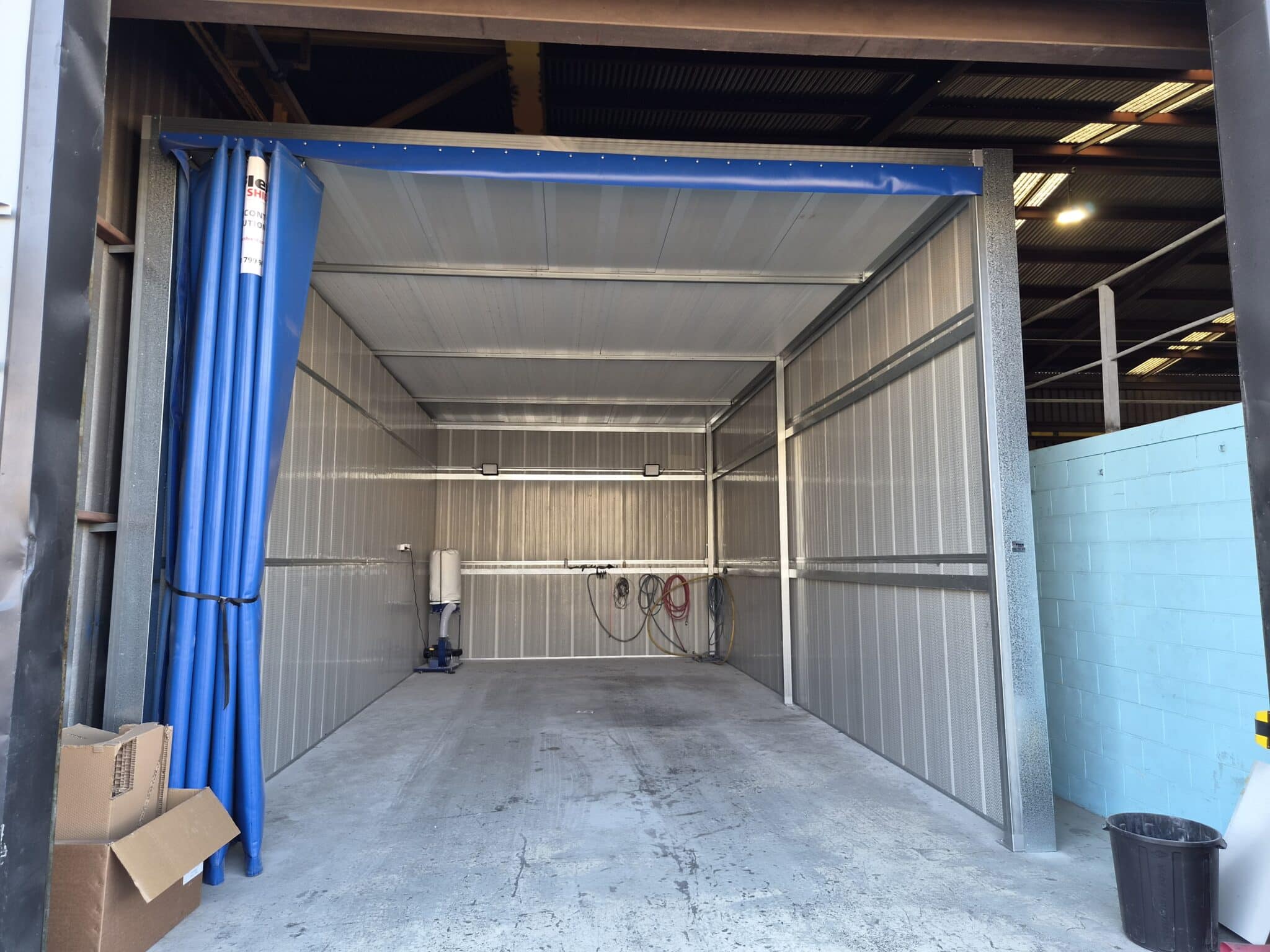
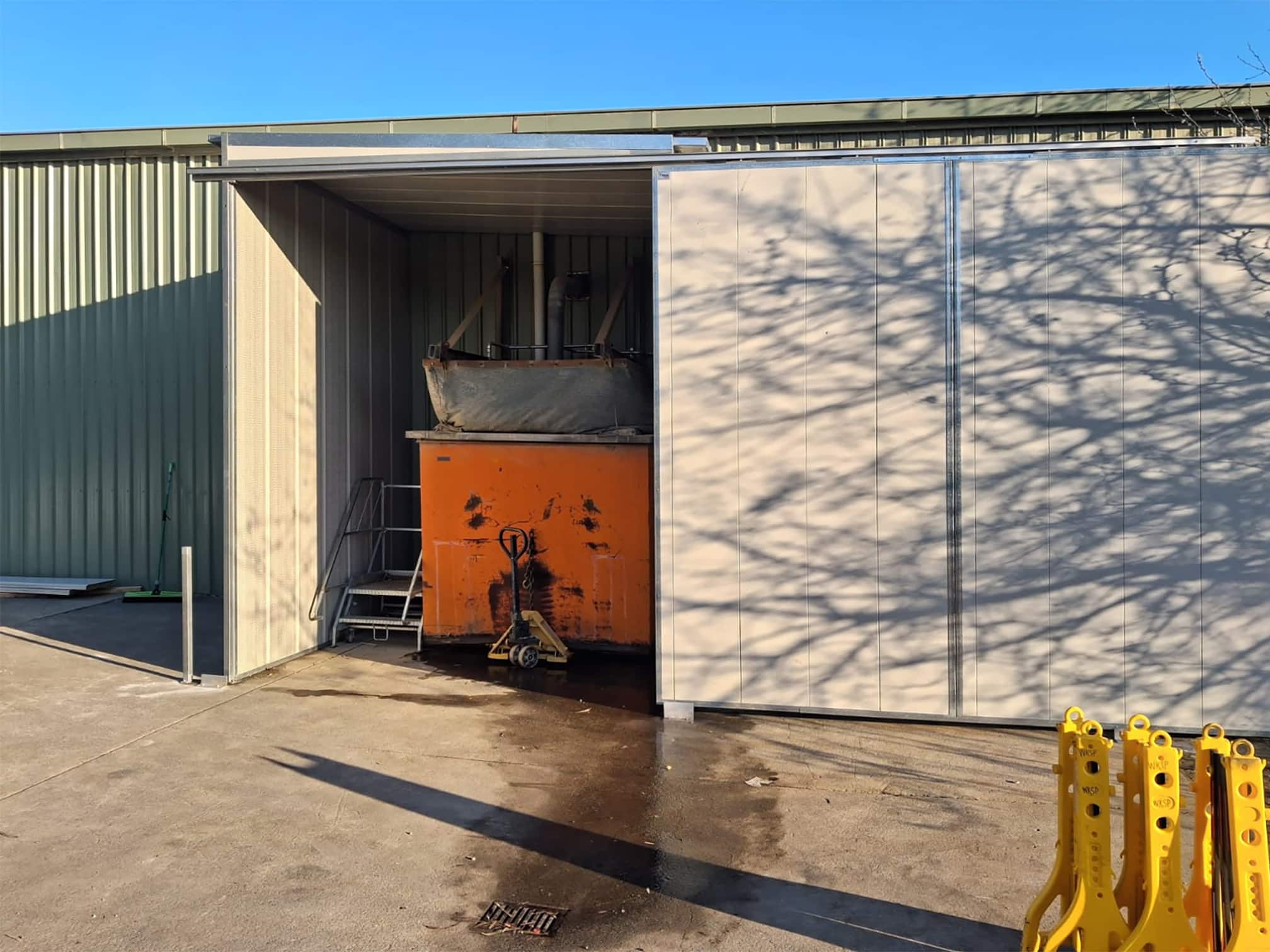
A permanent noise wall is a fixed acoustic barrier or enclosure wall intended to remain in place for the life of the facility, or a defined long-term period. It may be a freestanding barrier along a site boundary, an enclosure wall around a fixed noise source, or an internal partition separating noisy and quiet areas of a facility.
Permanence implies engineering for durability, weather resistance, and structural adequacy. This means a permanent wall needs to be designed and installed to withstand wind loads, temperature cycling, UV exposure, and the operational conditions of the specific environment. In food manufacturing or processing environments, it may also need to meet hygiene requirements.
The acoustic performance requirements for a permanent wall are the same as for any other acoustic product. The wall assembly must be tested to a recognised standard, and the Rw rating must meet the specification. A wall that has been in place for ten years but was never tested to a standard cannot be verified.
Building permanent acoustic treatment around a fixed source is a reasonable investment when the noise problem will not move. That means a permanent noise wall makes the most sense when the noise source is fixed and the site layout around it is not expected to change.
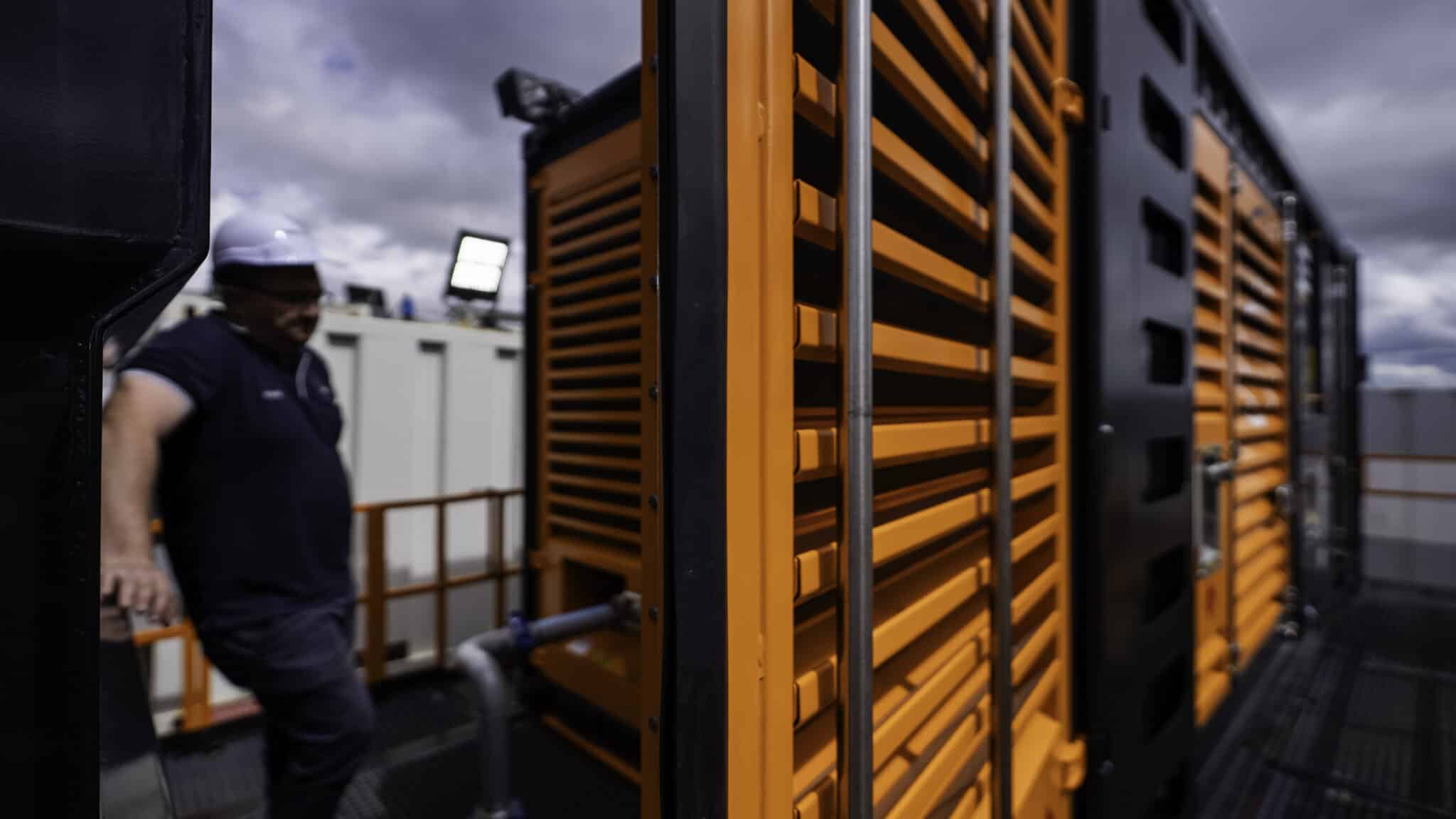
A large compressor station, a permanently installed generating set, a processing line, or a substation transformer are examples of noise sources that will remain in the same location for years.
Compliance-driven situations also favour permanent solutions. If a facility is operating under a development approval or environment protection licence that requires noise levels at specific receiver points to remain below defined limits, a permanent, verified acoustic installation provides documented evidence of compliance. A relocatable or temporary installation is harder to defend if the compliance question is raised.
Retrofitting acoustic treatment to an operating facility is more disruptive than installing it during a planned works period. So it can be a good opportunity to install permanent noise control when the facility is undertaking a capital improvement program or a planned maintenance shutdown.
Sites with fire rating requirements also benefit from permanent systems. Flexshield Sonic System panels carry a fire rating of -/120/-, making them suitable for use in fire compartment walls and around equipment with ignition risk. A permanent installation that is also fire rated addresses two requirements in a single system.
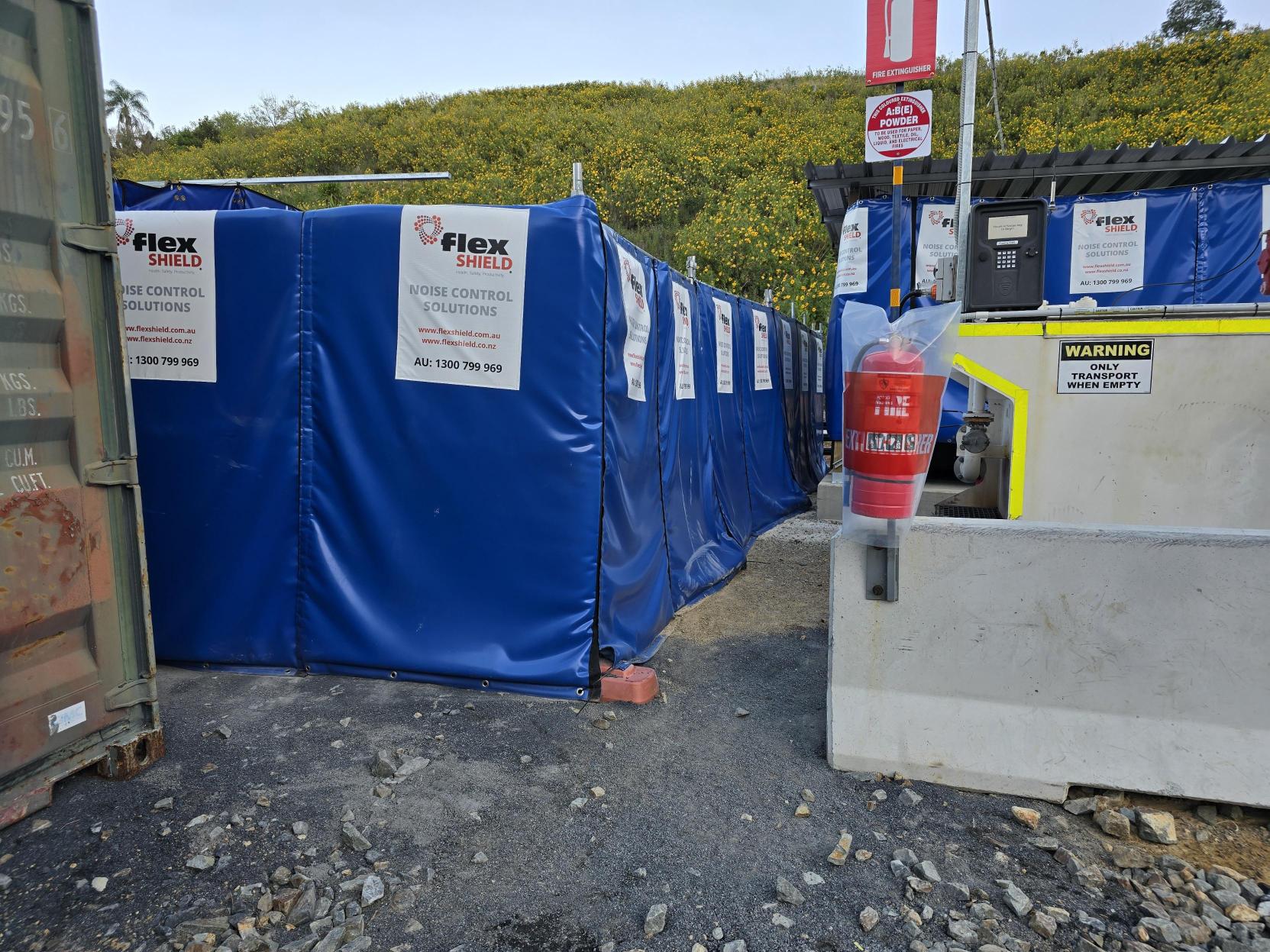
Not every industrial noise problem warrants a permanent installation. If the noise source is temporary – such as a construction activity, a plant hire item, or a trial production run – then a relocatable acoustic system that can be removed and reused is more appropriate.
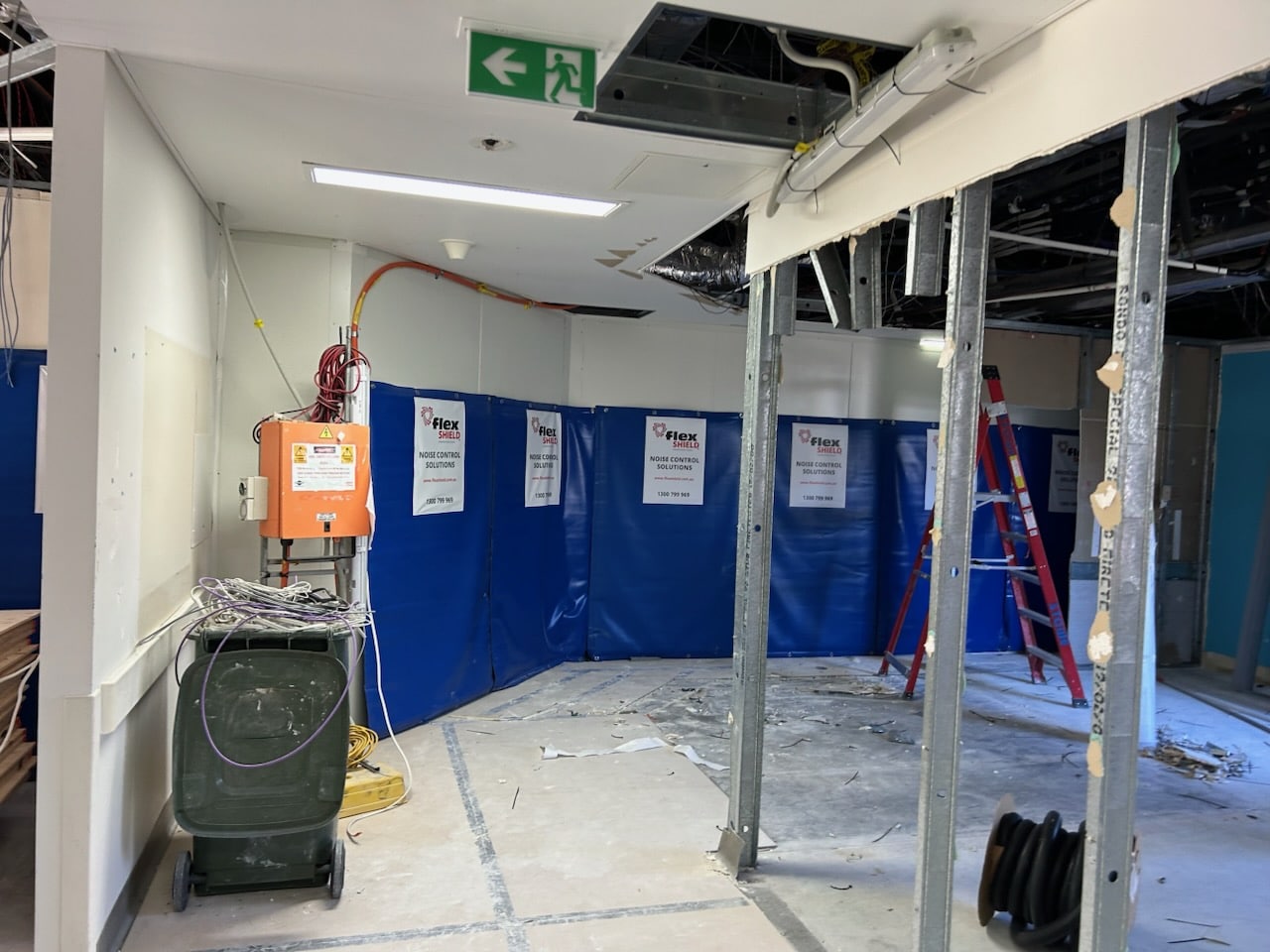
Facilities with changing layouts present a similar case. If the production floor is regularly reconfigured, equipment is moved between areas, or new machinery is expected to be added, a modular panel system that can be relocated and reconfigured as the layout changes will perform better over time than a fixed wall that no longer aligns with the noise sources it was designed to address.
Budget considerations also factor into the decision. Relocatable systems can be redeployed rather than written off when the requirement changes, which can provide better value over a longer planning horizon than a fixed installation that serves only one configuration.
The acoustic performance required from a permanent noise wall depends on the source levels, the receiver location, and the noise limit that needs to be achieved at that receiver. This calculation is typically done by an acoustic consultant using measured or estimated source levels, propagation modelling, and any required safety margin.
The output is a required Rw for the wall assembly. That figure should then be matched to a tested product specification. Stating that a wall is built from a particular material does not establish its acoustic performance; the performance needs to come from an independently tested assembly.
Flexshield Sonic System panels are independently tested. The V100 panel achieves Rw 37dB with a fire rating of -/120/-, and the V100SP achieves Rw 45dB with the same fire rating. Panel selection should always be made against the required Rw from the acoustic consultant, not simply estimated from material descriptions.
For applications where the enclosure interior will generate significant reflections, the NRC rating of the panel is also relevant. The V100 carries an NRC of 1.10, while the V100SP carries an NRC of 0.90. Both provide meaningful internal absorption to prevent noise buildup inside an enclosure.
A permanent acoustic enclosure around an industrial noise source must provide for adequate ventilation, access, and maintenance. These requirements need to be built into the design from the start, not added later as penetrations through the acoustic panels.
Ventilation openings should use acoustic louvres rated to maintain the overall acoustic performance of the enclosure. If a louvre with Rw 18dB is used in an enclosure wall with panels rated Rw 37dB, the louvre becomes the limiting element for that section. Louvre selection should match or approach the panel performance.
Sonic Series acoustic louvres are independently tested and available in a range of Rw and free-area configurations to balance acoustic performance and airflow requirements. Sonic Access acoustic doors, rated to Rw 46dB for single leaf or Rw 52dB for high performance configurations, provide access points that do not compromise the overall enclosure performance.
Clearly, permanent acoustic walls need to maintain their performance over time. Panel seals, door hardware, louvre blades, and connections between panels are all potential failure points if not specified and maintained correctly.
That’s where Australian-manufactured systems have practical advantages. If a panel is damaged, a seal needs replacing, or additional sections are required years after the original installation, local manufacture means the same product to the same specification is available without extended lead times or supply chain uncertainty.
Flexshield products are manufactured in Australia. The same panel types available for a new installation are available for maintenance, repair, or extension of an existing system.
The decision on whether to choose permanent or relocatable noise control comes down to four questions:
If the answer to most of those questions is yes, a permanent noise control system is likely the right choice. If the answers are mixed or uncertain, a relocatable modular system may provide better long-term value by adapting as conditions change.
The Flexshield team can assist with product selection and specification for both permanent and relocatable applications. Contact us to discuss your site requirements.
We’ll make sure it’s built right from the start. Contact Flexshield on 1300 799 969 or get in touch online.
Proudly built by Flexshield Group
Designed to perform. Built to last.