
Call 1300 799 969 | Contact Us
Home » Common noise sources in power generation facilities
Power generation facilities produce noise from a wide range of sources. Gas turbines, diesel generating sets, cooling systems, transformers, switchgear, and ancillary mechanical plant all contribute to the overall noise environment. Managing that noise requires an understanding of what each source produces, how it propagates, and what control approach is appropriate for each one.
This article provides a practical overview of the main noise sources at power generation sites, how their noise characteristics differ, and what acoustic measures are commonly applied.
Gas turbines are a primary noise source at open cycle and combined cycle gas power stations. They produce high levels of broadband mechanical noise from the turbine casing and inlet and exhaust systems. The inlet and exhaust are typically the dominant noise paths.
Inlet noise can be managed through acoustic attenuators or silencers fitted to the air intake system. These are designed to reduce broadband noise without creating significant pressure drop that would affect turbine performance. Exhaust noise is similarly managed through purpose-designed exhaust attenuators, though the high temperatures and gas velocities involved require specialist engineering.
Gas engine generating sets produce noise from the engine block, exhaust, and cooling systems. Their noise characteristics differ from gas turbines: gas engines produce stronger low-frequency components from combustion, which can be challenging to attenuate with standard panel systems. Exhaust silencer selection for gas engines needs to account for low-frequency performance as well as insertion loss across the broader frequency range.
Diesel generators are present at power generation sites in standby, emergency, and peaking capacities. In grid-scale applications they may run continuously. The noise produced by diesel generators comes from engine combustion, mechanical motion, exhaust, and cooling fans.
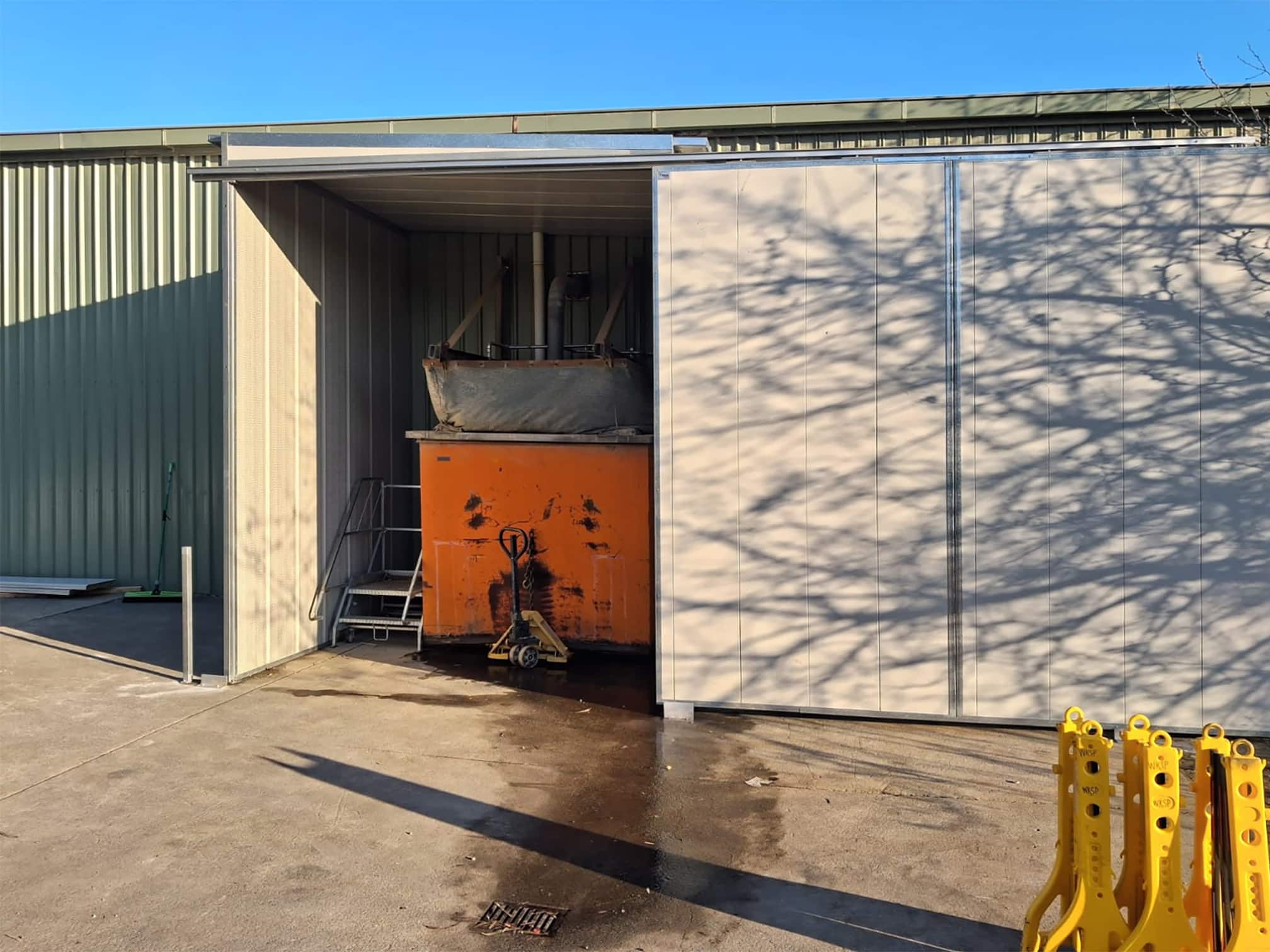
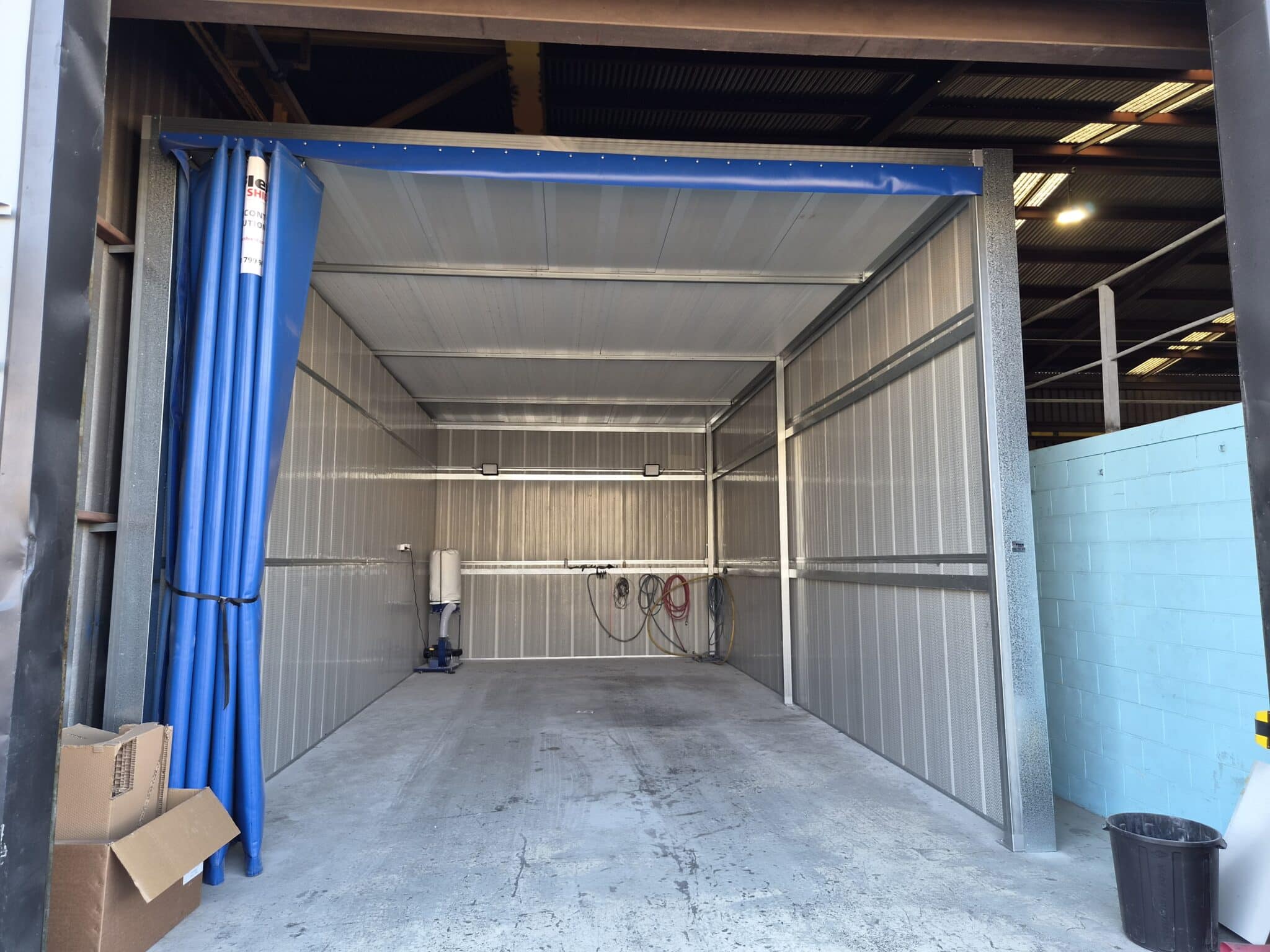
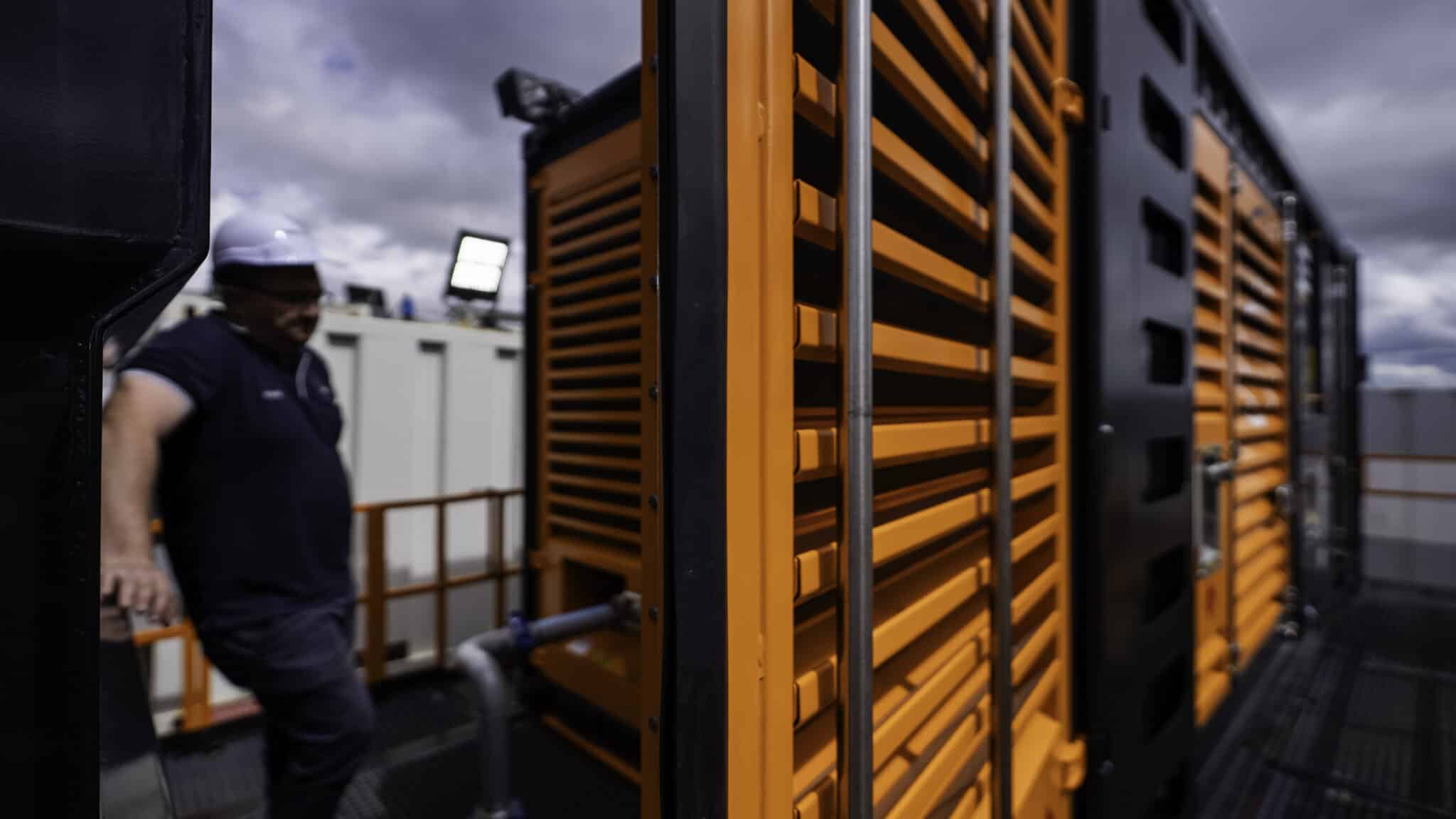
Acoustic enclosures are widely used to control diesel generator noise. At power generation sites where generators operate for extended periods, enclosures need to provide adequate ventilation – both for engine combustion air and for heat rejection from the radiator system. Acoustic louvres manage ventilation openings without creating unacceptable noise paths through the enclosure wall.
Sonic System acoustic modular panels provide independently tested performance for generator enclosure applications. The V100 is rated Rw 37dB and the V100SP is rated Rw 45dB, both with the same fire rating of -/120/-. For facilities where diesel generating sets are located near site boundaries or sensitive areas, the V100SP provides additional acoustic performance where the noise source levels require it.
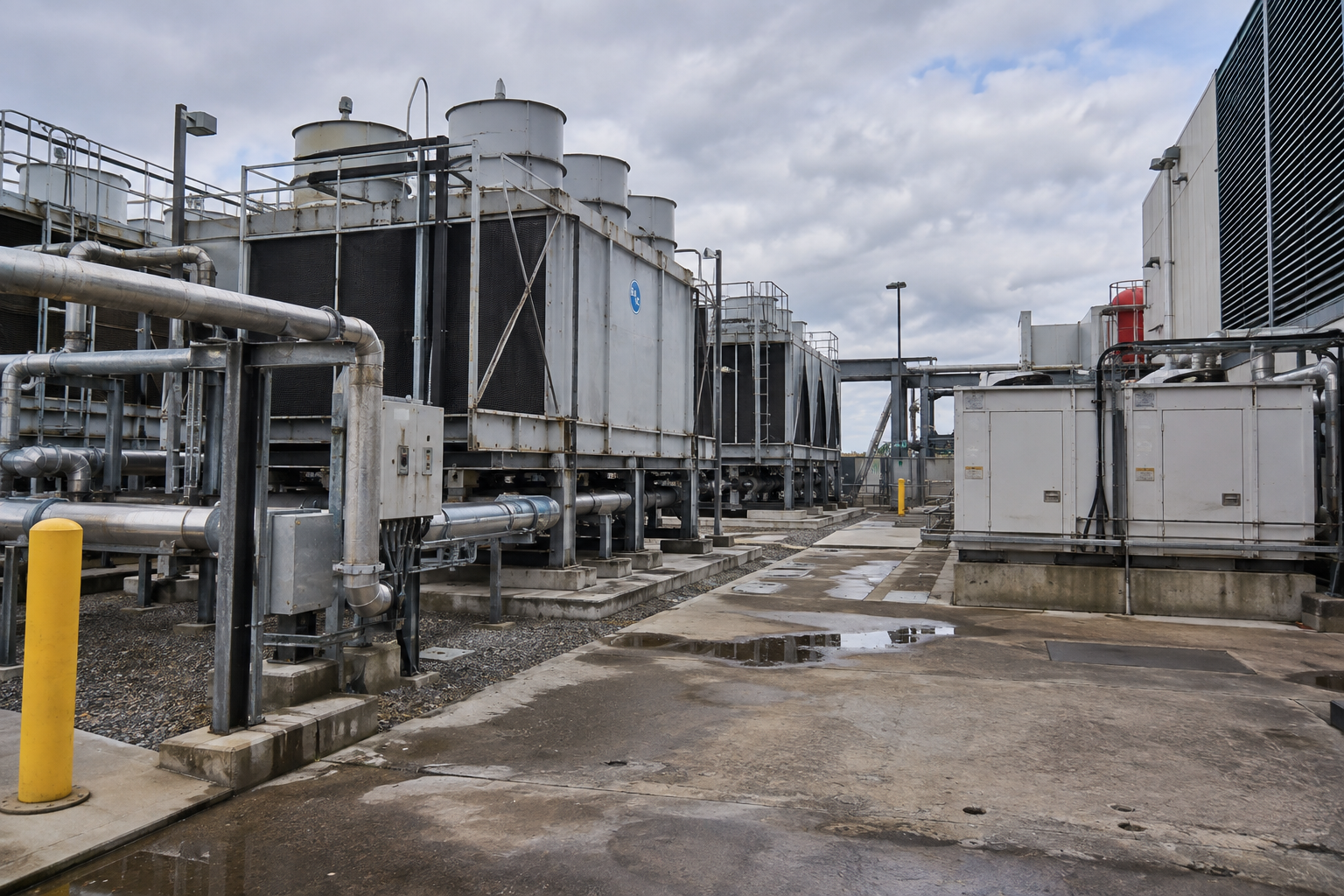
Cooling systems at power generation facilities range from dry air coolers and fin-fan heat exchangers to large evaporative cooling towers. Each produces noise through different mechanisms.
Fan-based cooling systems generate aerodynamic noise from blade rotation and air movement, with tonal components at blade-pass frequency. This noise is typically directional, radiating primarily from the fan face. Barrier walls or acoustic screens on the receiver-facing side can provide useful attenuation without requiring a full enclosure.
Cooling towers produce noise from water falling through fill media and from the fan if fan-assisted. The water impact noise has a broadband character, while the fan component can introduce tonal elements. Cooling towers are often large structures, which makes full enclosure impractical. Directional barriers and acoustic louvres in the tower walls are more common approaches.
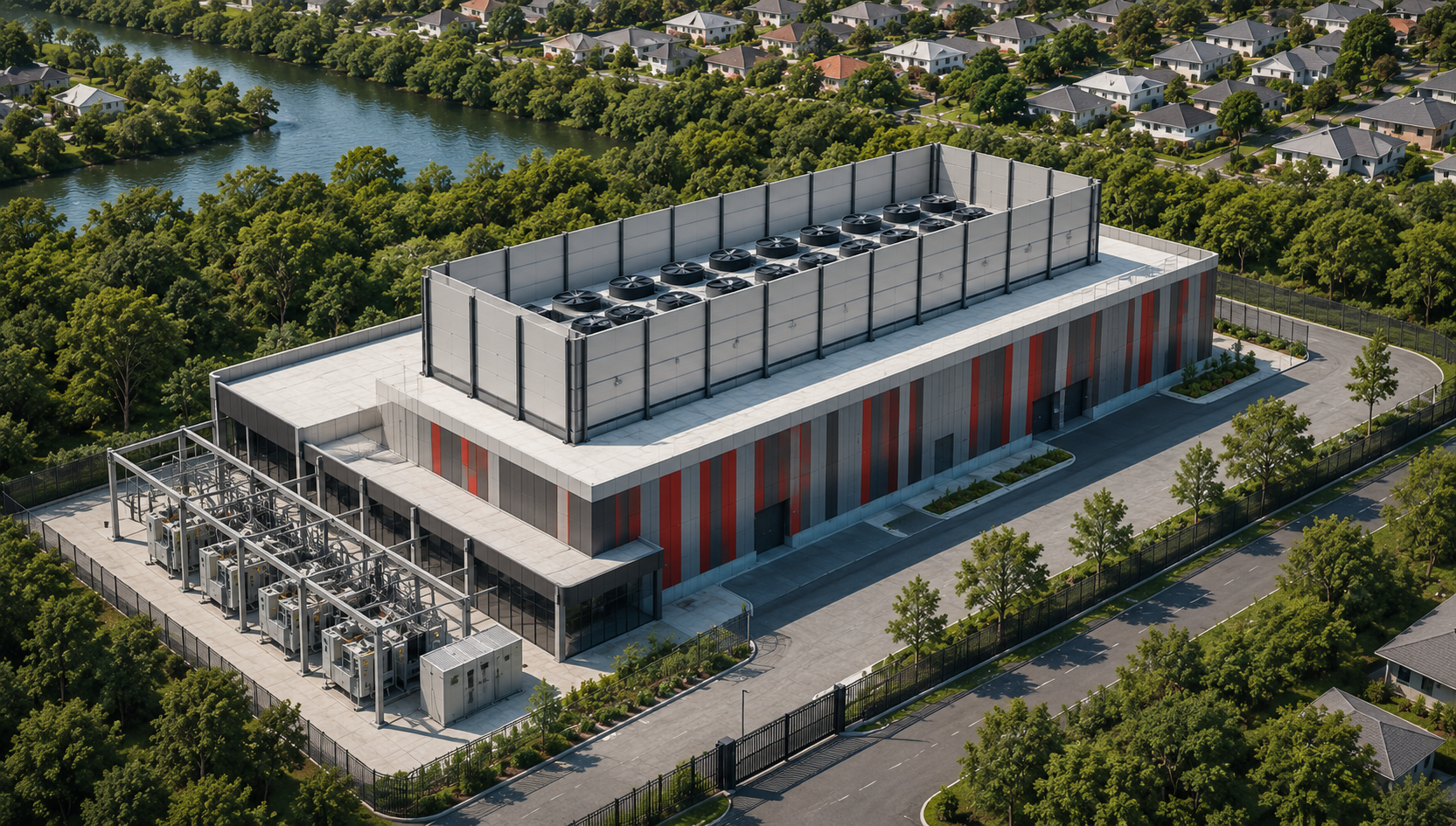
For facilities near residential areas or other sensitive receivers, cooling system noise is frequently one of the most persistent issues at night, when background levels drop and cooling systems continue to operate. Early assessment of cooling system noise at the planning stage, before positions and heights are finalised, can reduce the scale of required acoustic treatment.
Transformers generate a characteristic low-frequency hum at twice the supply frequency – eg. 100Hz in a 50Hz system. This hum, produced by magnetostriction in the transformer core, is relatively quiet in absolute terms but highly audible at night in quiet environments because of its tonal character.
Standard acoustic panels perform less well at 100Hz than at higher frequencies. This means acoustic barriers used to manage transformer noise need to be assessed for their low-frequency performance, not just their headline Rw value. In some situations, anti-vibration mounting of the transformer to reduce structure-borne transmission to the supporting structure is also required alongside airborne barriers.
Transformer noise is a well-documented issue at substation and grid connection sites. As renewable energy generation expands and more substations are built in locations closer to communities, transformer noise is an increasing area of planning and compliance attention.
Power generation facilities use significant volumes of HVAC equipment for control room cooling, electrical switchroom cooling, and battery storage climate control. This equipment produces noise from compressors, fans, and refrigerant flow, with individual units typically producing less noise than turbines or cooling towers but contributing cumulatively to the overall site noise level.
HVAC acoustic treatment typically involves acoustic louvres at intake and discharge openings, acoustic enclosures around external condensing units, and noise barriers when the plant is located on the receiver-facing side of the facility. For indoor equipment, internal acoustic treatment and sound-rated penetrations through walls and ceilings also apply.
As battery energy storage systems become more common at power generation sites, the HVAC requirements for BESS enclosures add another noise source to the facility inventory. BESS thermal management relies on continuous cooling, which means HVAC plant running around the clock across the operating temperature range of the battery cells.
Acoustic louvres appear across multiple applications at power generation facilities. They manage ventilation openings in generator enclosures, provide weather protection and noise attenuation at air intake and discharge paths, and are used in BESS container walls and switchroom walls.
Sonic Series acoustic louvres are independently tested across a range of configurations:
Selection depends on the acoustic performance required and the airflow volume that needs to pass through the opening.
At power generation sites, louvre sizing is often constrained by the thermal requirements of the equipment being ventilated. Under-sizing a louvre to improve acoustic performance can create overheating problems more serious than the original noise issue. Getting the balance right requires knowing both the required airflow and the acceptable noise path through the louvre.
Power generation facilities are subject to state and local planning noise limits, with compliance assessed at defined receiver points. For projects in development or approval, an acoustic impact assessment will set out the required noise levels at those receivers and the estimated performance of proposed acoustic treatments.
For existing facilities adding capacity or new equipment, the same approach applies: establish the source levels for the new equipment, model the contribution at the receiver points, and determine whether the existing acoustic environment can accommodate the additional noise, or whether new treatment is required.
At Flexshield we supply acoustic panels, enclosures, barriers, doors, and louvres for power generation applications across Australia. Our products are Australian manufactured, which supports shorter lead times and mid-project specification flexibility when site conditions change during construction.
We’ll make sure it’s built right from the start. Contact Flexshield on 1300 799 969 or get in touch online to discuss acoustic requirements for your project.
Proudly built by Flexshield Group
Designed to perform. Built to last.