
Call 1300 799 969 | Contact Us
Home » Overcoming data centre noise control challenges
Noise from data centre plant doesn’t disappear when you expand. It compounds. Planning your acoustic measures ahead of growth is far simpler, and far cheaper, than retrofitting once you’ve already hit a compliance issue.
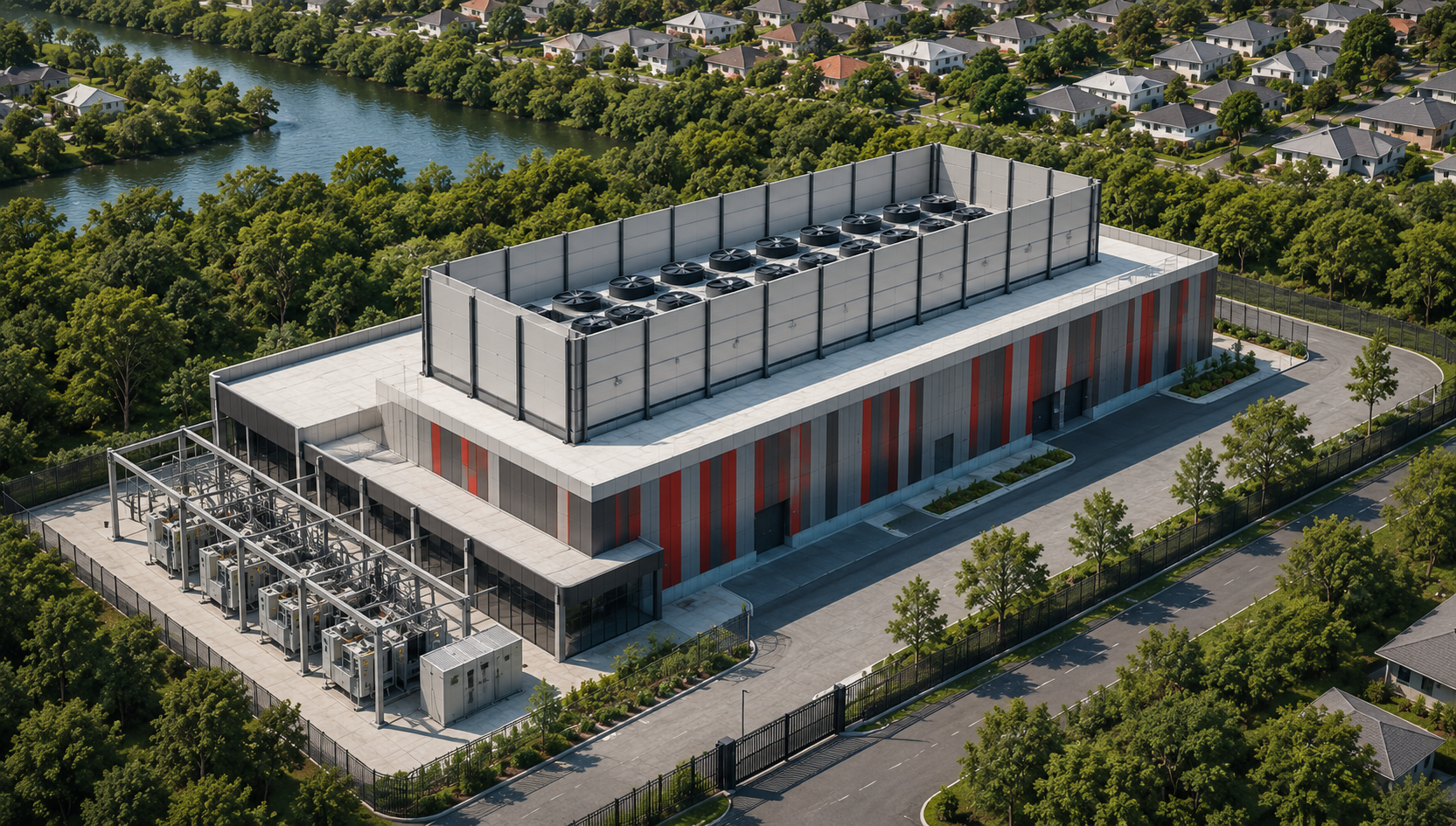
Data centres across Australia are growing fast. Demand for cloud computing, artificial intelligence workloads, and digital infrastructure is pushing operators to expand existing sites and build new ones at pace. With that growth comes more plant. More cooling. More backup power. And more noise.
The noise challenge data centres face isn’t just about what’s running today. It’s about planning for what will be running in two or five years’ time. Sites that manage noise reactively, dealing with complaints and compliance notices as they arise, often find themselves spending far more than if they had designed acoustic controls into the expansion from the beginning.
This article looks at the noise sources that grow alongside a data centre, what to consider when planning acoustic measures, and how to build noise control into your expansion strategy rather than bolting it on afterwards.
Retrofitting acoustic barriers and enclosures around existing plant is possible, but it comes with real constraints. Equipment that wasn’t installed with noise control in mind can be difficult to enclose without restricting ventilation. Acoustic barriers around chillers or cooling towers often need to be set at specific distances to allow airflow, which means the available footprint may already be compromised.
Then there’s the matter of operational disruption. Installing acoustic measures around live plant requires careful coordination. Work that takes a week to design and install on a greenfield site may take three times as long when working around operating equipment, cooling circuits, and maintenance schedules.
Noise compliance requirements are set by environmental protection legislation, development approvals, and council regulations. These limits don’t relax when a data centre grows. In many cases, operators seeking planning approval for expansion are required to demonstrate that new plant won’t increase noise levels at nearby receivers, regardless of how much plant is already running. Planning ahead means those assessments don’t become obstacles.
Understanding where the noise comes from is the starting point for any acoustic plan. Data centre noise is generated by three broad categories of plant, each of which is likely to increase as the site expands.
Cooling plant
Cooling is the most noise-intensive aspect of most data centre operations. As IT load increases, cooling demand scales with it. The main noise sources include:
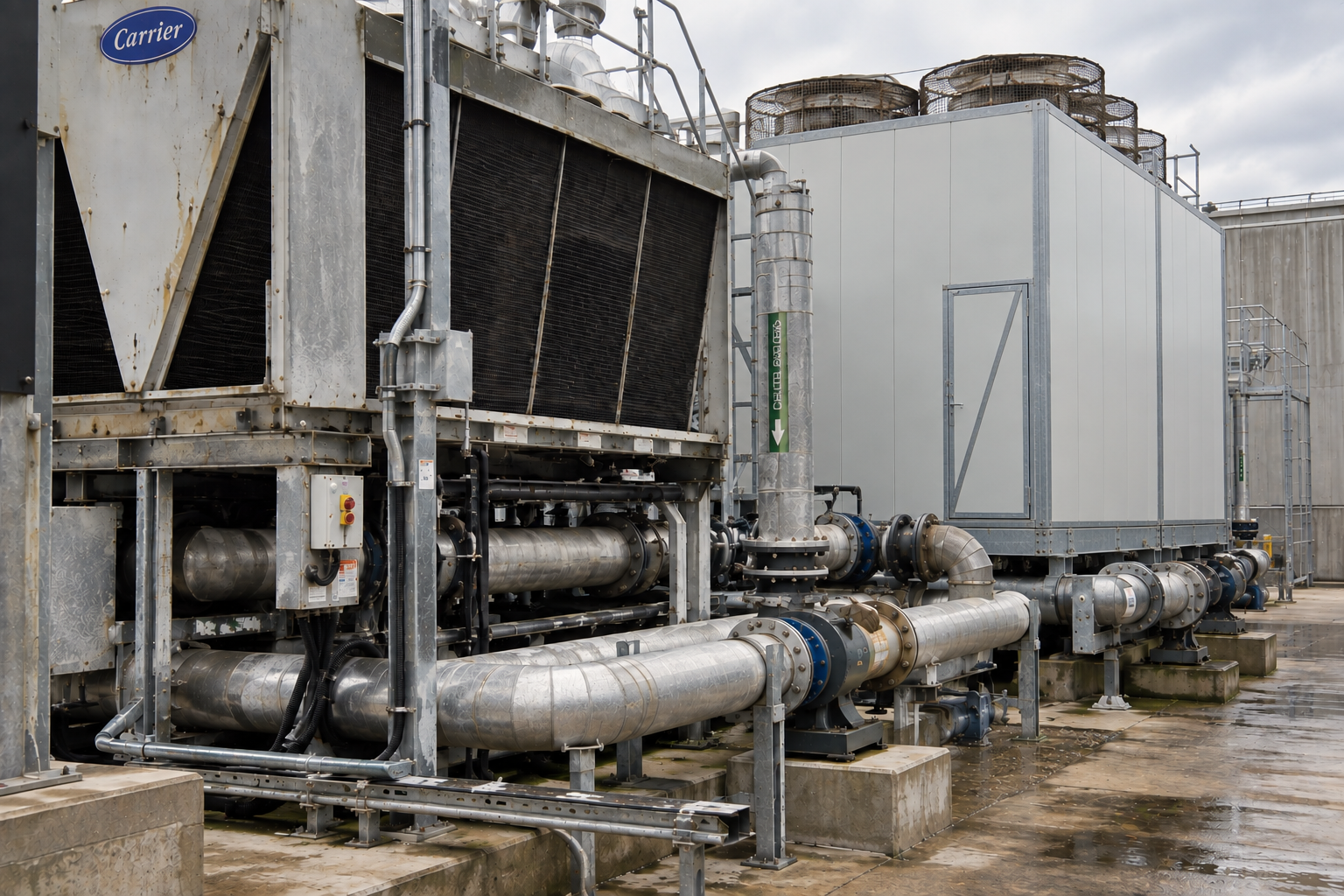
Chillers and dry coolers
Refrigerant compressors and large fans generate broadband noise across a wide frequency range. A single large chiller can produce noise levels of 75 to 90dBA at one metre, with tonal components from compressors that carry significant distances.
Cooling towers
The combination of fan noise and falling water generates low-frequency noise that can be particularly persistent at residential receivers. Low-frequency noise is harder to attenuate, and often requires purpose-designed barriers with adequate mass and height.
CRAC and CRAH units
Computer room air conditioners and air handlers are often located on rooftops, where they have a clear noise propagation path to surrounding areas. Multiple units running simultaneously create a noise floor that can be difficult to manage without purpose-built acoustic screening.
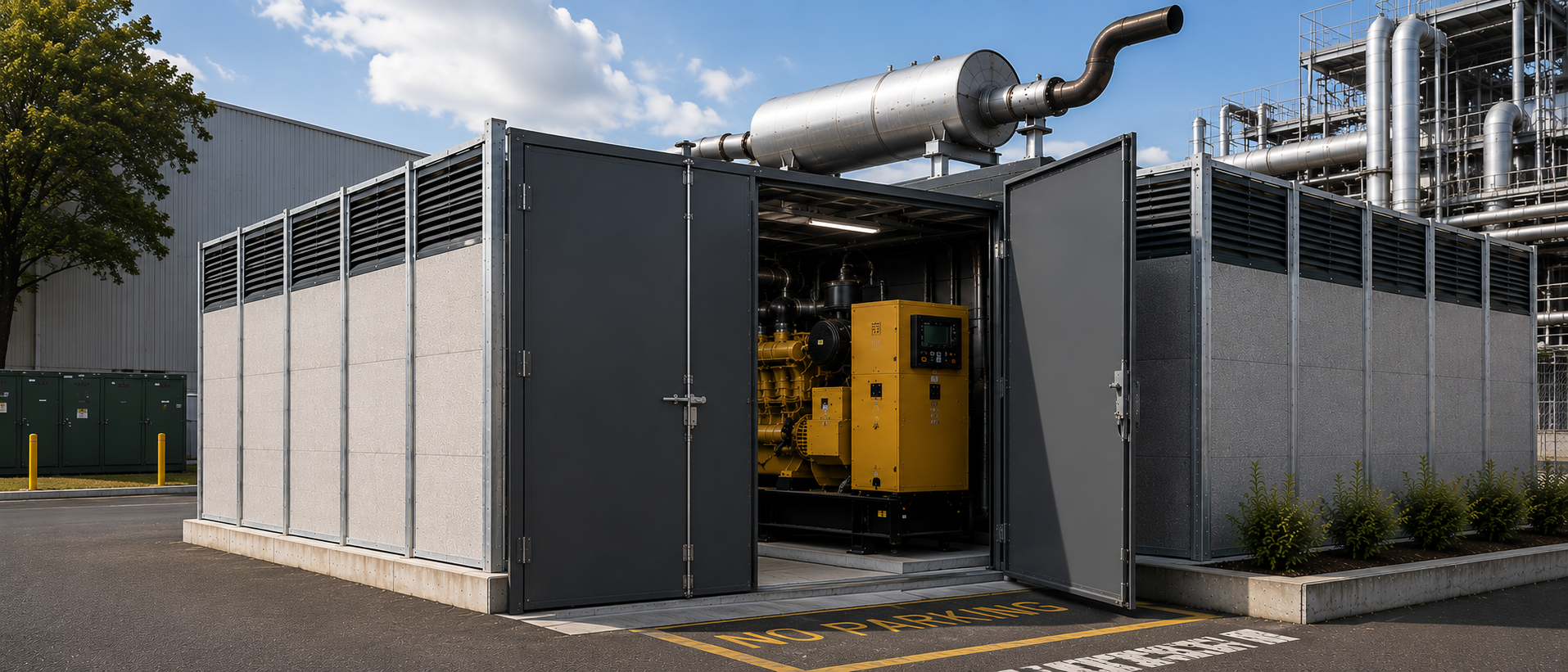
Backup power is a non-negotiable requirement for data centres, and diesel generators are the dominant technology for achieving the power continuity and response times the industry demands. They are also among the loudest pieces of equipment on any data centre site.
A large diesel generator set can produce noise levels exceeding 100dBA at one metre when operating at full load. Even with acoustic enclosures fitted by the manufacturer, residual noise from exhaust, radiator fans, and structure-borne transmission can still breach compliance limits at nearby receivers, particularly at night.
As data centres add capacity, they typically add generator sets to match the increased power load. Two generators running simultaneously don’t produce twice the noise of one, but they do add approximately 3 dBA to the overall level, which can be enough to push a borderline site into a compliance issue.
Uninterruptible power supply (UPS) systems are generally less noisy than generators, but cooling fans within large UPS units contribute to the ambient noise level and should be accounted for in acoustic modelling.
Generator exhaust stacks, air handling units, and ventilation fans associated with electrical switchrooms and battery storage all contribute to the overall noise profile of a data centre. Exhaust noise from diesel generators is typically managed with silencers, but the effectiveness of silencing varies significantly between products. Undersized or poorly specified silencers are a common source of ongoing compliance issues.
Acoustic energy is cumulative. Each time a data centre adds plant that produces noise at or near the same level as existing equipment, the total noise level at a given receiver increases. The relationship is logarithmic rather than linear, which means a doubling of cooling plant doesn’t double the noise level in decibels, but it does produce a meaningful increase.
What matters from a compliance standpoint is the total noise level at the receiver, typically the nearest residential property or noise-sensitive land use. If the existing plant is already producing levels at or close to the applicable limit, any additional plant, regardless of how modest it seems in isolation, could tip the site into a breach.
This is particularly relevant during generator testing. Most data centres are required to test standby generators under load on a regular basis, often monthly. Testing typically occurs during daytime hours, but the noise generated can still attract complaints from surrounding properties, and repeated complaints can trigger formal compliance investigations.
Operators planning significant expansion should consider commissioning an updated acoustic assessment before adding plant, not after. An assessment at the planning stage gives you the information needed to design acoustic measures into the project rather than discovering a gap after the equipment is installed.
The right approach to acoustic management depends on the site layout, the nature and location of noise-sensitive receivers, and the specific plant being managed. There is no single product or approach that works universally, but there are consistent considerations that apply across most data centre sites.
Acoustic barriers around external plant
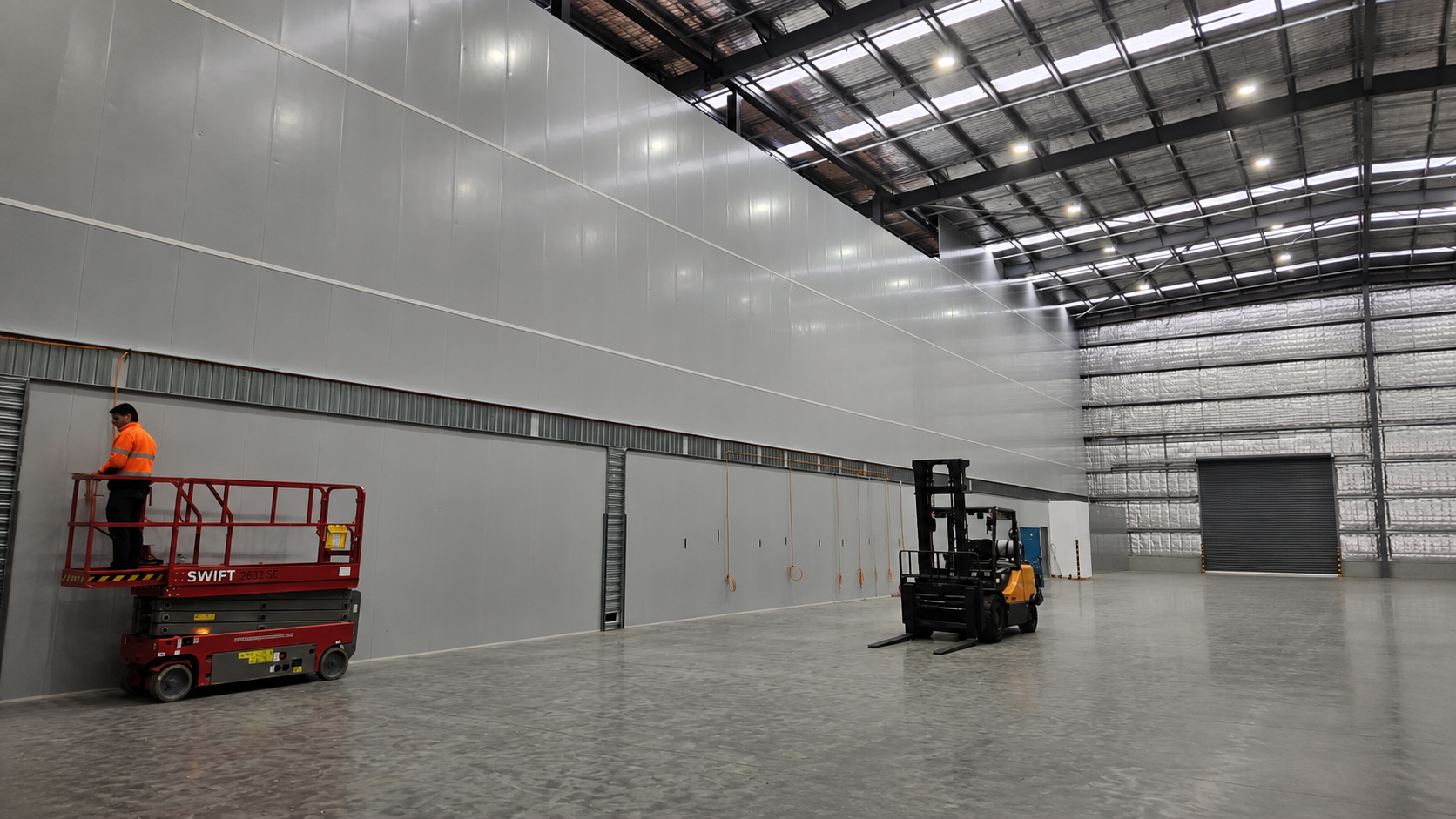
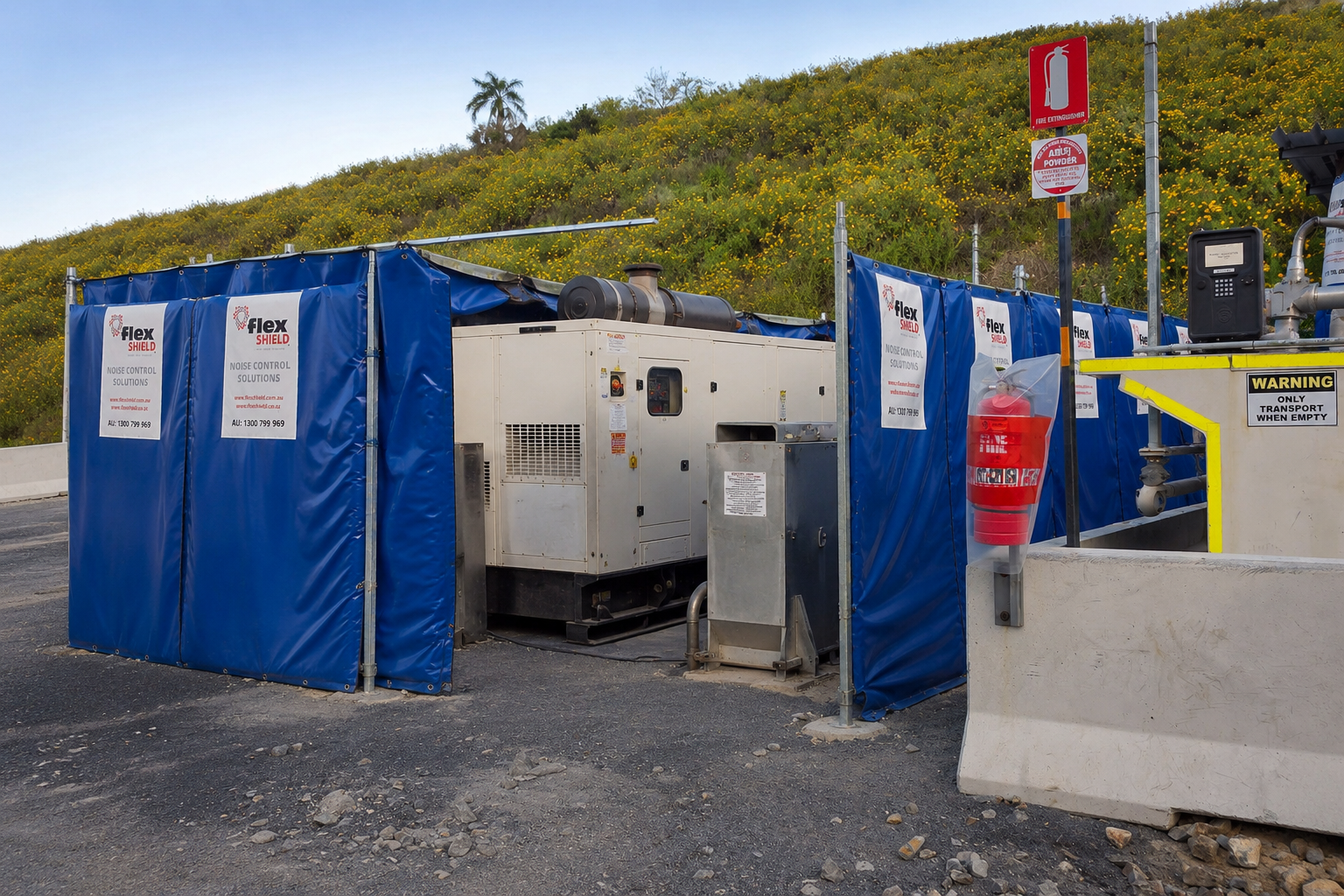
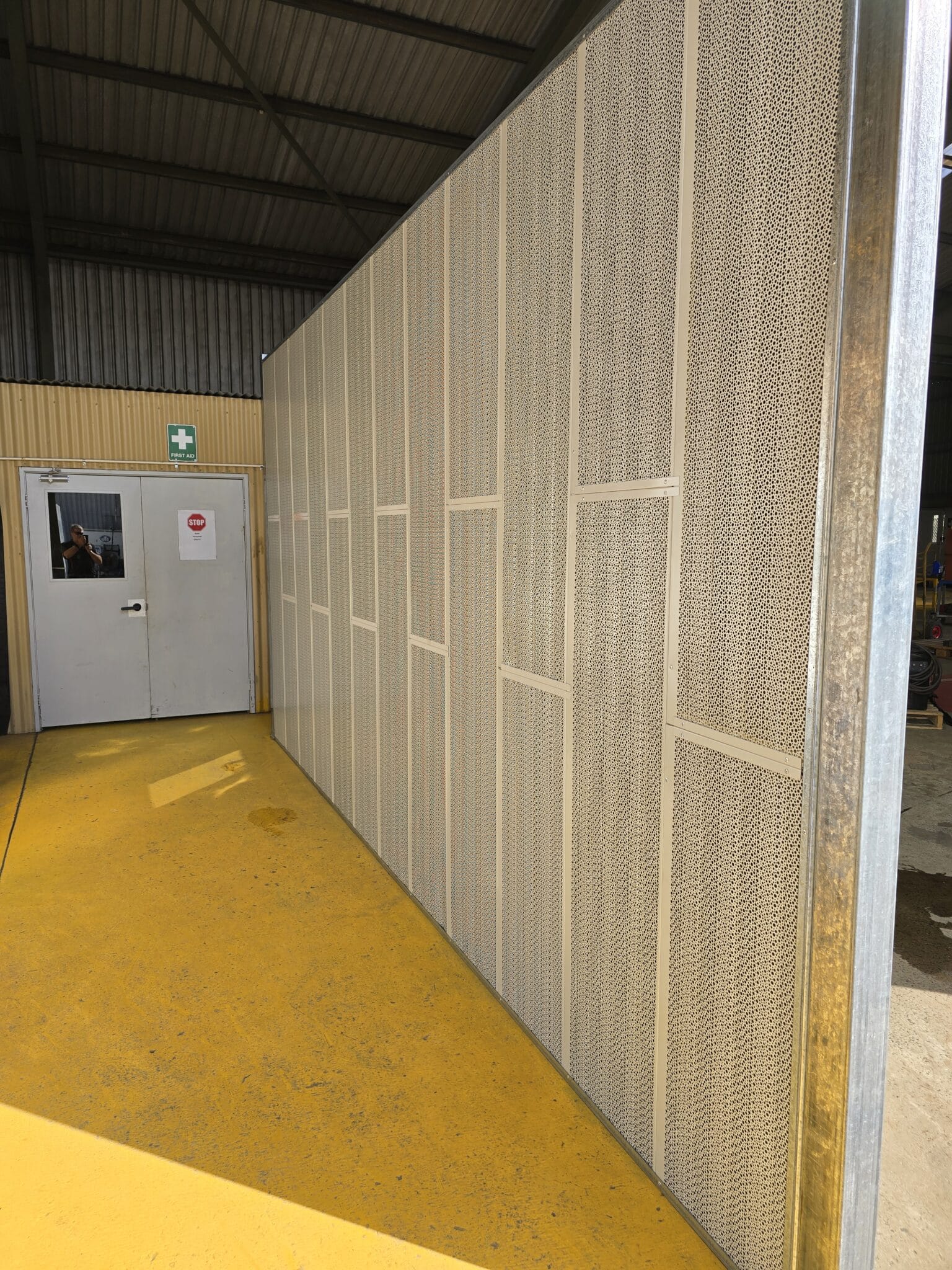
Purpose-built acoustic barriers are one of the most commonly used noise control measures for data centre external plant. They work by interrupting the line of sight between the noise source and the receiver, reducing the level of noise that reaches nearby properties.
For barriers to be effective, they need to be high enough to break the line of sight, long enough to avoid noise flanking around the ends, and constructed from materials with adequate acoustic mass.
Lightweight or permeable barriers provide minimal attenuation. Products tested to Australian standards, such as those achieving NATA-accredited performance ratings, give operators documented evidence of performance that can be used to support compliance assessments.
Flexshield’s modular acoustic barriers are designed for installation around external plant and can be configured to suit site-specific layouts. The modular design allows barriers to be extended or reconfigured as plant is added, which is a meaningful advantage on sites where expansion is anticipated.
Acoustic enclosures for generators and UPS
Where a generator or UPS system is the dominant noise source, and a barrier alone won’t achieve the required attenuation, an acoustic enclosure may be the more appropriate measure. Enclosures surround the equipment on multiple sides, reducing noise transmission in all directions rather than only toward a specific receiver.
The primary technical challenge with enclosures on diesel generators is ventilation. Generators produce significant heat under load and need continuous airflow to operate safely. An enclosure that restricts airflow can cause the generator to overheat, which creates its own operational risk. Properly designed enclosures incorporate acoustic louvres or attenuators to allow the necessary airflow while limiting noise transmission through the ventilation openings.
Attenuators and acoustic louvres for ventilation
Wherever mechanical plant requires ventilation, that ventilation opening represents a potential noise propagation path. HVAC attenuators and acoustic louvres are designed to allow airflow while absorbing or deflecting sound energy passing through the opening.
In data centre applications, acoustic louvres are commonly used in generator enclosures, switchroom ventilation openings, and cooling plant enclosures. The performance of louvres varies considerably between products, and specifying a product with documented acoustic performance, rather than relying on manufacturer claims alone, is important for sites operating under formal noise conditions.
One of the practical advantages of planning acoustic measures before expansion is the ability to design for future capacity. A barrier system installed to manage two chillers can, if designed with that intent, be extended to accommodate a third or fourth without requiring a complete redesign.
This kind of forward planning requires knowing, at least approximately, how the site is likely to grow. Operators who have a five-year expansion plan should be sharing that information with their acoustic consultant and their noise control supplier, so that what gets installed today doesn’t become an obstacle to what comes next.
Practical considerations include leaving clear access corridors for maintenance, ensuring barrier footings or structural supports are designed to carry additional height if needed, and confirming that acoustic products carry performance data at the frequencies most relevant to the plant being screened.
In Australia, noise from industrial and commercial premises is regulated through a combination of state-level environment protection legislation, development approval conditions, and sometimes specific guidelines issued by the relevant environment protection authority.
Development approval conditions for data centres typically include noise limits at nominated receiver locations, often expressed in dBA as a maximum allowable level during specific time periods. Daytime limits are generally higher than nighttime limits, and residential receivers typically attract the most stringent controls.
When a data centre seeks approval for expansion, planning authorities may require a new noise impact assessment demonstrating that the proposed additional plant won’t exceed the approved limits. If the existing noise control measures are adequate, this is straightforward. If not, the operator may be required to implement additional controls as a condition of the expansion approval, and those controls need to be operational before the new plant goes live.
Having documented performance data for installed acoustic products, including NATA-accredited test results where available, strengthens the case made to planning authorities. It demonstrates that the noise control measures are fit for purpose rather than simply present.
The data centre sector operates under significant pressure to expand quickly. Land costs, power infrastructure, and fibre connectivity make site decisions complicated, and the pressure to commission new capacity fast can push noise control planning to the back of the queue.
That approach carries real risk. A data centre that triggers a formal noise investigation from the relevant environmental protection authority faces the prospect of enforcement action, including directions to cease operating specific equipment until noise controls are installed. For infrastructure running critical customer workloads, that is not an acceptable outcome.
The operators who manage noise best are those who treat acoustic planning the same way they treat power planning or cooling planning: as a core part of the expansion process, not an afterthought. Getting a noise assessment done before additional plant is procured, and consulting a noise control supplier at the design stage rather than after installation, keeps options open and costs manageable.
Talk to the experts in data centre noise control
Flexshield has worked with data centre operators across Australia to supply acoustic barriers, enclosures, acoustic louvres, and associated products. If you’re planning expansion and want to understand your options early, getting that conversation started sooner makes the process considerably more straightforward.
We’ll make sure it’s built right from the start. Contact Flexshield on 1300 799 969 or get in touch online.
Proudly built by Flexshield Group
Designed to perform. Built to last.