
Call 1300 799 969 | Contact Us
Home » Common data centre noise sources and how to control them
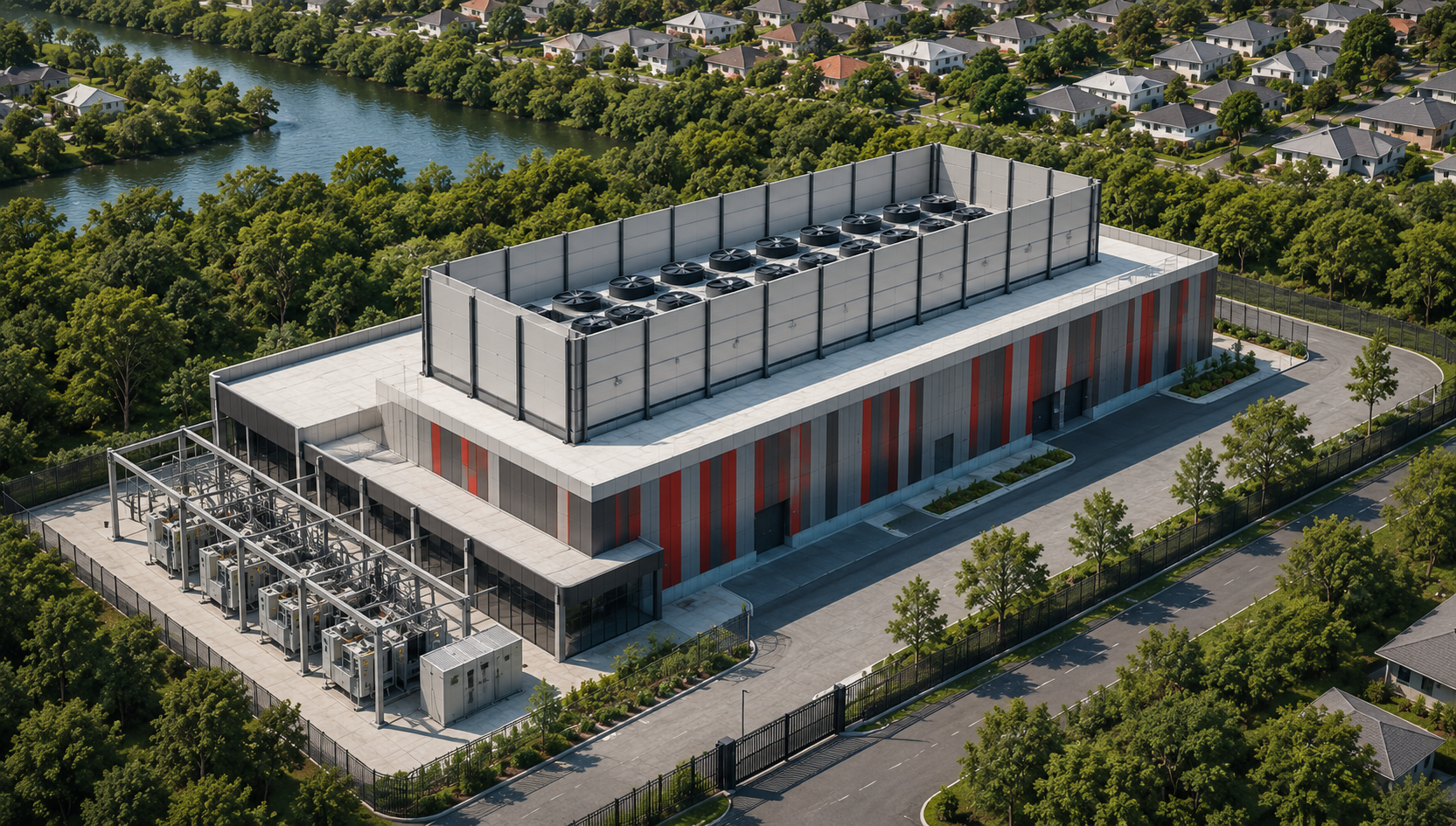
Data centres have grown rapidly across Australia in recent years, and with that growth has come increasing scrutiny over the noise they produce. While the focus of data centre design has traditionally been on power, connectivity and cooling capacity, noise has become a compliance issue that operators can no longer treat as an afterthought.
The challenge is that data centres are never truly quiet. They house dozens of noise-generating assets running continuously, 24 hours a day, seven days a week. For facilities located near residential areas, commercial precincts or mixed-use developments, this constant noise output can quickly trigger complaints and regulatory pressure.
The first step to managing data centre noise is understanding where it comes from.
1) Cooling and HVAC equipment
The single largest source of noise in most data centres, cooling equipment is working harder than ever as server densities increase and heat loads grow.
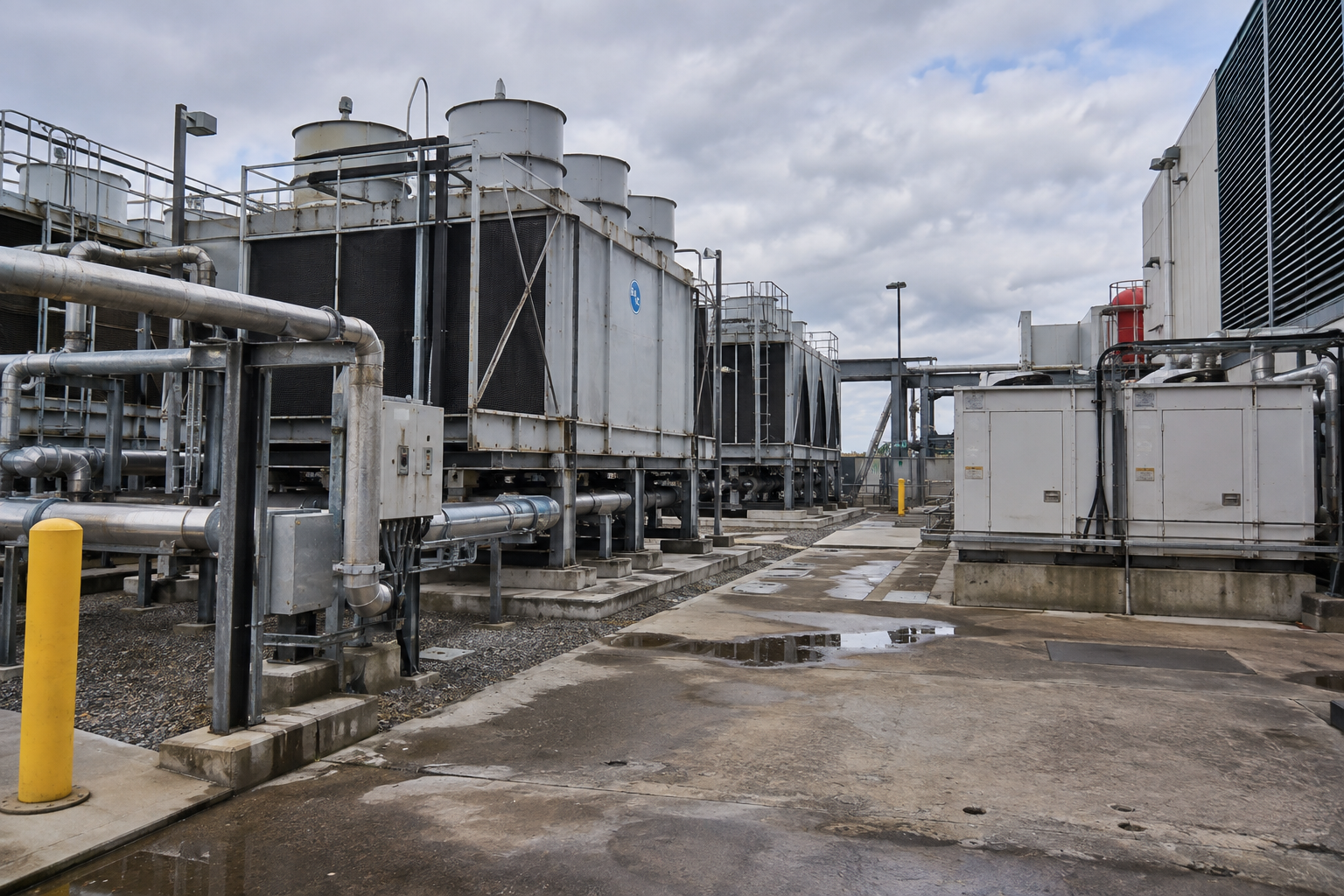
External plant is the primary concern. Rooftop air conditioning units, chillers, cooling towers, and external condensers produce substantial broadband noise that radiates outward from the facility. This equipment typically runs continuously, which means noise is not an occasional occurrence but a persistent environmental impact on surrounding areas.
HVAC fans within internal air handling units also contribute. Large units moving high volumes of air generate aerodynamic noise that can transmit through ductwork, walls and floors into adjacent spaces and nearby properties.
For data centres pursuing higher density cooling configurations, including liquid cooling and close-coupled cooling units, the noise profiles can differ from traditional air-based approaches. However, the pumps, compressors and fans associated with these configurations still generate noise that requires management.
2) Diesel backup generators
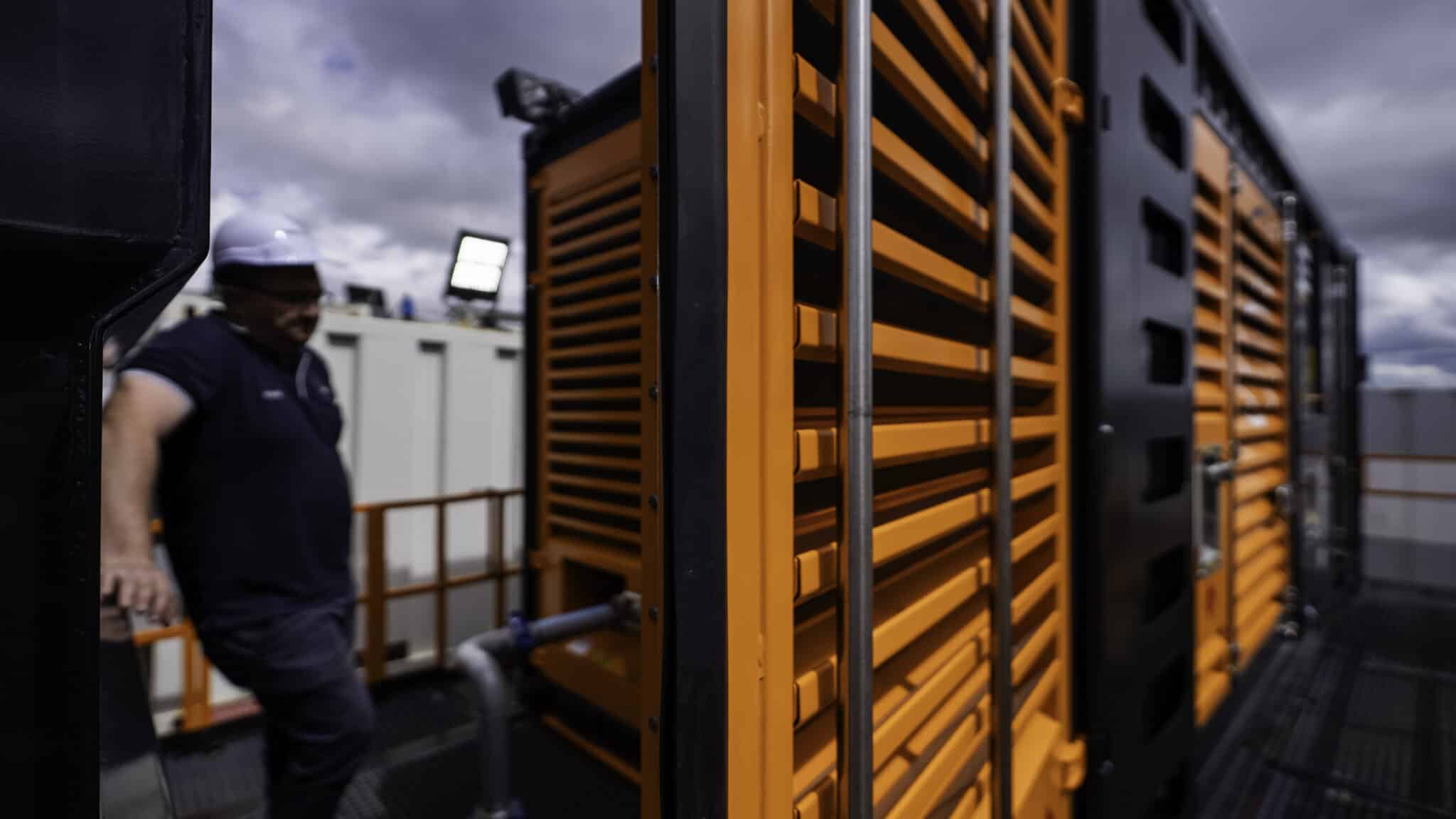
Nearly every data centre of scale maintains diesel backup generation capacity. These generators are essential for business continuity and uptime guarantees, but they represent a significant noise challenge.
Standby generators typically produce noise levels between 95 and 115 dB(A) at one metre during operation. While they do not run continuously under normal conditions, testing regimes, maintenance schedules and actual outage events mean generators are active more regularly than most people realise.
Noise from generators travels in two ways:
Managing both pathways is necessary to achieve genuine noise control.
3) Uninterruptible power supply units
UPS units are another persistent noise source. The fans and cooling mechanisms within UPS equipment run continuously to maintain operating temperatures, and in large data centres with extensive UPS infrastructure, this collective noise output can be significant.
Because individual units produce relatively modest levels, UPS noise is often overlooked during the planning phase. However, when multiple units are installed in adjacent rooms or along corridors, the cumulative effect becomes noticeable, particularly in buildings where acoustic separation between plant rooms and occupied or external spaces is limited.
4) Server racks and in-row cooling
Within the data hall itself, server racks and in-row cooling units generate noise through the operation of thousands of individual cooling fans. At the rack level, this noise combines to create a broadband low-frequency hum that can permeate the building structure.
While internal noise primarily affects workers within the facility and is governed by occupational health and safety requirements, it can also transmit externally in some building configurations, particularly in facilities with large open-plan data halls close to external walls.
5) Switchgear and electrical infrastructure
High-voltage switchgear, transformers and electrical distribution equipment produce low-frequency hum and tonal noise. Transformers in particular are a common complaint source because they generate a distinctive 50 Hz fundamental tone and harmonics that travel easily through structures and over distance.
This tonal character makes transformer noise particularly noticeable to nearby residents, and more likely to trigger noise complaints than broadband noise at equivalent sound levels. Under most Australian environmental noise frameworks, tonal components attract a penalty correction that makes compliance harder to achieve.
Understanding how noise propagates is as important as knowing where it originates. Data centre noise reaches receivers through several pathways.
Direct airborne transmission
Noise from external plant and equipment travels directly through the air to nearby receptors. This is the most common pathway for complaints from neighbouring properties. The noise level at a receptor depends on the source level, the distance between source and receptor, and whether any barriers or screens break the line of sight.
Structural transmission
Vibrating equipment that is in contact with the building structure can transmit noise through walls, floors and ceilings. This is a particular concern with generators, UPS units and transformers. Anti-vibration mounts are typically used to reduce structural transmission, but they are not always sufficient on their own, particularly when equipment ages and vibration isolation performance degrades.
Flanking paths
Noise can bypass acoustic barriers or enclosures through flanking paths, including gaps around ductwork, cable penetrations, doors and ventilation openings. Flanking is a common reason why noise control measures fail to achieve their expected performance in practice. Any assessment of data centre noise control should include an audit of potential flanking paths.
Acoustic barriers and screens around external plant
For external plant and equipment, acoustic barriers and screens are one of the most practical and widely used noise control approaches. A well-designed acoustic screen placed around chillers, cooling towers, or condensers can achieve significant noise attenuation, reducing the impact on surrounding properties without affecting equipment performance or maintenance access.
Acoustic barriers for data centre applications need to consider several factors:
Flexshield manufactures acoustic barriers and modular screen panels suitable for external data centre plant. The Sonic System acoustic modular panel is designed for industrial applications and can be configured to suit a wide range of external plant layouts. Panels can be set up and reconfigured as plant layouts change, making them suited to data centres that are progressively expanding cooling capacity over time.
Acoustic enclosures for generators
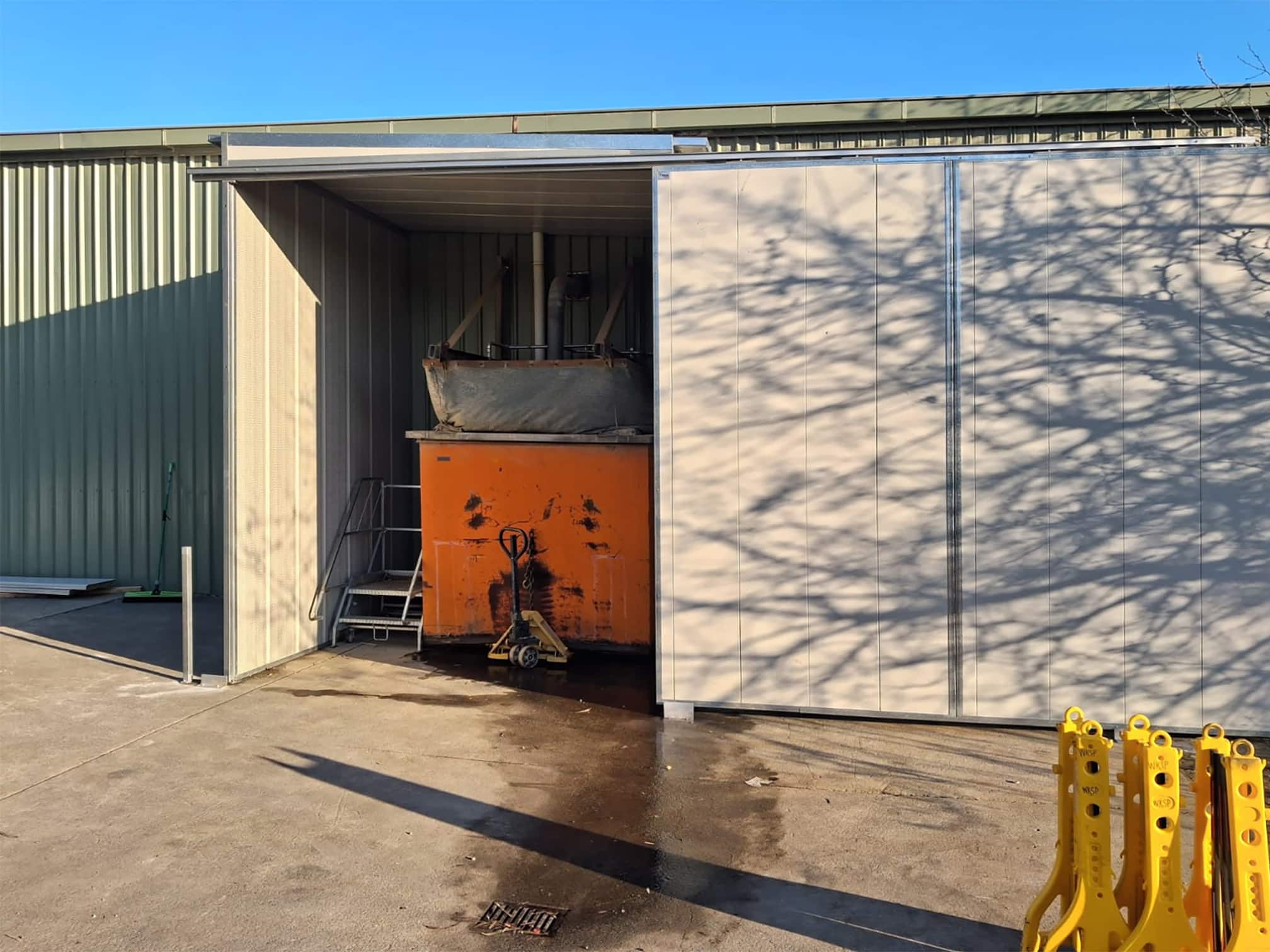
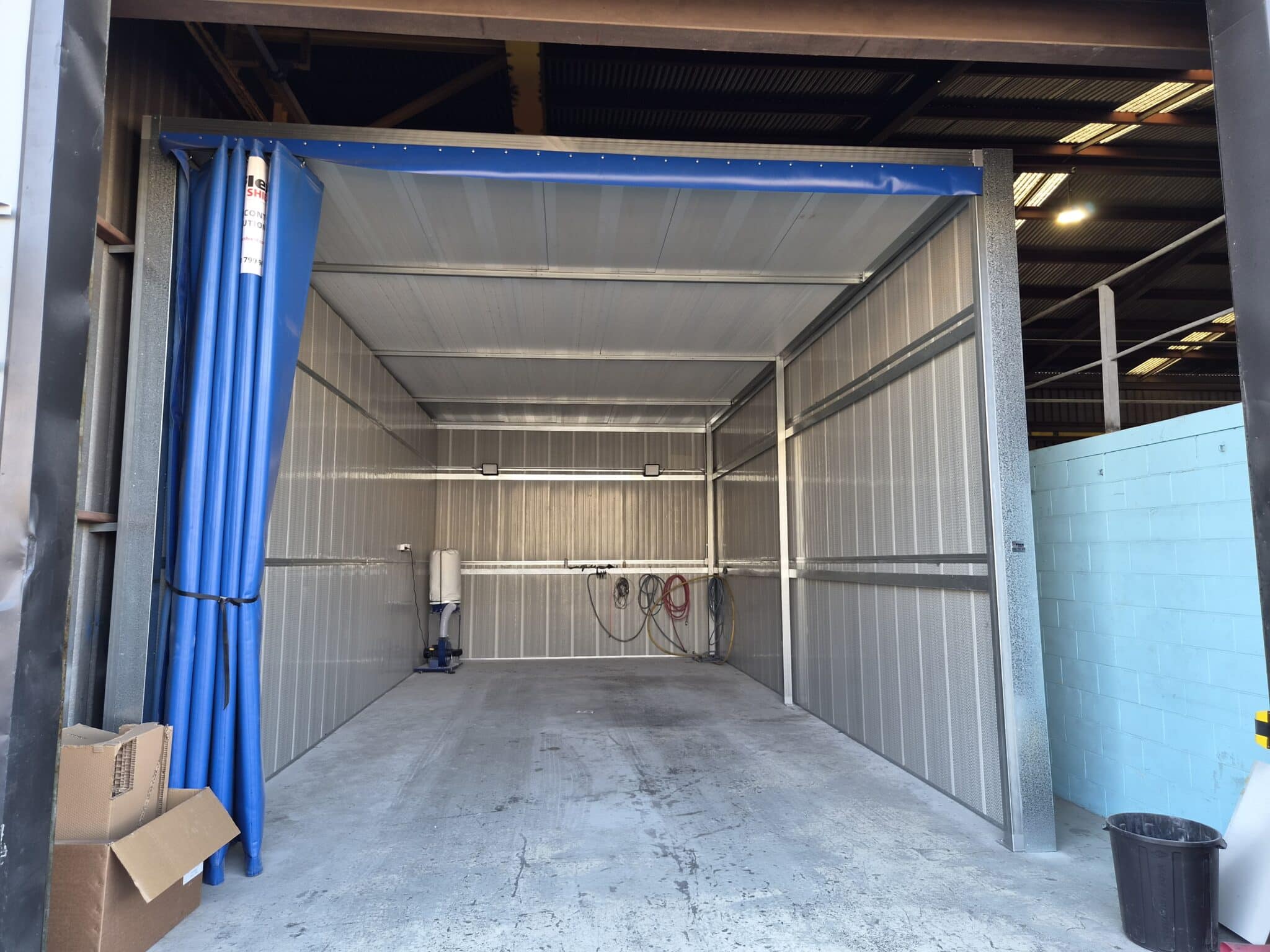
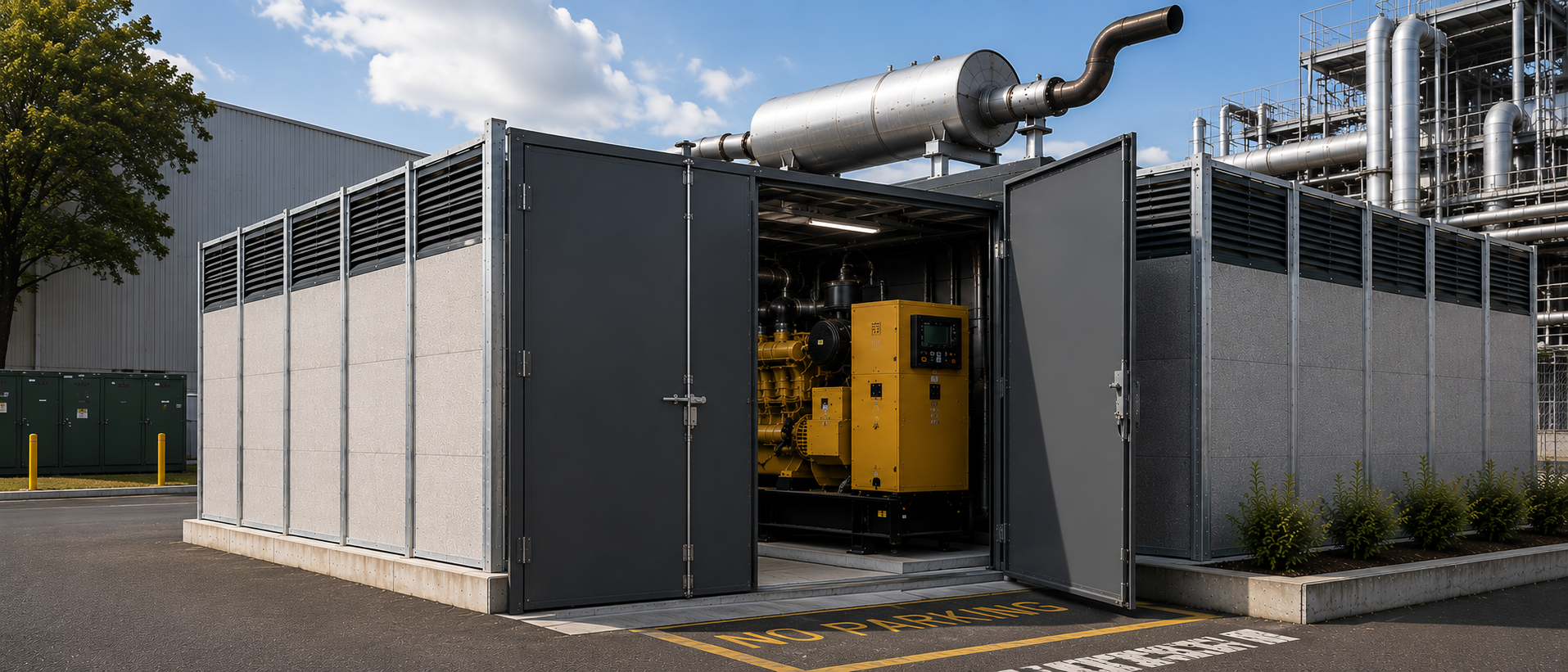
For diesel backup generators, acoustic enclosures are the standard control approach. A generator acoustic enclosure wraps around the unit to contain noise while maintaining the ventilation airflow the engine requires to operate safely.
Enclosure performance is typically expressed as insertion loss, measured in decibels. The required insertion loss depends on the ambient noise targets, the distance to the nearest receptor and the base noise level of the generator. A qualified acoustic consultant should specify the required performance before an enclosure is procured.
For generators that cannot be fully enclosed, partial enclosures or acoustic barriers placed on the noisiest faces of the generator can provide meaningful attenuation while maintaining access requirements.
Acoustic attenuators for ventilation and ductwork
HVAC attenuators are used to reduce noise that travels through ductwork and ventilation openings. They are lined channels or splitter arrays that dissipate sound energy as air passes through, reducing noise that exits at grilles, louvres, or openings.
In data centre applications, acoustic attenuators are commonly used on generator exhaust ventilation pathways, cooling unit air intakes and exhaust routes, and on air handling unit supply and return ducts. Selecting an attenuator with appropriate pressure drop characteristics ensures that airflow performance is not compromised.
Anti-vibration isolation
For equipment that generates structural noise, anti-vibration mounts and inertia bases are used to break the transmission path between the equipment and the building structure. This is standard practice for generators, large pumps and air handling units.
Where vibration isolation is already in place but noise levels remain problematic, it is worth reviewing whether the isolation mounts have degraded or are being bypassed by rigid connections such as pipework or conduit.
Early planning and acoustic modelling
For new data centre developments or significant capacity expansions, noise control is best addressed at the planning stage. An acoustic consultant can model expected noise levels based on the proposed equipment schedule and site layout, identify the most significant sources, and recommend control measures before construction begins.
This approach is more cost-effective than retrofitting noise control measures after construction, and avoids the risk of failing to meet planning consent conditions at commissioning.
Data centres in Australia are typically required to comply with noise conditions attached to their development approval or planning permit. These conditions usually specify a maximum noise level at the nearest residential or noise-sensitive receptor, measured in accordance with relevant state environmental protection policies or EPA guidelines.
Tonal and impulsive noise components are often penalised under these guidelines. This means that transformer hum and periodic mechanical transients may need to meet lower absolute levels to achieve compliance than broadband noise.
As data centres expand capacity, the cumulative noise impact of additional plant can push a facility toward or beyond its noise limits. Managing this incrementally, by assessing the noise contribution of each new piece of equipment before it is installed, is preferable to addressing a compliance problem after the plant is commissioned.
If your data centre is generating noise complaints or approaching compliance limits, a structured approach to noise source identification and control delivers the best outcomes. Starting with a noise survey to characterise the current situation gives you the evidence base to prioritise control measures and make the case internally for investment.
Flexshield works with data centre operators, facility managers, and acoustic consultants across Australia to supply acoustic barriers, enclosures and attenuators suited to a wide range of applications.
We’ll make sure it’s built right from the start. Contact Flexshield on 1300 799 969 or get in touch online.
Proudly built by Flexshield Group
Designed to perform. Built to last.