
Call 1300 799 969 | Contact Us
Home » Why Australian data centres need acoustic barriers around external plant and equipment
Data centres sit at the heart of Australia’s digital economy. And as demand for cloud computing, colocation, and enterprise infrastructure grows, so does the scale of facilities that are being built across metropolitan and regional Australia.
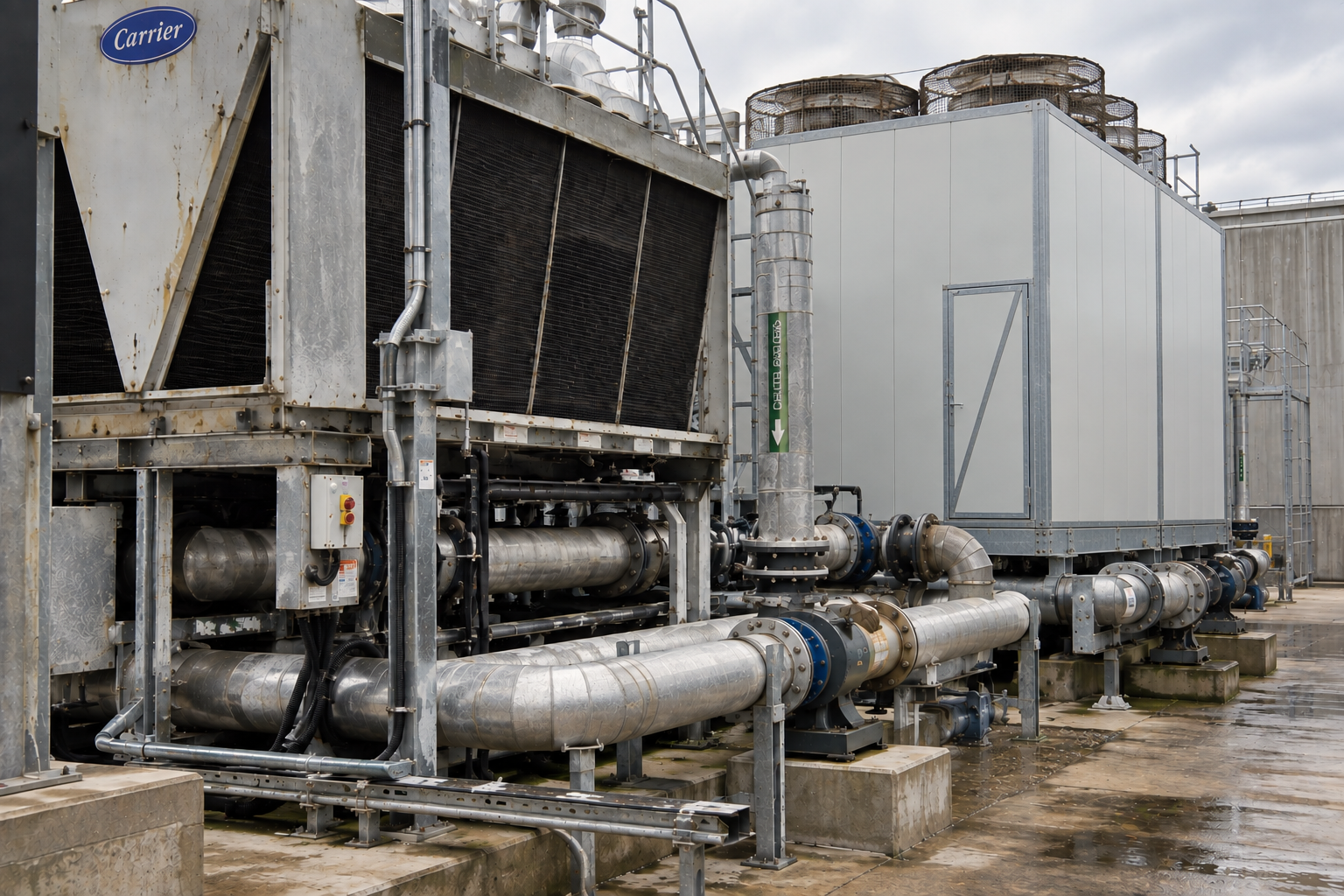
What often receives less attention during planning is the noise impact of all that external plant. Cooling towers, chillers, backup generators, and HVAC equipment run continuously, generating noise levels that can conflict with limits set by state environment regulators and local councils.
Managing this noise is not optional. Data centre operators who fail to address it face compliance notices, project delays, and strained relationships with neighbours. Acoustic barriers have become a standard part of data centre design – and for good reason.
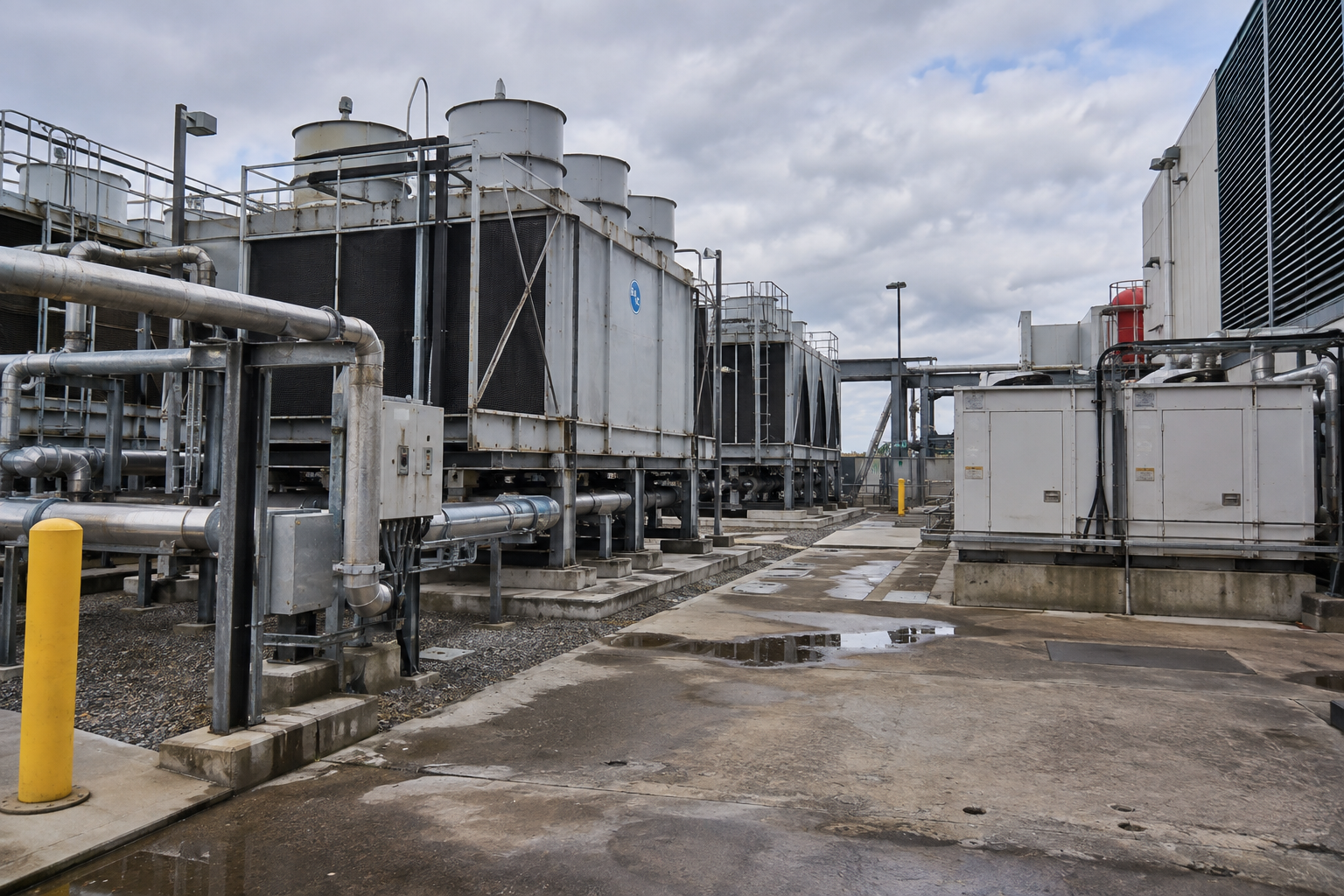
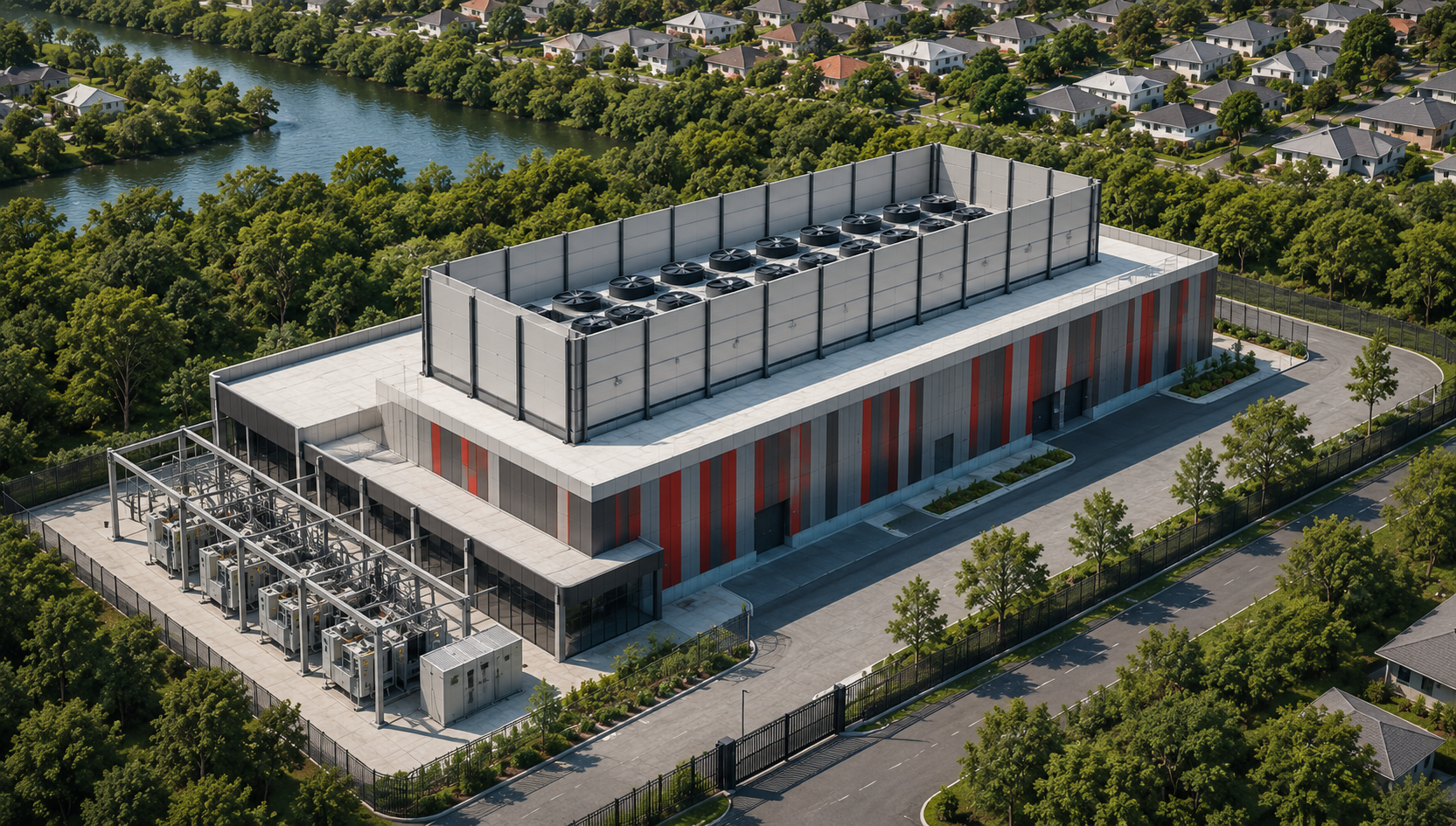
The scale of mechanical plant on a modern data centre is considerable. A single large facility might run dozens of cooling towers, multiple backup generator sets, large air handling units, and cooling fans across rooftop and ground-level equipment. Each of these is a noise source, and in combination they create a noise environment that requires targeted acoustic management.
Cooling towers produce broadband noise from fan motors, water fill, and air discharge. Large towers can generate noise at 70 to 80 dB(A) at one metre. Where multiple towers operate in parallel, as is common in hyperscale facilities, the cumulative effect is significant.
Chillers add mechanical compressor noise that tends to be lower frequency and can travel further than higher-frequency fan noise. This makes chillers particularly challenging at boundaries where low-frequency noise limits apply.
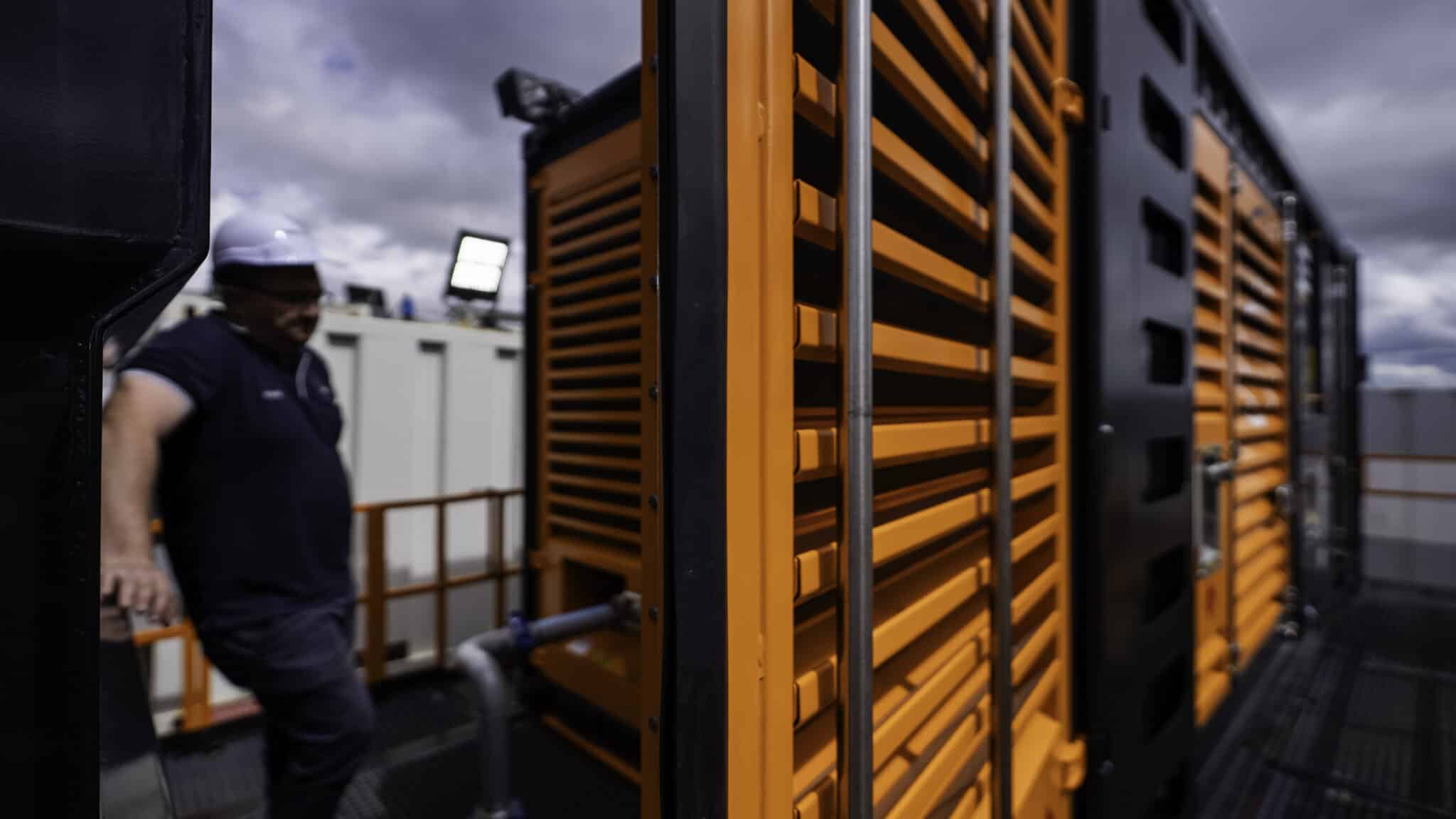
Standby generator sets are mandatory at most data centres. These are large diesel or gas units that undergo regular load testing, often weekly or monthly. Generator exhaust and mechanical noise during testing can exceed 100 dB(A) at one metre and must be managed carefully to avoid exceeding EPA noise limits at nearby residential or commercial receptors.
Even without testing, generators at idle emit noise from cooling fans and mechanical movement that contributes to background noise levels at the site boundary.
Data centre HVAC systems run constantly. Air handling units, condenser fans, and ventilation equipment on rooftops or building facades generate tonal and broadband noise that can be audible to neighbours, particularly at night when ambient noise levels drop and EPA night-time limits apply.
Unlike many industrial facilities that operate on fixed shifts, data centres run 24 hours a day, seven days a week. This means there is no quiet period. Equipment noise at 2:00 am is just as significant from a compliance standpoint as noise at midday – and night-time noise limits are typically stricter than daytime limits under Australian EPA standards.
Data centres are also increasingly located in areas adjacent to residential neighbourhoods, commercial precincts, or mixed-use zones where receptors are nearby and sensitive. Metropolitan sites are subject to stringent noise conditions as part of their development approval.
As facilities expand with additional cooling capacity, generator sets, or new equipment halls, each upgrade can require a fresh noise assessment and potentially new acoustic treatment. Operators who do not plan for acoustic management from the beginning often find themselves retrofitting barriers at greater cost and complexity.
Noise limits for data centres in Australia are set at a state level by environment protection authorities and at a local level through development approval conditions.
In most states, the relevant framework requires operators to demonstrate that noise from plant and equipment does not exceed defined limits at the nearest sensitive receptors (typically residential premises). These limits vary by time of day, with stricter requirements applying between approximately 10:00 pm and 7:00 am.
New South Wales uses the Industrial Noise Policy framework administered by the NSW EPA. Victoria applies the State Environment Protection Policy (SEPP N-1). Queensland uses the Environmental Protection (Noise) Policy. Each sets criteria for both intrusive noise and background noise exceedances.
Compliance evidence is typically required at both the development approval stage and during operation. Operators who have received EPA noise complaints or compliance notices need to demonstrate that remediation measures have addressed the issues, and that ongoing monitoring confirms compliance.
Acoustic barriers work by intercepting the line of sight between a noise source and a receiver. When a barrier is placed between cooling towers or generator sets and the nearest sensitive receptor, it reduces direct noise propagation and can provide significant attenuation, depending on barrier height, mass, and proximity to the source.
For data centres, this typically means installing barriers around the perimeter of plant areas, around individual equipment items, or as screening panels positioned to block the main noise pathway to nearby receptors.
The performance of an acoustic barrier depends on positioning. A barrier must be tall enough and close enough to the noise source to create an adequate acoustic shadow zone. For cooling towers, ground-mounted barriers positioned within three to five metres of the tower are generally more effective than distant perimeter fencing.
For rooftop plant, parapet walls or purpose-built acoustic screens around the equipment provide attenuation without restricting air flow, which is important for equipment performance and thermal management.
PVC-based acoustic barriers offer several advantages at data centres. They are durable in outdoor conditions, resistant to UV and moisture, and can be installed and reconfigured without heavy machinery. For temporary noise management during construction phases or generator load-testing events, portable PVC acoustic barriers can be deployed and repositioned as required.
For permanent installations, modular acoustic panels such as the Flexshield Sonic System provide a professionally engineered option with documented acoustic performance. These panels are NATA-accredited for acoustic testing and are manufactured in Australia, making them appropriate for projects that require certified performance data to satisfy development conditions or EPA requirements.
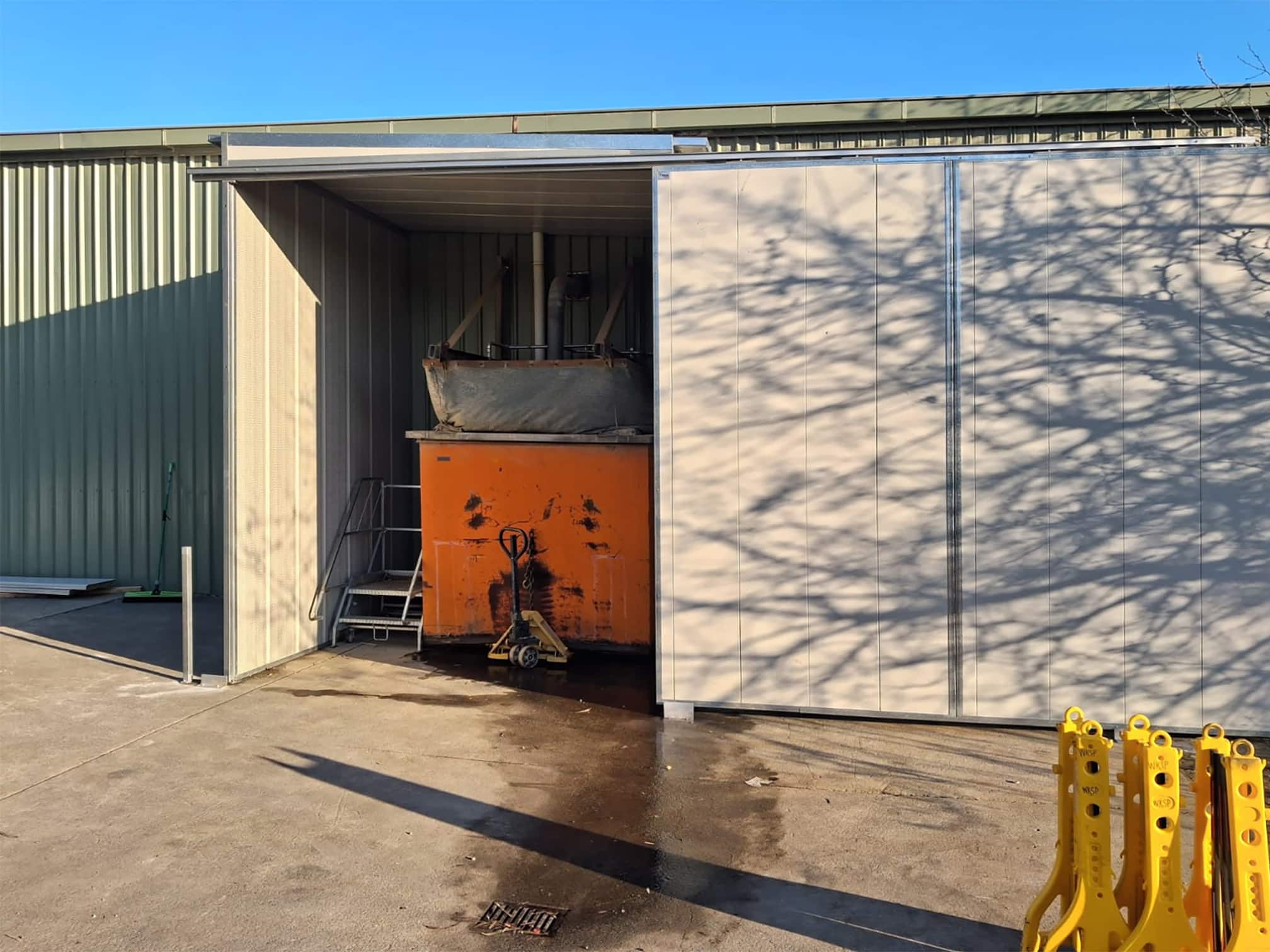
For some equipment at data centres, a free-standing acoustic barrier provides adequate attenuation. For other items – particularly high-noise items like generators or large compressors – a full acoustic enclosure may be required.
An acoustic barrier is effective where reducing noise in one or two directions is sufficient to achieve compliance at the receptor. By contrast an enclosure wraps around the equipment on all sides, dramatically reducing noise at all azimuths but also requiring careful design to maintain ventilation and access.
At data centres, the choice between a barrier and an enclosure typically comes down to the noise level of the source, the proximity and distribution of sensitive receptors, and whether the barrier can achieve the required attenuation within the constraints of the site.
A noise assessment by a qualified acoustic consultant will determine what level of treatment is needed. Once the requirement is established, Flexshield can supply either barriers or enclosures designed to meet the specified insertion loss targets.
Many data centre noise control challenges arise because acoustic management was never integrated into the original design. Adding cooling capacity, new generator sets, or additional HVAC plant can push a facility over its noise limits, requiring retrofitting of acoustic barriers or other treatment.
The most practical approach is to consider acoustic management as part of the infrastructure design process. When new plant is being specified, the noise output of that plant should be factored into the acoustic assessment. Where a facility is designed for staged expansion, the acoustic management framework should account for the noise contribution of future equipment additions.
This is relevant for data centres that are planning significant capacity upgrades over a five to ten year period. Building acoustic infrastructure that can accommodate future plant, rather than treating each expansion as a separate noise problem, reduces cost and complexity over the long term.
Flexshield supplies a range of acoustic products suited to data centre applications, including modular acoustic panels, PVC acoustic barriers, acoustic louvres, and custom acoustic enclosures. All our products are designed for the conditions typical of Australian data centre sites, including exposure to weather, UV, and continuous operation.
Flexshield works with acoustic consultants, facilities managers, and data centre operators to supply the right product for each application. Whether you require a temporary barrier for generator load testing, or a permanent acoustic screen around a cooling plant area, Flexshield can supply and fabricate products to specification.
We’ll make sure it’s built right from the start. Contact Flexshield on 1300 799 969 or get in touch online.
Proudly built by Flexshield Group
Designed to perform. Built to last.