Staying ahead of noise complaints on Australian construction sites
Construction projects generate noise. That’s accepted as part of the built environment. But managing that noise within development approval conditions, council requirements, and community expectations is one of the more consistent challenges project managers and site supervisors face across Australian construction.
Most sites have conditions attached to their approvals that specify noise limits, permitted working hours, and sometimes monitoring requirements. Meeting those conditions while maintaining programme productivity is not always straightforward.
Why construction noise compliance is harder than it looks
Construction activities produce noise across a wide frequency range. And excavation, concrete cutting, steel fabrication, material delivery, and plant operation all contribute simultaneously. The challenge is not just the absolute level of noise, but its character.
Tonal noise and impulsive sounds are more noticeable to nearby residents than continuous background noise at equivalent decibel levels. Sites close to residential areas, schools, healthcare facilities, or hospitality precincts attract the most scrutiny, even when measured levels are within permitted limits.
Complaints from neighbouring properties can lead to council investigations, monitoring requests, and in some cases, restrictions on working hours that affect programme delivery. And the cost of non-compliance is rarely limited to fines. Delays, strained community relationships, and retrofitted acoustic measures mid-project are the consequences that affect projects most.
Common sources of noise complaints on construction sites
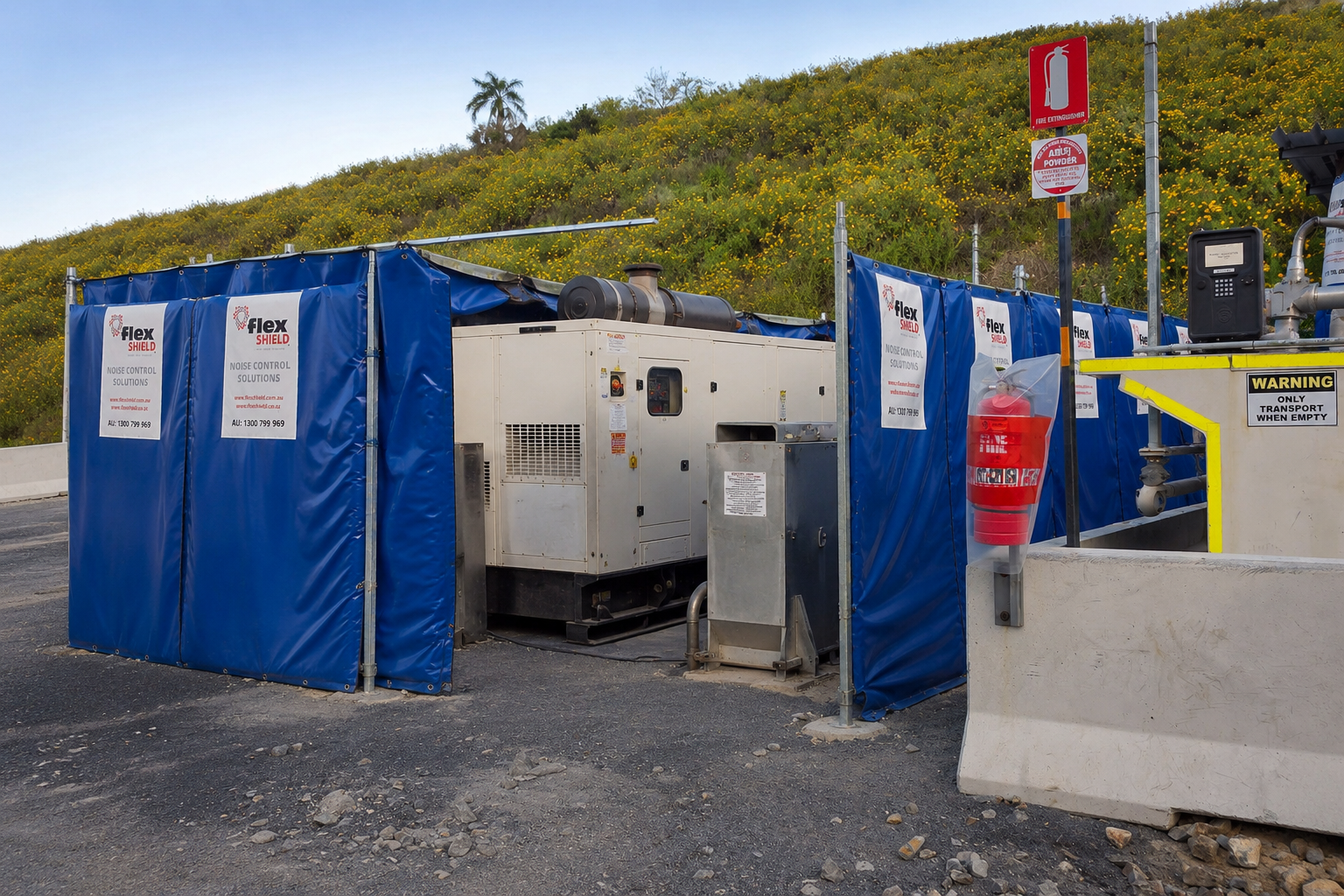
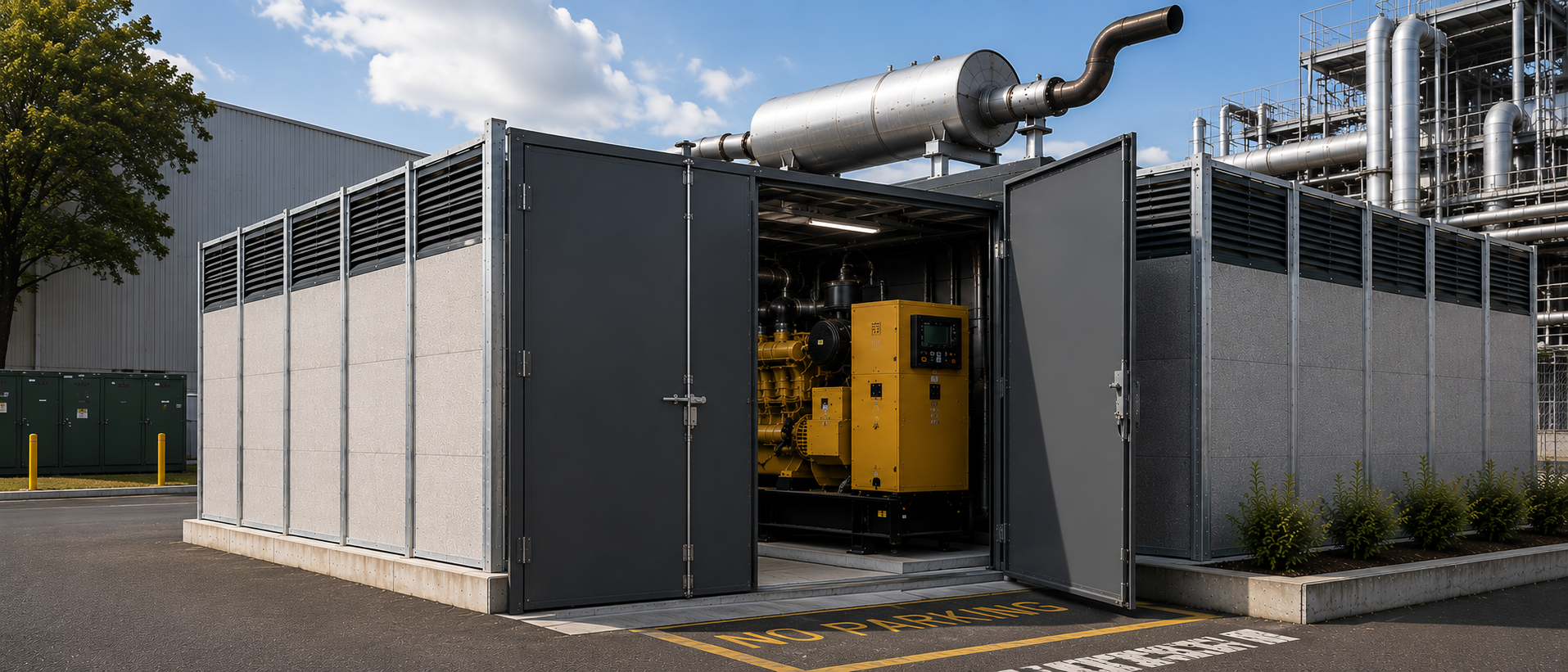
Generators are one of the most frequently cited sources of construction noise complaints in Australia. They operate for extended periods, are often positioned near site boundaries or access points, and produce consistent mechanical noise that surrounding areas find difficult to ignore. Low-frequency output from generator engines travels further than high-frequency noise and can penetrate buildings.
Concrete saws and angle grinders create sharp, intermittent noise that is particularly noticeable during quieter periods. Mobile plant such as excavators, concrete pumps, and delivery vehicles contribute throughout the working day.
Piling and rock breaking activities attract the most community responses because of their impulsive character. Even where absolute noise levels are within permitted limits, repetitive impact noise generates complaints. Early engagement with neighbours before these works commence reduces the volume of complaints significantly.
The importance of managing noise proactively rather than reactively
The most practical approach to construction noise compliance is to plan acoustic management into the project from the start. Waiting for complaints to arrive before taking action creates more pressure, more cost, and more disruption to programme.
Temporary acoustic barriers around generator compounds, noisy plant areas, and site boundaries reduce noise transfer to neighbouring properties before the work begins. Flexshield’s Sonic System acoustic modular panels are used across Australia as construction site noise barriers for temporary noise control. Because the panels are modular, they can be configured for specific areas and reconfigured as site layouts change across the life of the project.
Sonic System panels are fire rated to FRL -/120/-, which is relevant on construction sites where adjacent works or temporary structures are present. The V100 panel achieves independently tested Rw 37dB. The V100SP achieves Rw 45dB where higher performance is required.
Acoustic curtains for flexible temporary noise control
Where barriers need to be erected and removed quickly, or where access requirements make modular panels impractical, acoustic curtains offer a faster installation option. Sonic acoustic curtain products are independently tested to Rw 27dB (4kg) and Rw 30dB (6kg), providing proven airborne noise reduction across work areas.
Curtains can be suspended from existing structures, temporary overhead rails, or scaffold frames. They are particularly useful for enclosing noisy operations that move around the site, or for providing temporary separation between active work areas and quieter zones.
The importance of record-keeping and community communication
Good records are vitally important on construction sites. Documenting noise levels at key monitoring points, noting when and where complaints were received, and recording which acoustic measures were in place at any given time creates a defensible position if compliance issues are raised.
Communicating with nearby residents and businesses before and during noisy periods can also help to reduce the volume of complaints. People tend to be more tolerant of construction disruption when they have been informed in advance and have direct contact to express any concerns.
Get expert advice on meeting EPA noise regulations for construction
Most construction noise compliance issues are manageable. Those that escalate tend to be situations where acoustic risks were underestimated at the planning stage, and no construction noise management was in place when works commenced.
We’ll make sure it’s built right from the start. Contact Flexshield on 1300 799 969 or get in touch online.
Proudly built by Flexshield Group
Designed to perform. Built to last.