
Call 1300 799 969 | Contact Us
Home » How acoustic screens help data centres meet noise compliance requirements
Cooling towers, chillers, dry coolers, backup generators, and electrical transformer infrastructure run continuously, often 24 hours a day, seven days a week. As data centres grow in scale and move closer to residential and commercial areas, the noise produced by this external plant and equipment has become one of the most scrutinised aspects of site compliance.
Acoustic screens are one of the most widely used tools for managing this challenge. When specified correctly and installed to suit the site, they can significantly reduce noise levels reaching neighbouring receivers and support the noise assessment requirements that accompany planning applications and operational permits.
Noise compliance for data centres is governed at a state level in Australia, with requirements typically flowing through the Environmental Protection Act in each jurisdiction and supported by guidelines such as the NSW Industrial Noise Policy, the Victorian Noise Protocol for Industry, and equivalent frameworks in Queensland, Western Australia, and South Australia.
These frameworks set limits on noise received at neighbouring properties, typically expressed as LA90 dB(A) levels measured over defined time periods. Many data centre sites are also subject to specific conditions attached to their development consent or environmental authority, which may include maximum permissible noise levels at defined assessment locations.
The challenge for data centre operators is that noise requirements are set at the receiver, rather than the source. It does not matter how loud the equipment is at the source; what matters is how much noise reaches the nearest residential dwelling, commercial premises, or sensitive land use. This means the compliance path often comes down to the effectiveness of noise attenuation between the plant and the boundary.
Understanding the noise sources on a data centre site is the first step in identifying where acoustic screens will provide the most benefit.
Cooling equipment
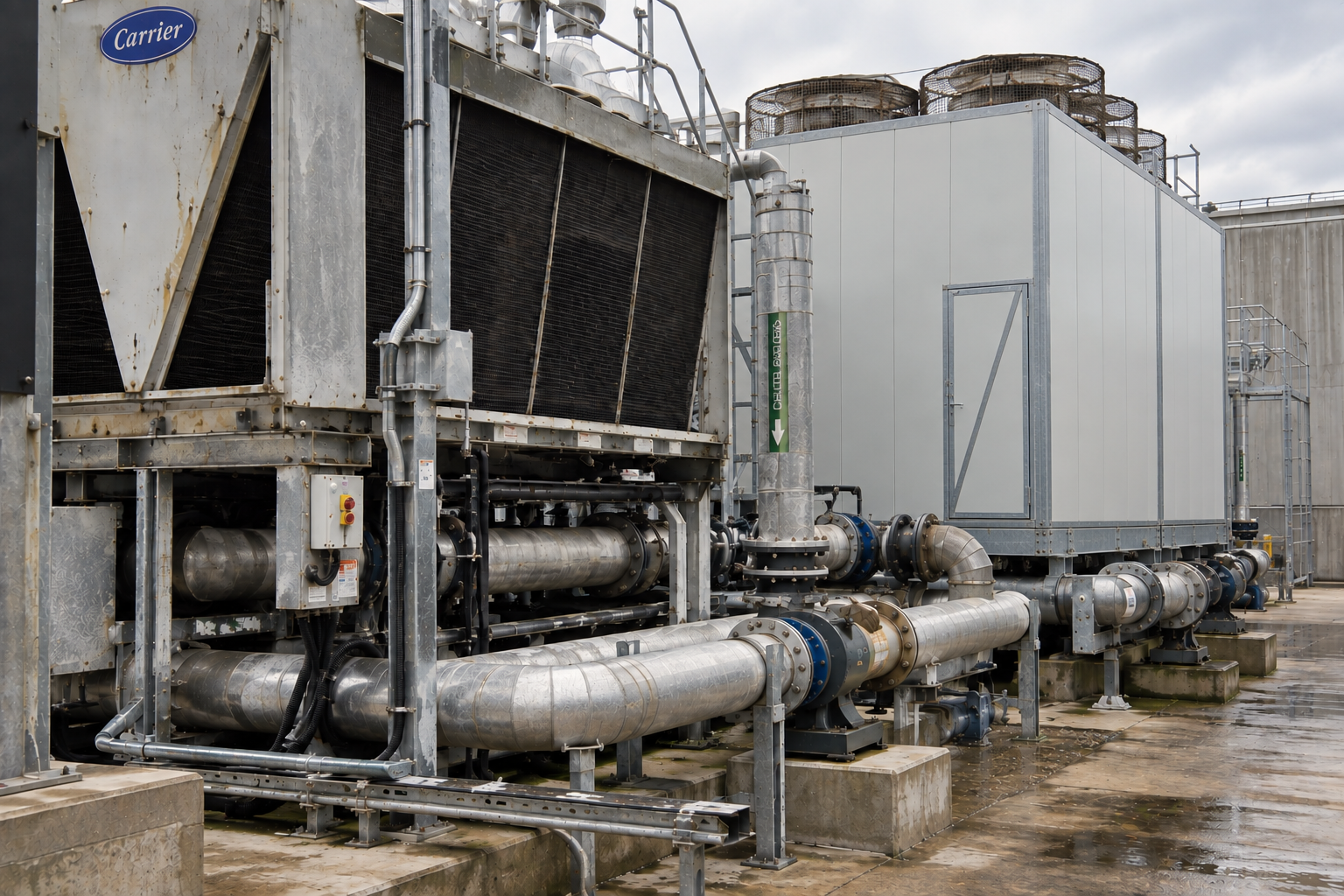
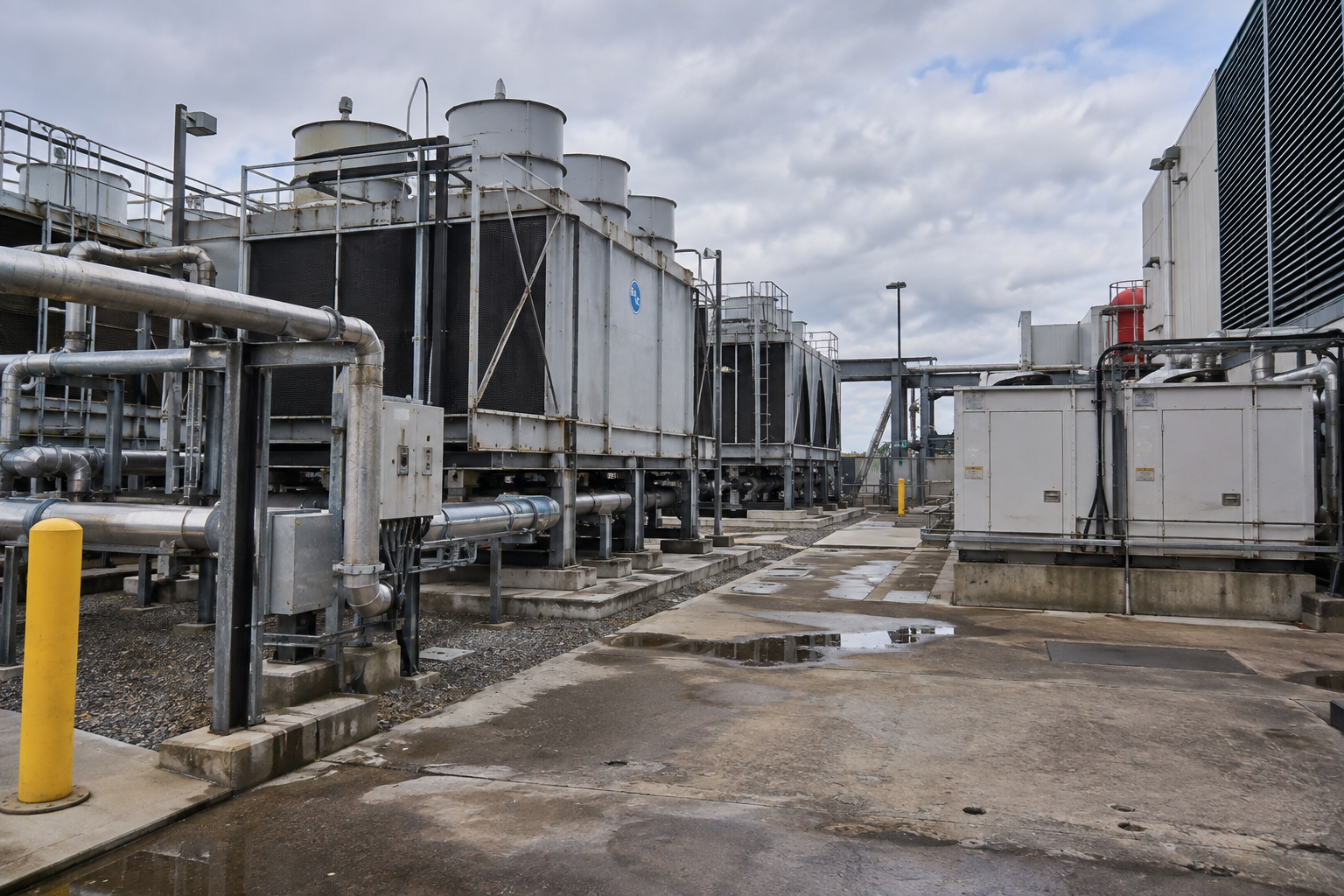
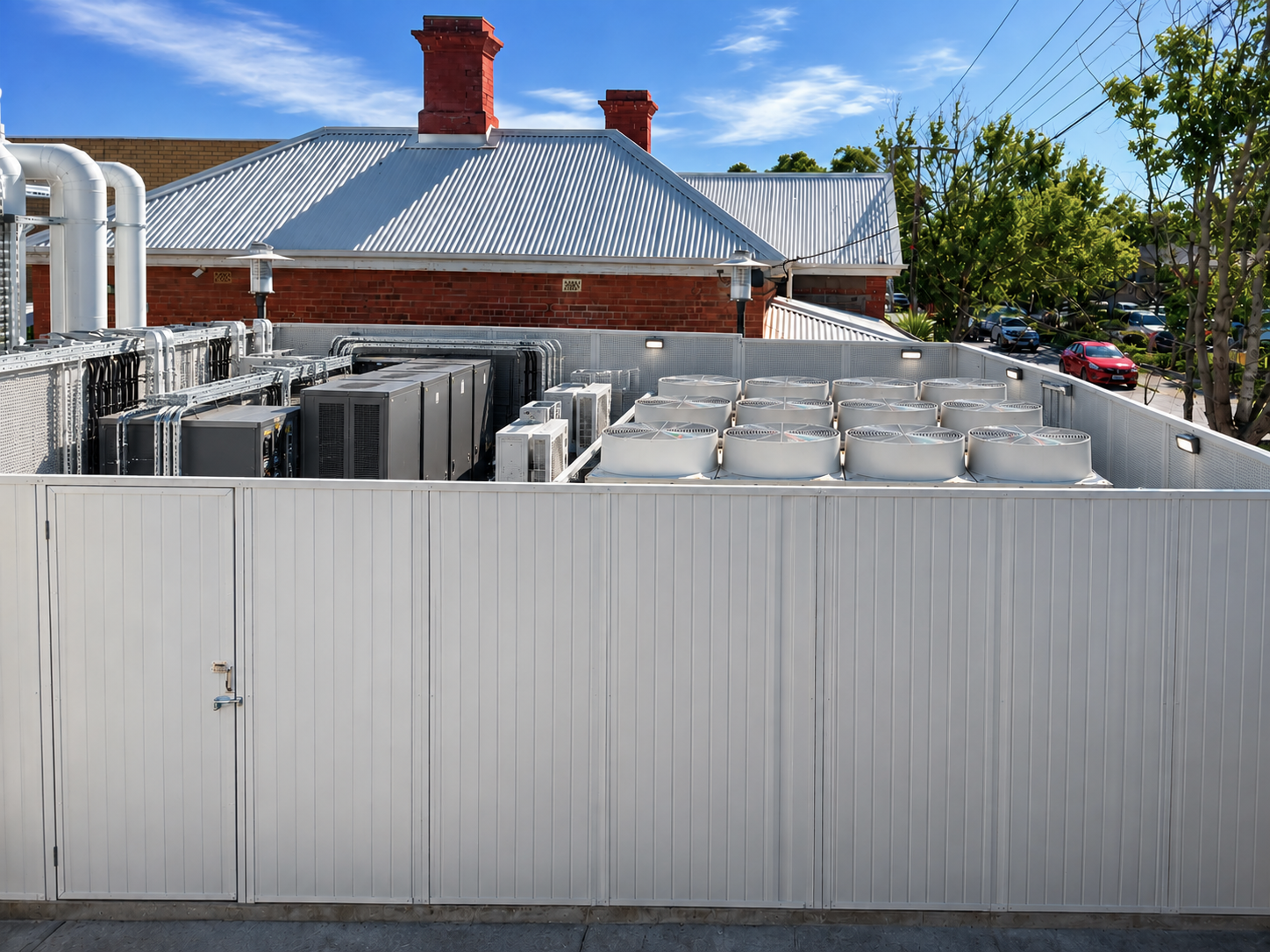
Cooling infrastructure is typically the dominant noise source on a data centre site. Air-cooled chillers, dry coolers, cooling towers, and Computer Room Air Conditioning (CRAC) units all produce significant broadband noise, often with tonal components that can be particularly disruptive at lower frequencies. As artificial intelligence workloads increase the power density requirements of modern data centres, cooling systems are scaling up accordingly, and so is the noise they produce.
Backup power systems
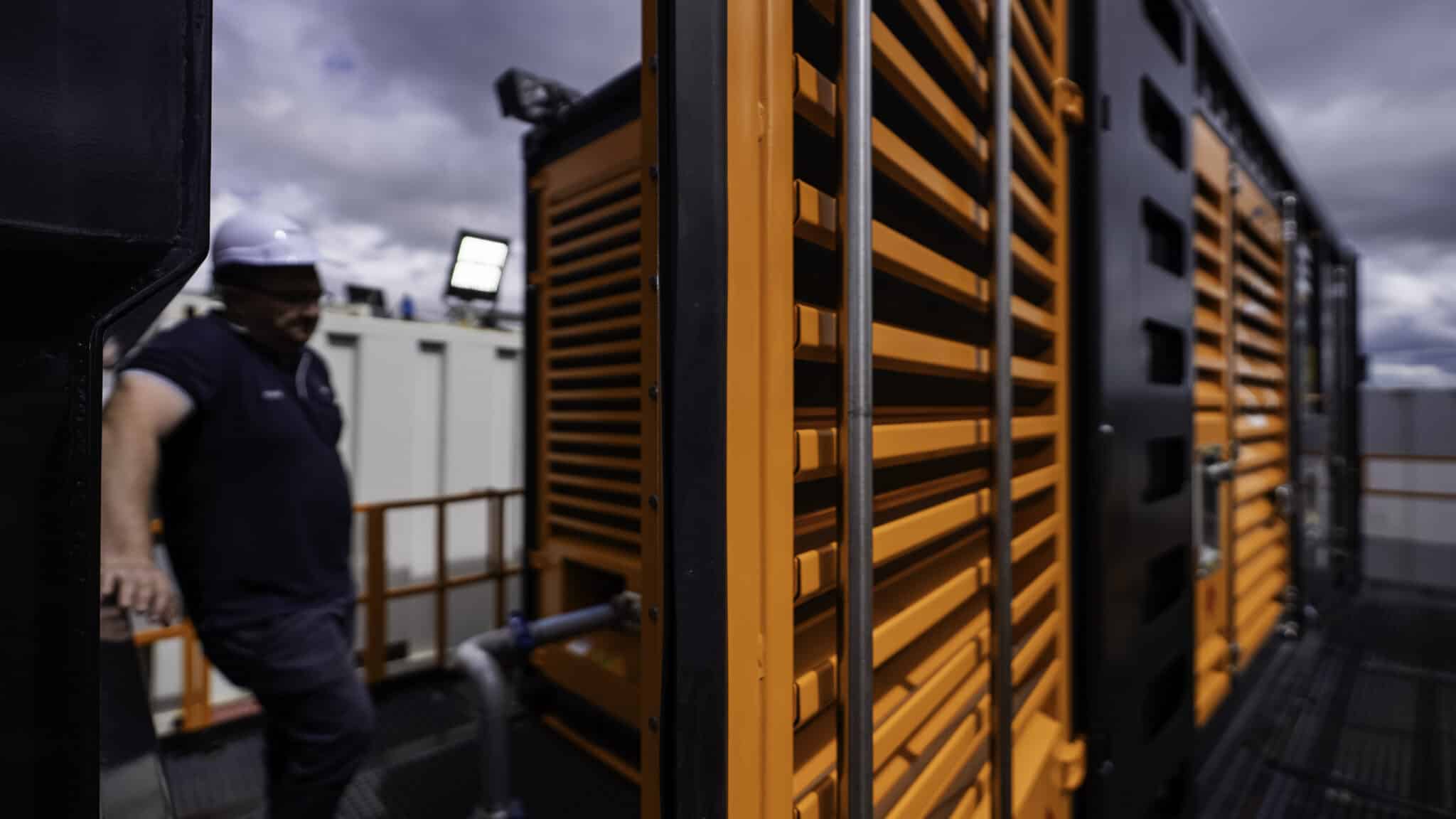
Diesel and gas-powered generators are a standard feature of data centre backup power infrastructure. During monthly test runs or unplanned outages, these systems can produce noise levels that significantly exceed the ambient environment, particularly on sites near residential areas. Generators are often clustered in groups for large facilities, compounding the cumulative noise output.
Electrical infrastructure
Transformers, Uninterruptible Power Supply (UPS) units, and switchgear can also contribute to the site noise profile. Transformers in particular produce a continuous low-frequency hum at 100 Hz and its harmonics, which can be difficult to attenuate and has a tendency to travel further than higher-frequency noise.
What acoustic screens do, and how they work
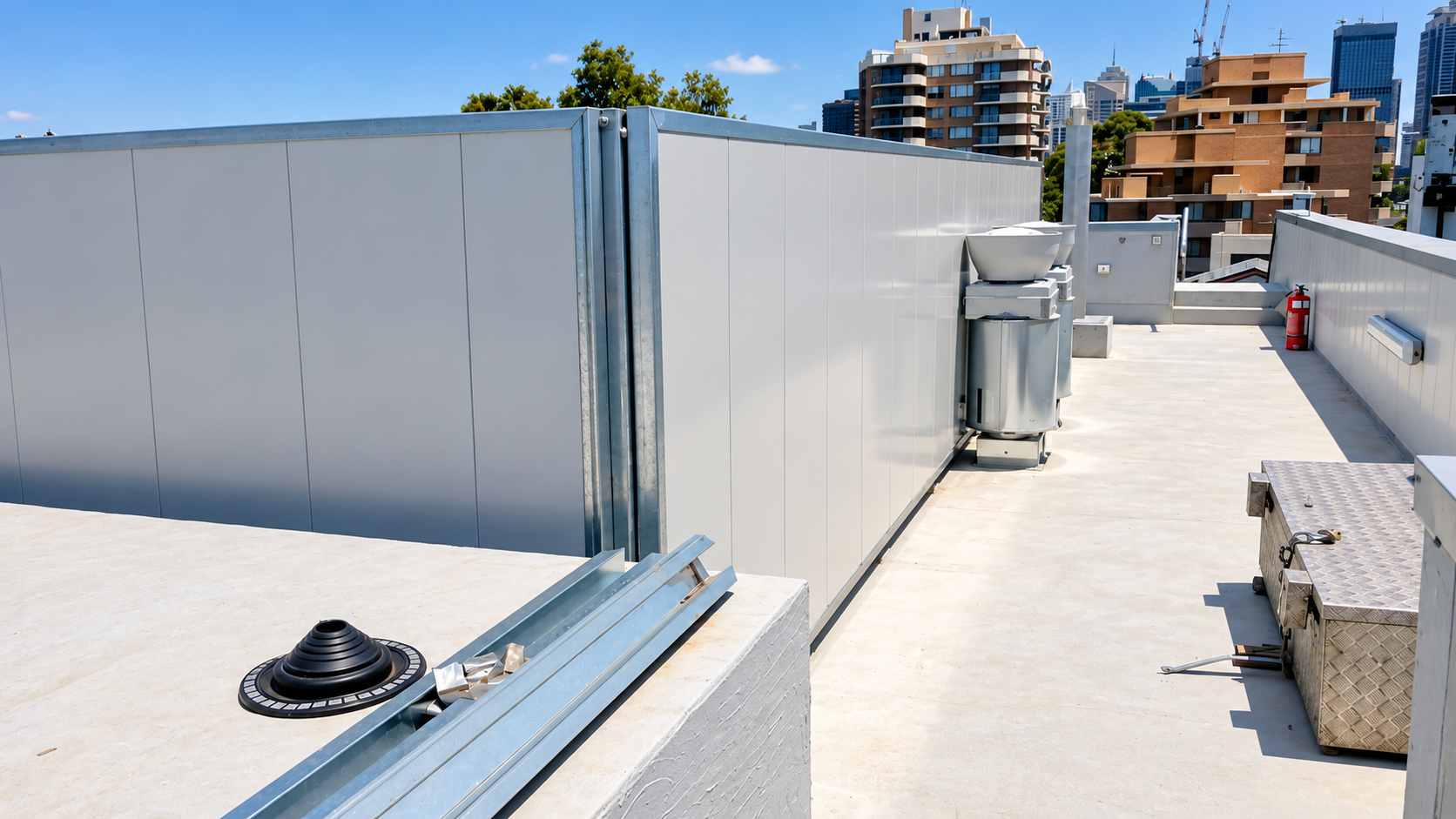
Acoustic screens work by intercepting the line of sight between a noise source and a receiver. When a noise source can no longer be seen directly by the receiver, sound must travel over or around the barrier, which introduces additional path length and attenuation.
The amount of attenuation provided by a screen depends on several factors, including the height of the screen relative to the source and receiver, the distance from the source to the screen, the distance from the screen to the receiver, and the acoustic performance of the screen panels themselves.
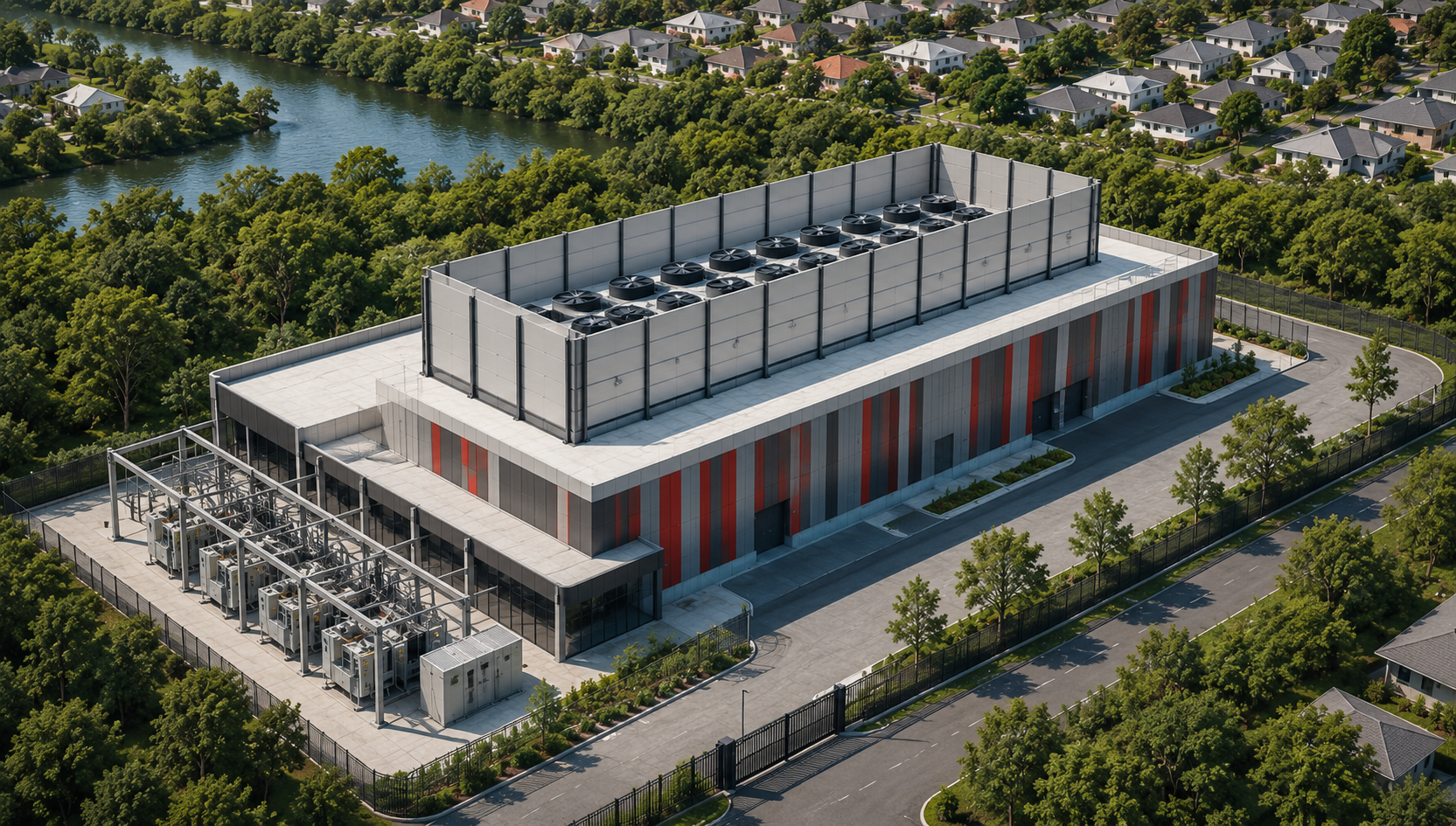
For most data centre applications, acoustic screens are positioned close to the external plant they are shielding. This close-source placement maximises the insertion loss available from a given screen height and is typically the most practical approach on constrained urban sites.
Screen panels need to provide sufficient sound transmission loss to prevent noise from passing directly through the panel rather than over or around it. Industrial acoustic screen panels with tested and NATA-accredited performance ratings are recommended, as independently verified insertion loss data provides confidence that the product will perform as expected in the field.
Acoustic screens for data centres typically come into play in three distinct scenarios:
1) Meeting planning and development approvals
New data centre developments in Australia routinely require an acoustic assessment as part of the environmental impact assessment or development application process. Where noise modelling identifies that predicted levels at neighbouring receivers will exceed the applicable noise limits, acoustic screens are often the first mitigation measure that’s considered.
Acoustic screens are particularly valued in this context because they can be modelled with a relatively high degree of certainty, and their attenuation performance is well understood by acoustic consultants and consent authorities alike.
2) For ongoing operational compliance
Sites that have been operating for some time may find that capacity expansions, new equipment additions, or changes to the surrounding land use create new compliance challenges. A data centre that was originally located in an industrial precinct may now be bordered by residential development, which brings lower noise limits and a higher level of community sensitivity..
In these situations, acoustic screens can be retrofitted around existing equipment or installed as part of a proactive upgrade programme to ensure the site remains within its consent conditions.
3) During site expansion and capacity growth
The hyperscale data centre sector in Australia is growing rapidly, with major developments underway in outer metropolitan locations around Sydney, Melbourne, and Perth. As facilities expand from initial builds to full campus scale, the noise profile of the site changes significantly. Planning a modular acoustic screening approach from the outset means the screens can be extended progressively as new plant is added, without requiring a full redesign each time.
Not all acoustic screens are created equal. The following factors are worth considering when evaluating acoustic screen options for a data centre application.
Insertion loss requirements
The acoustic consultant engaged for the site assessment should be able to specify the minimum insertion loss required from the screen at each frequency octave band. Acoustic screen panels should be selected with tested insertion loss performance that meets or exceeds this requirement. NATA-accredited test data provides the most reliable basis for product selection, as it confirms that the product has been independently assessed under standardised conditions.
Panel construction and durability
Data centres are designed to operate continuously for many years. That means acoustic screens on these sites need to perform reliably over a long service life with minimal maintenance. Industrial acoustic screen panels constructed from steel or aluminium cladding with a mineral wool or similar acoustic infill are well suited to this environment. Panels should be corrosion-resistant and capable of withstanding the specific environmental conditions of the site, including exposure to weathering, wind loading, and any cooling tower moisture drift that may be present.
Maintenance access
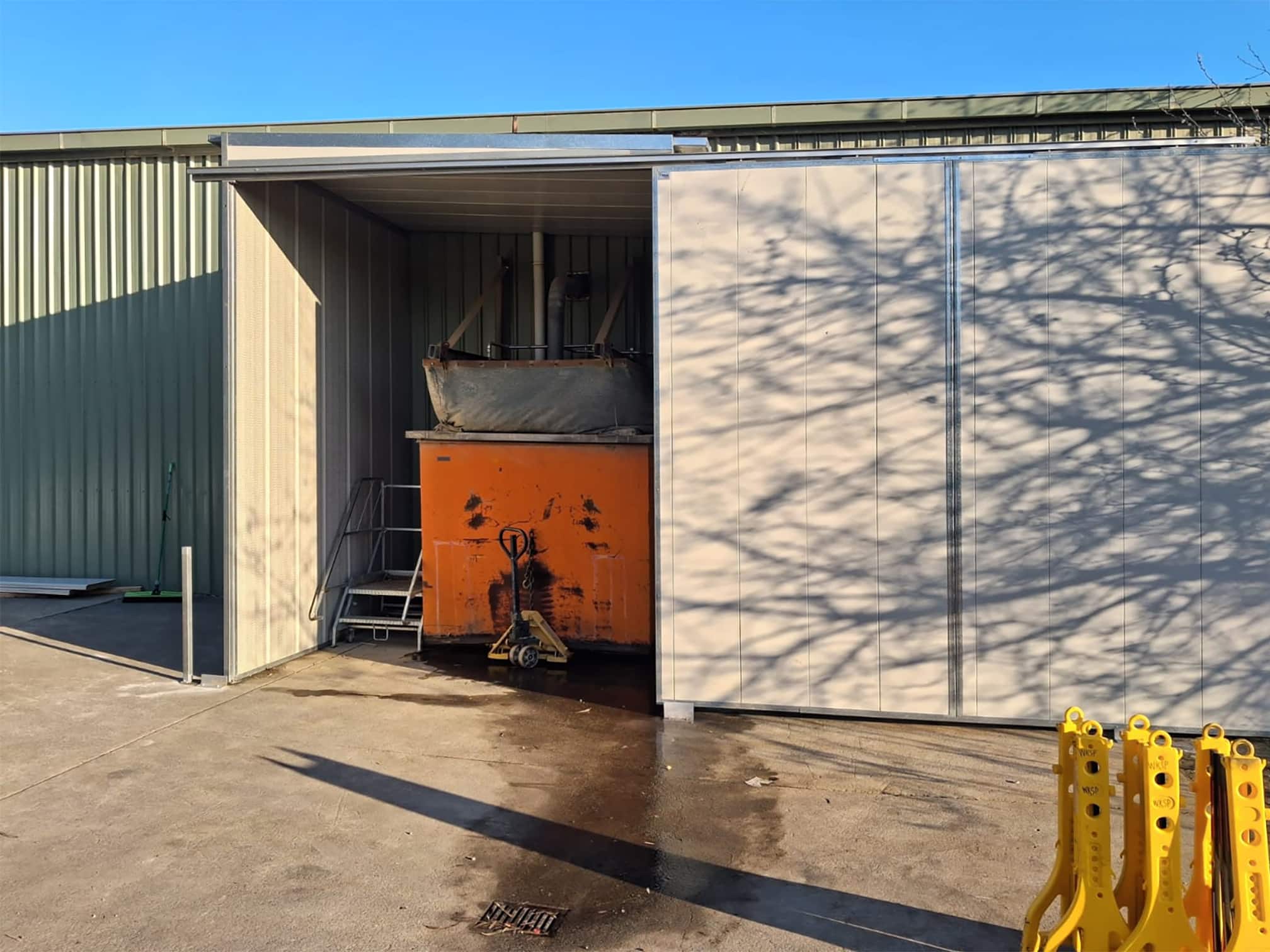
External plant and equipment requires periodic maintenance, and acoustic screens must be designed to accommodate this. Screens that completely surround plant enclosures need to incorporate access gates or removable panels at appropriate intervals. The acoustic performance of these access points should be considered in the overall screen design, as gaps or poorly sealed doors can significantly reduce the effective attenuation of an otherwise well-designed screen.
Modular design for future growth
Given the rapid growth trajectory of the data centre sector, selecting a modular acoustic screen that can be extended, reconfigured, or added to without requiring specialist labour or custom fabrication can offer significant long-term value. Modular panel and post systems allow screens to be adjusted as site layouts evolve and new equipment is commissioned.
Flexshield manufactures and supplies a range of acoustic screens and barriers for industrial applications across Australia, including sites in the data centre, utilities, power generation, and resources sectors.
All Flexshield acoustic products are NATA-accredited tested, Australian manufactured, and designed for permanent outdoor installation in demanding industrial environments. Flexshield works with acoustic consultants, engineers, and project teams to identify the right acoustic screen configuration for each site, taking into account insertion loss requirements, maintenance access needs, and future expansion planning.
If your data centre site is facing noise compliance challenges, or you’re in the early stages of planning a new development, speak to the Flexshield team about your acoustic screening requirements.
We’ll make sure it’s built right from the start. Contact Flexshield on 1300 799 969 or get in touch online.
Proudly built by Flexshield Group
Designed to perform. Built to last.