
Call 1300 799 969 | Contact Us
Home » Battery energy storage noise control explained
Battery energy storage noise control is becoming one of the more contested issues in Australia’s renewable energy build-out. As battery energy storage system (BESS) projects move from utility-scale substations into regional communities – and increasingly closer to established townships – the noise generated by cooling systems, inverters and transformers has moved from a design afterthought to a determining factor in whether a project receives development approval.
That means that for developers, EPC contractors, planning consultants and asset owners, getting battery energy storage noise control right at the design stage is now central to securing consent and holding a project’s social licence to operate over its full operating life.
This guide sets out the main sources of BESS noise, the state-based regulatory framework that applies across Australia, and the engineering controls that reduce noise reliably enough to satisfy both a consent authority and the nearest residential receiver.
A BESS site is not a single point source. It is a cluster of containerised battery units, power conversion equipment, transformers and thermal management systems, each running continuously to keep the batteries within their operating temperature range and to convert stored energy between DC and AC.
Unlike construction noise, which is temporary, BESS noise runs around the clock, including through the night, when background noise in rural and regional areas drops to its lowest point and any additional noise source becomes far more noticeable to nearby residents.
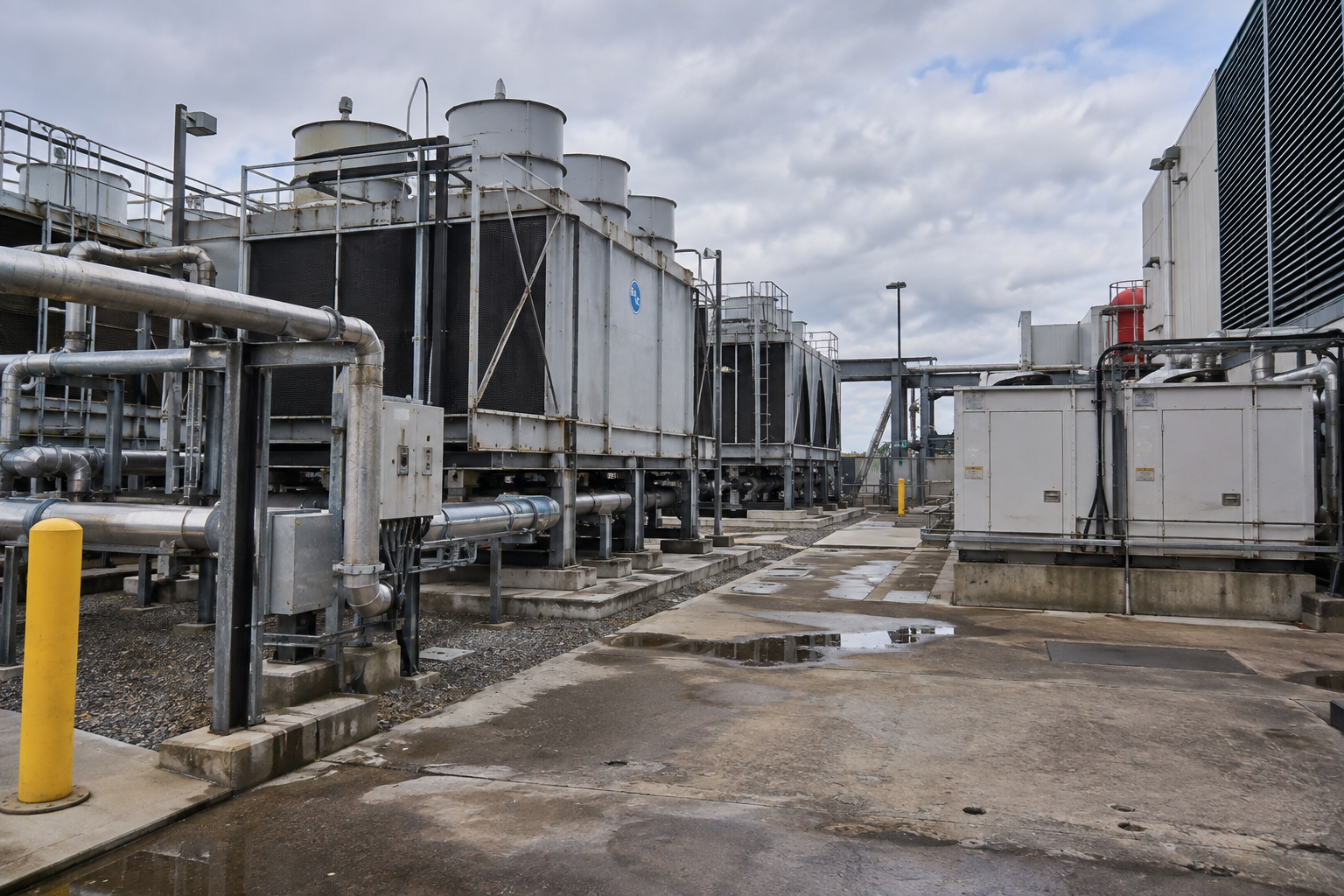
Lithium-ion battery containers rely on HVAC units or liquid cooling systems to keep cells within a safe temperature band, particularly during high-demand charge and discharge cycles. These systems run continuously and are frequently the dominant noise source on a BESS site, generating a steady broadband hum from fans and compressors that can travel well beyond the site boundary in a quiet rural setting.
Power conversion equipment, including central inverters and battery management electronics, produces a tonal hum linked to switching frequency, typically in the low hundreds of hertz. This tonal characteristic makes inverter noise more likely to attract a penalty under state noise policies, because tonal noise is judged more intrusive than broadband noise measured at the same level.
Step-up transformers connecting a BESS to the local distribution or transmission network generate a low-frequency hum driven by magnetostriction in the transformer core. This hum is continuous and carries further than higher-frequency noise, which is one of the reasons transformer noise is a frequent focus of community complaints near BESS and substation sites.
Across the site as a whole, cooling and thermal management equipment, including HVAC units and liquid cooling pumps, is typically the dominant continuous noise source, followed by the tonal hum from inverters and the low-frequency hum from step-up transformers.
The regulatory framework for BESS noise in Australia
BESS noise is regulated primarily through state-based environmental noise policy, applied as a condition of development consent rather than through a single national standard.
In New South Wales, the NSW EPA Noise Policy for Industry sets an intrusiveness criterion of the rating background level (RBL) plus 5 dB(A), assessed separately for day, evening and night periods, alongside an amenity criterion based on surrounding land use.
In Western Australia, the Environmental Protection (Noise) Regulations 1997 set assigned noise levels for noise-sensitive premises, with a night-time level typically in the mid-30s dB(A) depending on the receiver’s zoning.
Victoria applies its own noise protocol under the Environment Protection Regulations 2021, and Queensland’s Environmental Protection (Noise) Policy 2019 sets acoustic quality objectives with specific attention to background noise creep near sensitive receivers. Project-specific limits therefore depend on the site’s jurisdiction and the context of nearby receivers, so the applicable state requirements need to be established early in the planning process.
Because BESS projects run continuously, the night-time criterion is almost always the binding constraint on a project. A noise level that comfortably meets daytime limits can still trigger a breach at night, when the rating background level drops and residential amenity expectations are at their highest.
Planning authorities and consent conditions increasingly require a predictive noise assessment at the development application stage, followed by post-construction compliance monitoring once the facility is commissioned, to confirm that modelled outcomes match measured performance in the field. This makes overnight operation the main compliance risk, as background noise levels fall while BESS equipment continues to run and state policies apply their most restrictive criteria, including the rating background level plus 5 dB(A) approach used under the NSW EPA Noise Policy for Industry.
As with any industrial noise problem, the most durable outcomes come from applying the hierarchy of controls, starting with site layout and working through to engineered products.
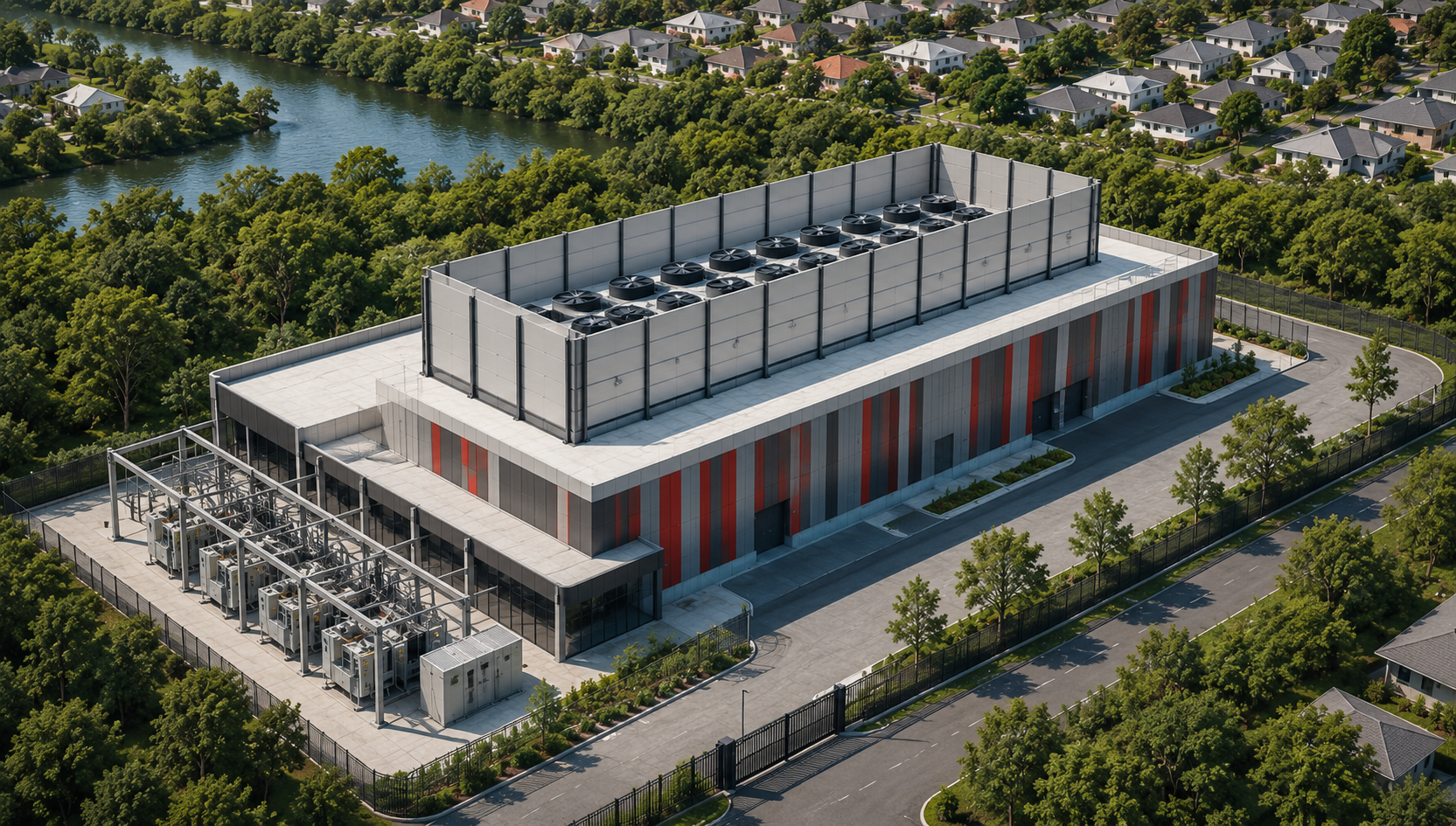
Site layout is the first and most affordable lever available to a project. Positioning battery containers, inverter stations and transformers away from site boundaries, and behind existing site infrastructure or topography, reduces the noise reaching the nearest sensitive receiver before a single acoustic product is specified. Orientating cooling system discharge away from receivers, and grouping the loudest equipment together rather than spreading it around the site perimeter, can materially change the predicted noise contour at the design stage, often at no additional cost to the project.
Where layout alone cannot achieve compliance (and it frequently cannot on constrained sites or where receivers sit close to the boundary), engineering controls become the primary tool for closing the gap between predicted and permitted noise levels.
1) Acoustic barriers and noise walls
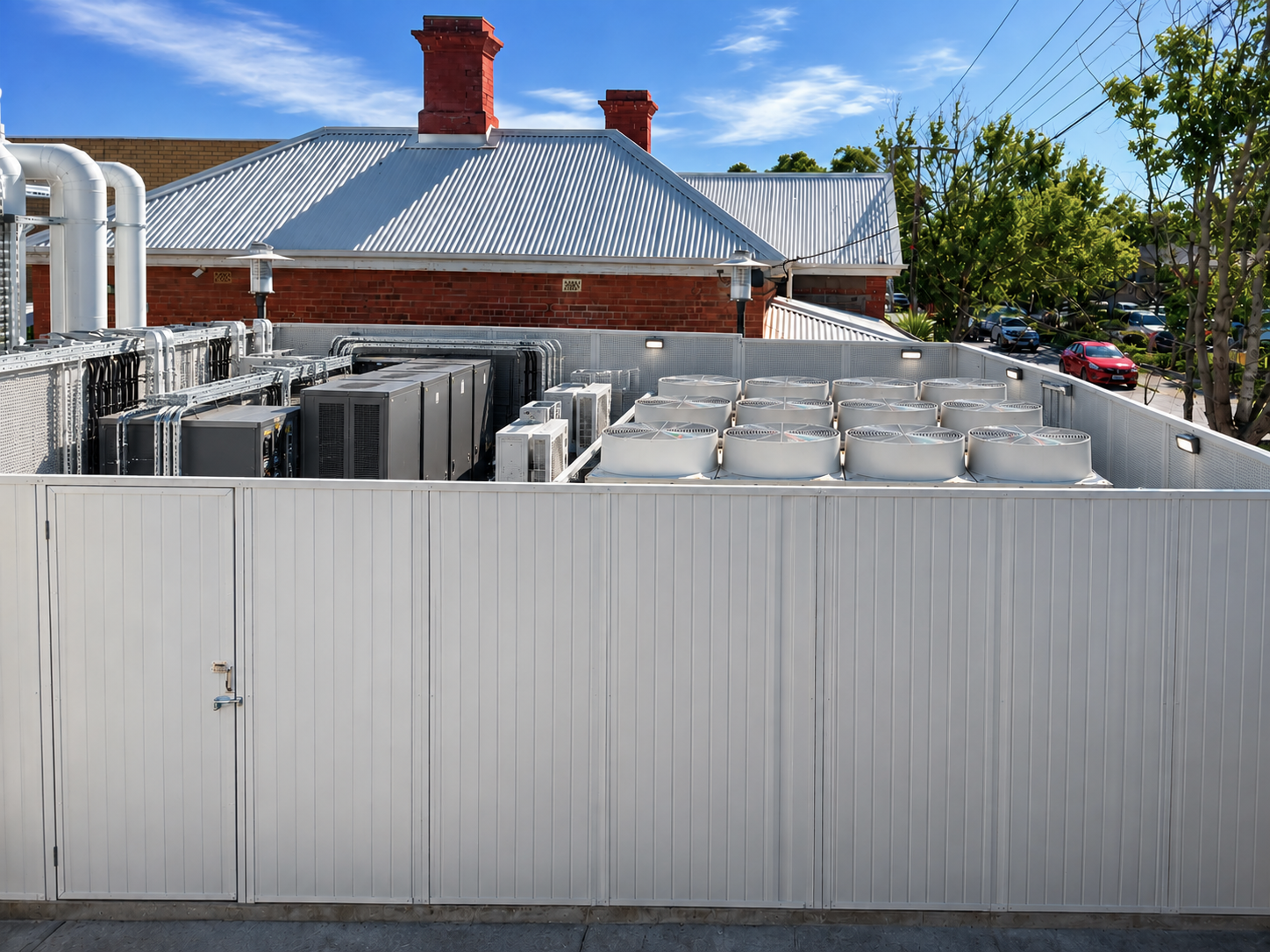
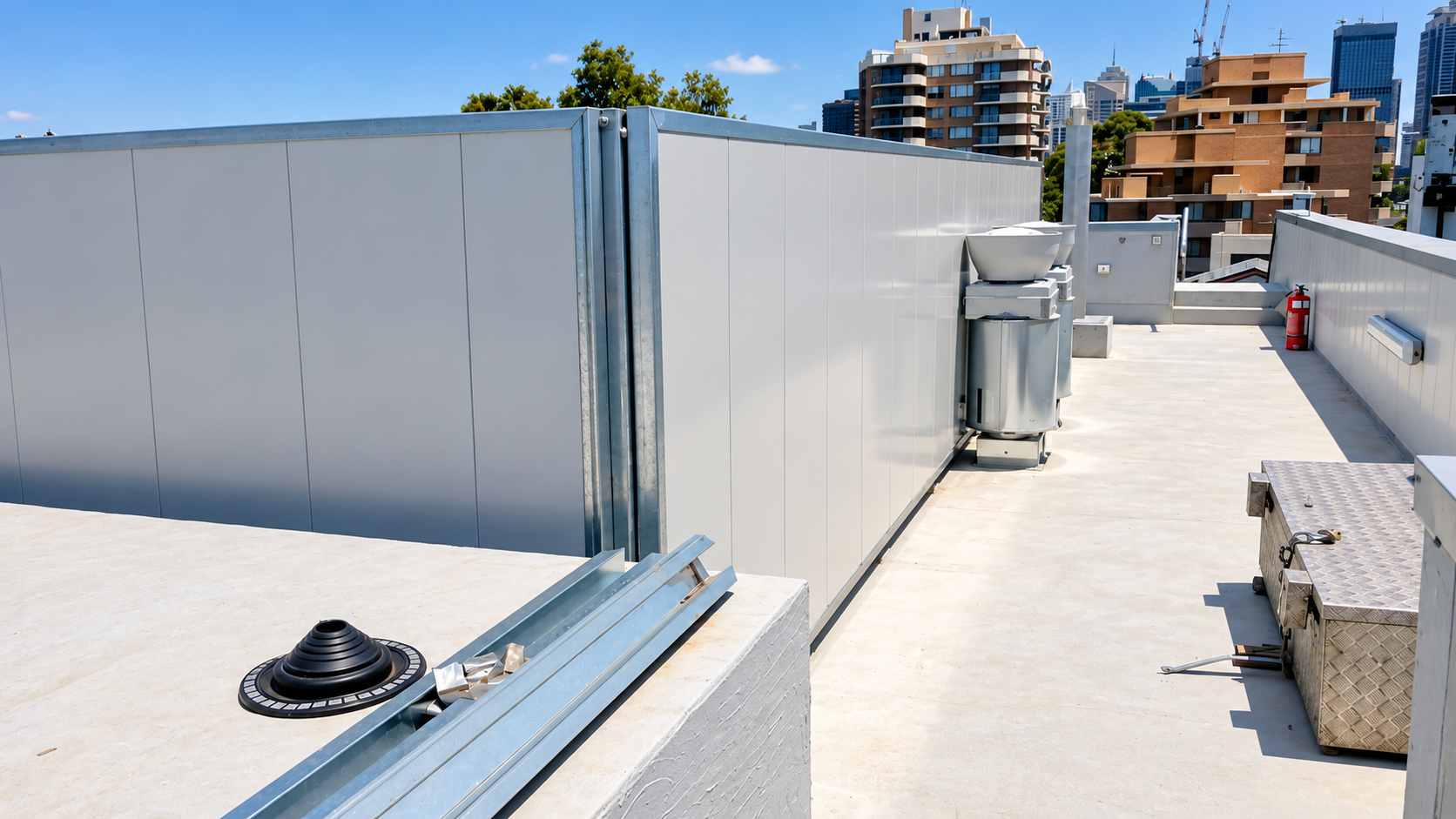
A perimeter acoustic barrier is the most common engineered control on BESS sites, interrupting the line of sight between the noise source and the nearest receiver. Flexshield’s modular acoustic wall panels are engineered for outdoor, unattended installation, and built to withstand weather exposure and the vibration of nearby plant over the full operating life of a facility.
Wall height and length are determined through noise modelling rather than estimation, since an undersized barrier can leave a project short of its consent conditions by a decibel or two, which is enough to trigger a breach of the approval. In many cases a correctly sized wall can achieve the required reduction on its own. Where cooling or ventilation noise dominates, attenuators and louvres may also be needed to close the remaining gap.
2) Acoustic enclosures for ancillary equipment
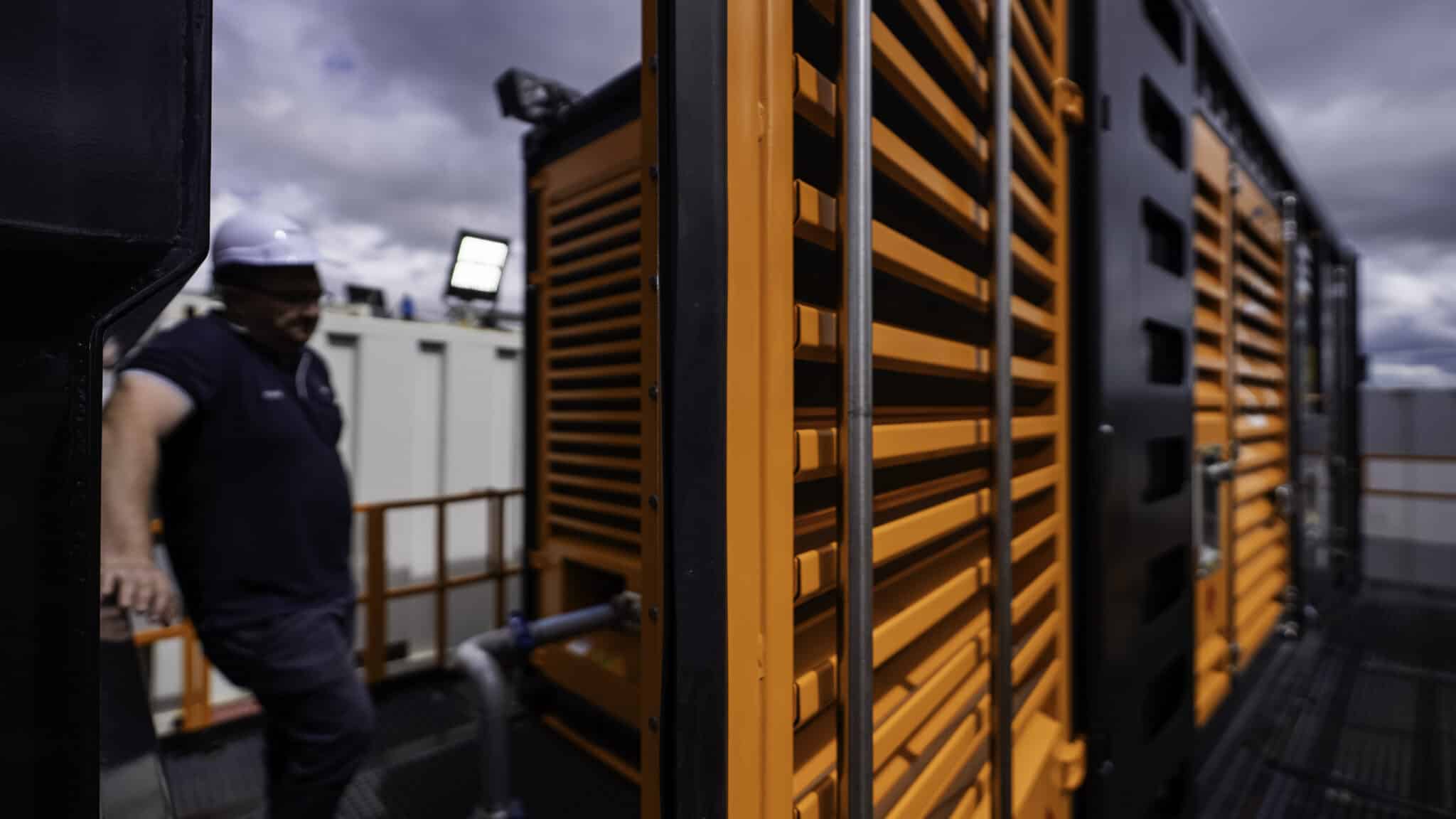
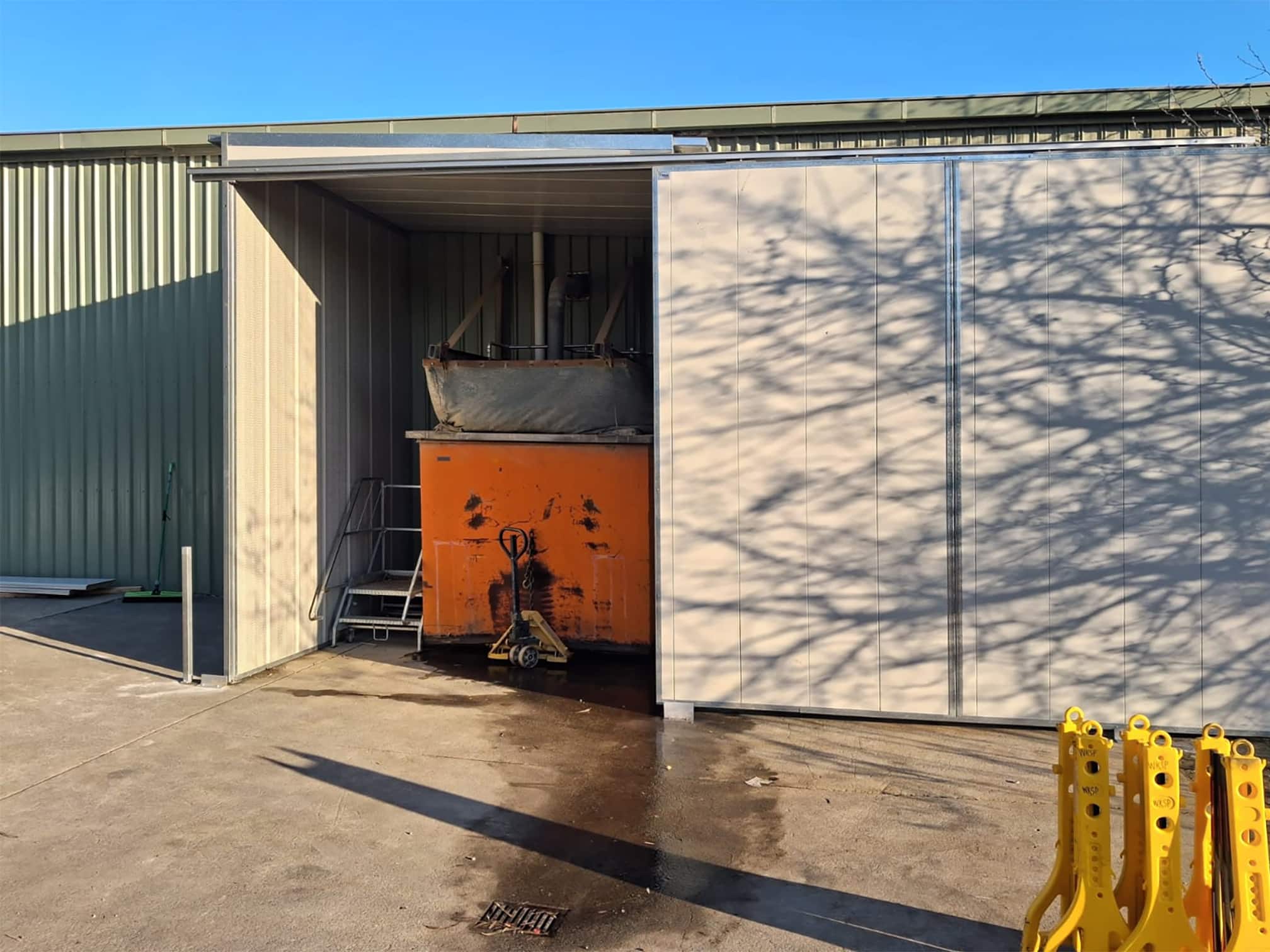
While battery containers typically arrive with their own factory-fitted enclosures, ancillary equipment such as auxiliary HVAC units, pumps and control cabinets often does not. Flexshield manufactures acoustic enclosures for this ancillary plant, engineered with ventilation paths that manage heat buildup without compromising either the equipment’s cooling performance or maintenance access.
3) Attenuators and silencers for cooling and ventilation systems
Where HVAC and cooling systems are the dominant noise source, attenuators fitted to intake and discharge points reduce noise transmission along the airflow path without restricting the airflow the cooling system depends on. This is particularly relevant on liquid-cooled BESS installations, where pump and chiller noise can otherwise become the limiting factor in a noise assessment.
4) Acoustic louvres for ventilated enclosures
Where equipment must be ventilated rather than fully sealed, acoustic louvres allow airflow through an enclosure or plant room while limiting the noise that escapes through the opening, specified against the required Rw performance and free area for the application.
Noise control on a BESS project should start well before construction. A predictive noise model, built from manufacturer noise emission data for the specific inverters, transformers and cooling systems proposed, allows a project to identify likely exceedances at the design stage, when changes to layout or product specification are still inexpensive to make.
Waiting until commissioning to discover a compliance gap is a costly position, often requiring retrofitted barriers or enclosures on a live, energised site with restricted access. The predictive assessment should therefore be completed at the design stage, with post-construction verification following once the facility is commissioned and operating at full output.
Once a facility is operating, post-construction noise verification – ideally carried out by a suitably qualified acoustic consultant using NATA-accredited testing methods – confirms that the installed noise control performs as modelled. This gives the operator a defensible record for the consent authority, the local community and any future compliance review, and provides an early warning if equipment ageing or maintenance issues begin to shift noise output over time.
Working with a supplier that manufactures in Australia, to Australian Standards, gives project teams a defensible basis for demonstrating compliance data reflects real operating conditions, rather than laboratory figures from an unrelated climate.
Flexshield Group designs and manufactures its acoustic product range in Australia, supported by NATA-accredited testing, for the industrial and infrastructure environments those products are specified into. Our acoustic barriers, enclosures, attenuators and louvres are used for battery energy storage and broader power generation projects across Australia.
Our team can review your noise model, recommend Australian-manufactured products sized to your predicted exceedance, and support your project from design through to post-construction verification. Contact Flexshield today to discuss your site.
We’ll make sure it’s built right from the start. Contact Flexshield on 1300 799 969 or get in touch online.
Proudly built by Flexshield Group
Designed to perform. Built to last.