
Call 1300 799 969 | Contact Us
Home » Night works noise control for Australian sites
Night works noise control can be one of the more demanding compliance challenges in Australian construction and infrastructure delivery. Rail possessions, road resurfacing, utility connections and shopping centre fitouts are often scheduled overnight because the work cannot be completed while the public is using the asset. This means project teams need to manage construction noise against a lower ambient background and with nearby residents potentially sleeping.
Night works are assessed differently from daytime construction, and an out-of-hours works (OOHW) approval may require detailed planning around working hours, plant, predicted noise levels, community notification and proposed mitigation measures. Barrier placement and work scheduling can also play an important role in managing noise throughout the programme.
Background noise levels can be lower at night as traffic, industry and general human activity reduce. As a result, construction activity that may be less noticeable during a busy daytime period can become much more prominent overnight.
Sleep disturbance is another consideration for night works. Relevant state and project requirements may include specific sleep disturbance criteria for work undertaken overnight. Intermittent events such as reversing alarms, vehicle movements and impact activities can therefore require particular attention when planning the work.
For project teams, this means considering not only overall noise levels but also when individual activities occur, how frequently they occur and where they are positioned in relation to nearby sensitive receivers.
The OOHW Approval Process
Standard construction hours vary between Australian states, local authorities and individual project requirements. Work proposed outside the applicable standard hours may require specific approval from the relevant council, environmental regulator or managing authority.
An OOHW application may need to identify the proposed dates and working hours, explain why the work needs to occur outside standard hours, identify the plant and activities involved, provide predicted noise levels at relevant sensitive receivers and document the proposed mitigation measures.
Requirements vary between jurisdictions and projects, so contractors should check the conditions that apply to the specific site and approval pathway before finalising the programme.
Sleep disturbance and trigger levels
Where night works are assessed against sleep disturbance criteria, the assessment may consider maximum noise levels from individual events as well as the frequency and duration of those events.
A programme involving a small number of louder activities can present a different noise profile from one involving continuous lower-level activity. The noise assessment should therefore reflect the actual work sequence, plant and operating conditions rather than relying only on an average figure across the shift.
Community notification for night programmes
Community notification requirements vary according to the authority, project and approval conditions. Depending on the project, notification may include advance written notice, information about expected working hours and activities, and contact details residents can use if they have concerns.
Building notification requirements into the planning process gives project teams time to communicate the expected programme before night work begins.
Plant idling and generators
Generators used for lighting towers, welding equipment or temporary services may operate for extended periods during a night shift. With lower background noise overnight, their location and operating time can become an important consideration.
Where practical, project teams can review generator positioning, operating periods and screening as part of the broader noise management plan.
Reversing alarms and vehicle movements
Truck and plant movements can be particularly noticeable overnight. Reversing alarms are designed to attract attention, which can make them prominent near residential areas during night works.
Depending on site requirements and applicable safety procedures, project teams may consider vehicle routes, delivery scheduling, site layout and other approved traffic management measures when planning overnight movements.
Any changes to reversing procedures or warning devices must remain consistent with the project’s safety requirements and applicable regulations.
Rail and road possession activities
Track work, resurfacing and other possession activities can involve specialised plant such as tampers, grinders and rollers. Where this equipment is required for the work, noise management may need to focus on the location and sequence of activities, operating times and suitable screening measures.
Planning these measures before the possession begins can help crews use limited work windows more efficiently.
Night works often involve several parties. A rail possession may include the principal contractor, network operator or asset owner and maintenance providers, each with their own responsibilities. Road works may also require coordination between construction crews, traffic management teams, authorities and other project stakeholders.
Bringing noise management into this planning process early can help ensure proposed controls align with the work sequence and site access requirements.
Aligning the noise management plan with the possession plan
Noise controls should be considered while the possession or works programme is being developed rather than being treated as a separate activity immediately before work begins.
Where the barrier supplier, principal contractor and relevant project stakeholders coordinate early, practical details such as barrier locations, fixing points, installation sequence, access and removal times can be addressed before crews arrive on site.
This is particularly useful when possession windows are short and installation time needs to be carefully managed.
Handling last-minute programme changes
Possession windows can change because of weather, earlier work overruns, access restrictions or network availability. Noise control measures therefore need to account for the practical conditions of the site and the possibility that work areas may move.
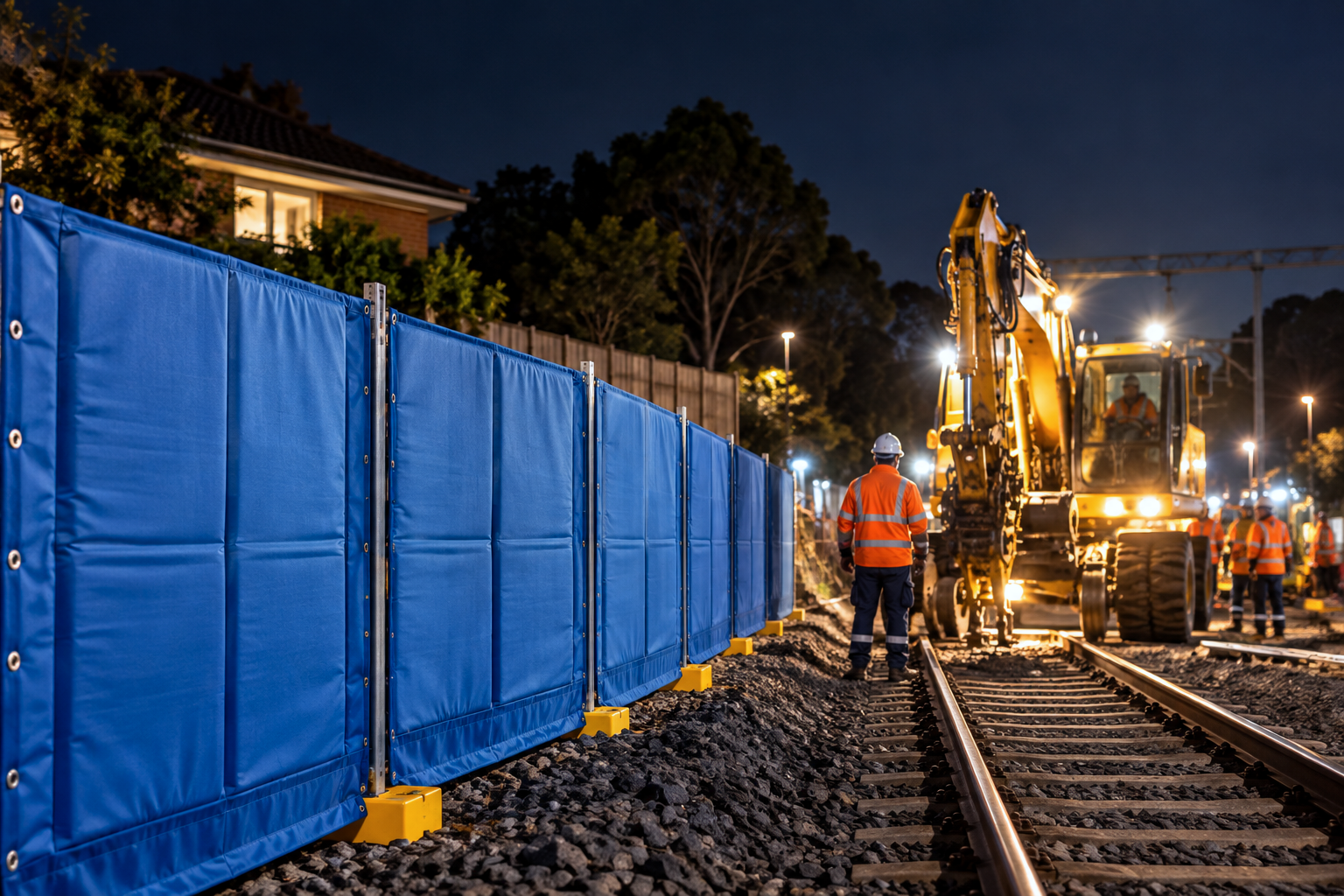
Barrier products that can be repositioned may give crews more flexibility when work locations change during a possession. The appropriate product and configuration will depend on the site, noise source, receiver location, available fixing points and project requirements.
Physical barriers can be used as a path control between a noise source and nearby receivers. Their suitability depends on factors including the source location, receiver position, barrier height, placement and continuity.
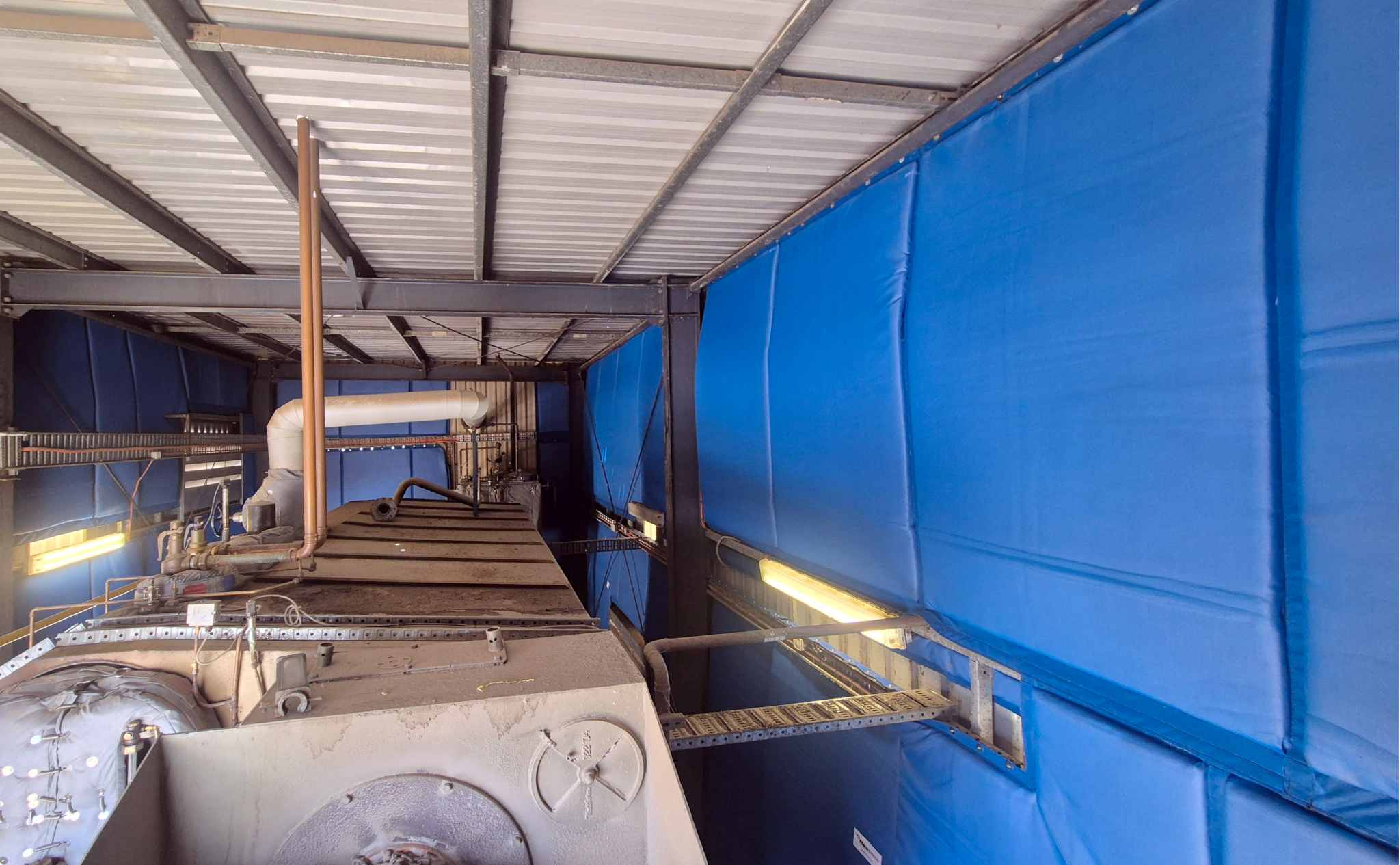
Flexshield manufactures products including the Sonic acoustic quilt and Sonic acoustic curtain for industrial and construction applications. Depending on the project and required configuration, these products can be incorporated into temporary noise control arrangements around work areas, plant or site boundaries.
Barrier continuity is an important consideration. Gaps at ground level, between adjoining sections or around access points can allow noise to pass through or around the barrier. Barrier height and positioning also need to be considered in relation to the source and receiver.
For programmes running across multiple nights or involving changing work areas, project teams should also consider how the selected barrier will be installed, moved, stored and handled throughout the works.
Scheduling can complement physical noise controls during night works. Project teams can review when higher-noise activities occur, whether activities can be grouped, and how the sequence of work affects nearby receivers.
Where project and approval requirements allow, concentrating particular activities into defined work periods may help provide residents with clearer information about when those activities are expected to occur.
The appropriate sequence will depend on the possession window, construction methodology, safety requirements, approval conditions and the activities that must be completed during each shift.
Noise monitoring may form part of the requirements for an approved night works programme. Depending on the project, attended monitoring can be used to compare actual site conditions with predicted levels and identify changes in plant, work location or barrier configuration that may need attention.
Longer programmes may also use unattended monitoring equipment where required by the project’s noise management approach or approval conditions.
Monitoring records, site observations and complaint records can help project teams document what occurred during a particular shift and respond to concerns raised by residents or authorities.
Flexshield Group manufactures noise control products in Australia for construction, infrastructure and industrial applications. For night works, rail possessions, road works and other out-of-hours programmes, the Flexshield team can help you review the site requirements and suitable barrier options for the proposed work.
We’ll make sure it’s built right from the start. Contact Flexshield on 1300 799 969 or get in touch online.
Proudly built by Flexshield Group
Designed to perform. Built to last.