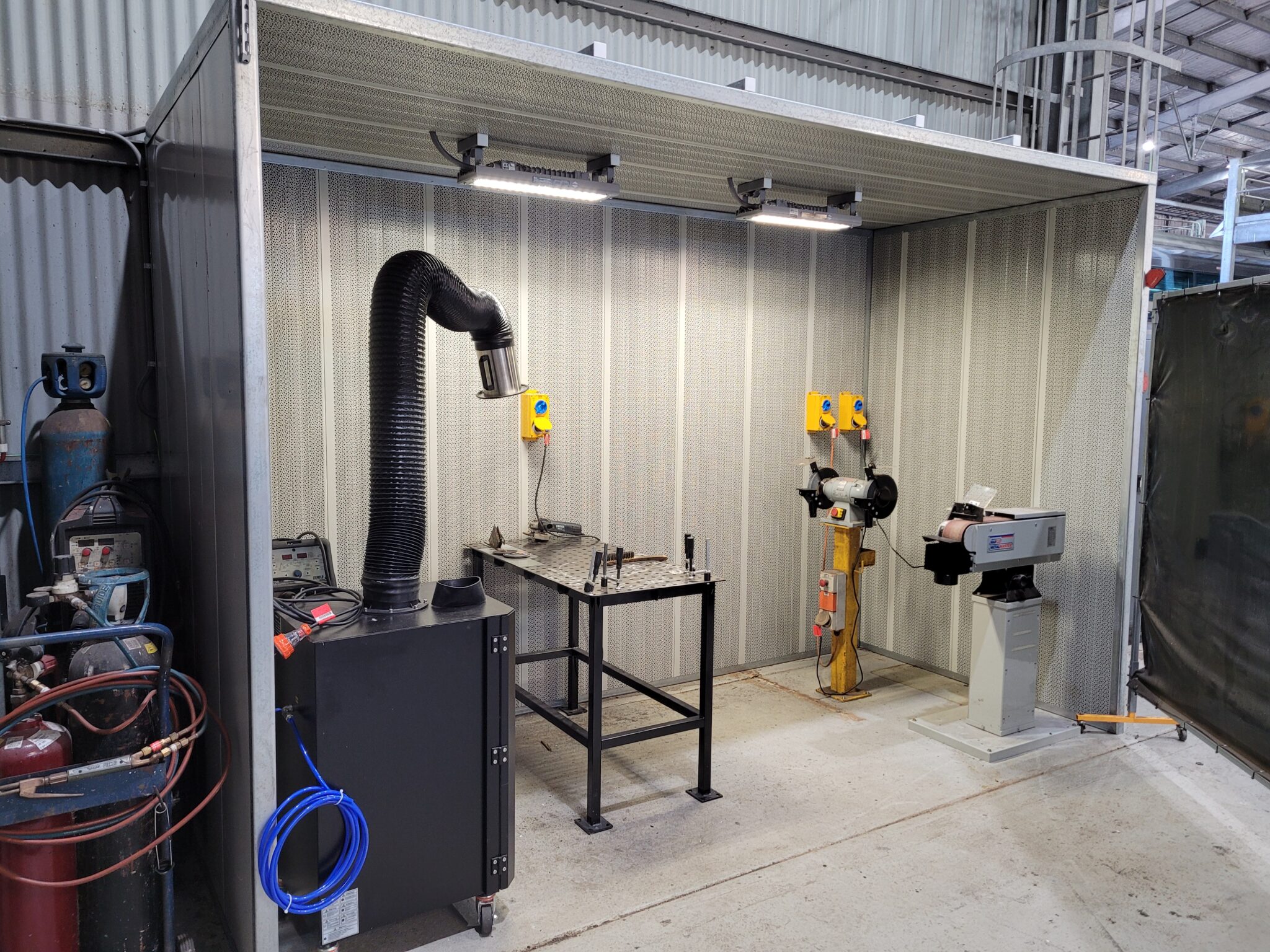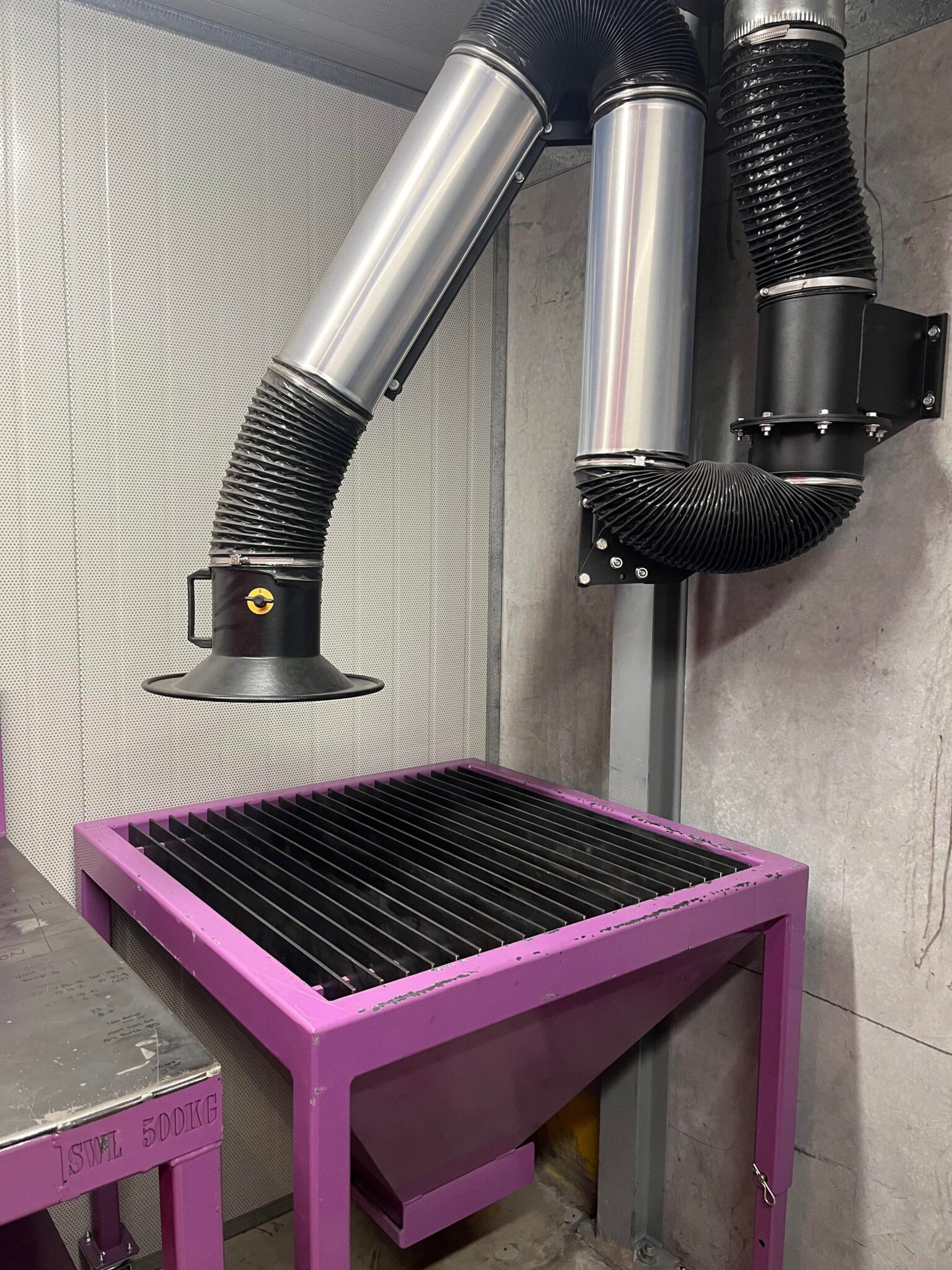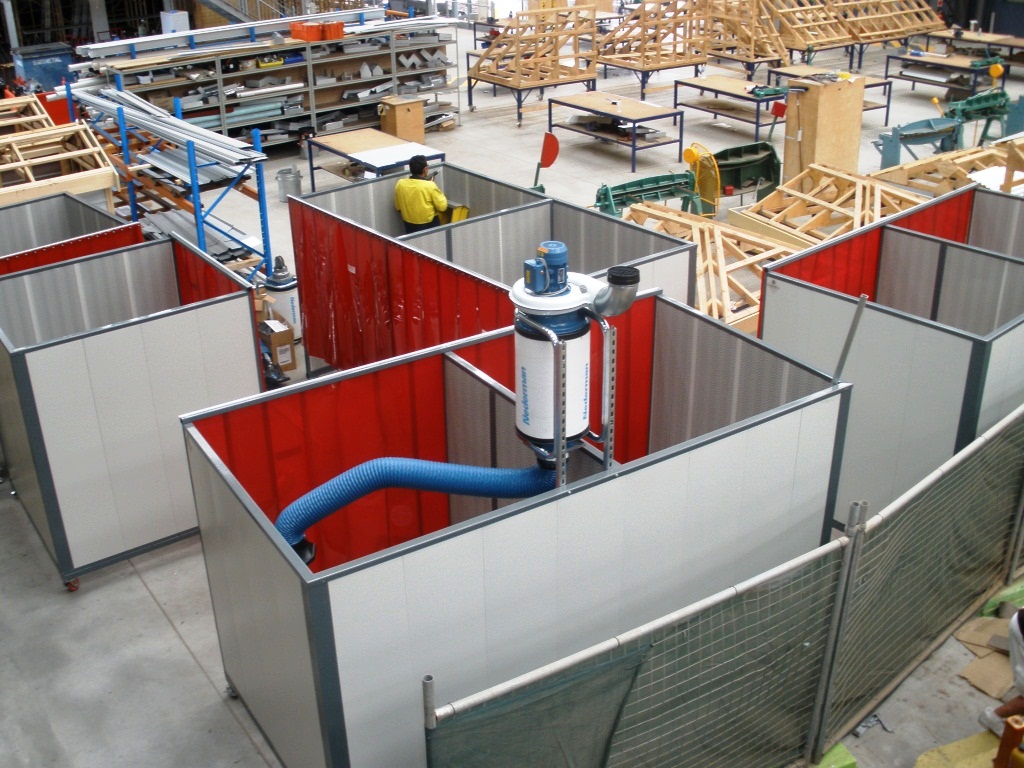

Welding fumes are airborne contaminants and can contain a mixture of hazardous chemicals. Safe Work Australia states that workplaces must manage exposure to welding fumes and ensure workers and others are not exposed above the applicable workplace exposure standard or limit.
As at October 2026, Australia is transitioning from workplace exposure standards to workplace exposure limits for airborne contaminants. The WEL framework begins on 1 December 2026. Project requirements should therefore be checked against the current rules in the relevant state, territory or Commonwealth jurisdiction at the time of design and commissioning.
Safe welding fume extraction is one control measure and should be selected as part of the workplace risk assessment and hierarchy of controls. Extraction equipment alone does not establish compliance. Where exposure levels are uncertain, air monitoring or advice from a suitably qualified occupational hygienist may be required.
Copy the table below into your project document or email and complete as much information as you have available.
| Requirement | Your project details |
|---|---|
| Welding process and contaminants | |
| Welding processes used | _______________________________________________ |
| Base metals | _______________________________________________ |
| Welding consumables | _______________________________________________ |
| Coatings or surface treatments | _______________________________________________ |
| Other materials involved | _______________________________________________ |
| Other gases, vapours or airborne contaminants | _______________________________________________ |
| Number and layout of welding stations | |
| Number of operators | _______________________________________________ |
| Number of welding stations | _______________________________________________ |
| Work area dimensions | Length ______ mm Width ______ mm Height ______ mm |
| Obstructions or access restrictions | _______________________________________________ |
| Required extraction arm reach | _______________________________________________ |
| Preferred hood position | _______________________________________________ |
| Extraction configuration | ☐ Fixed ☐ Mobile ☐ Individual ☐ Shared ☐ Not sure |
| Extraction and filtration | |
| Required airflow | _______________________________________________ |
| Capture arrangement | _______________________________________________ |
| Filtration requirements | _______________________________________________ |
| Air handling | ☐ Recirculated ☐ Discharged ☐ Not sure |
| Other extraction requirements | _______________________________________________ |
| Services and installation | |
| Available electrical supply | _______________________________________________ |
| Duct route requirements | _______________________________________________ |
| Mounting points | _______________________________________________ |
| Equipment location | _______________________________________________ |
| Filter inspection access | ☐ Required ☐ To be confirmed |
| Cleaning and maintenance access | _______________________________________________ |
| Future workshop changes planned | ☐ Yes ☐ No ☐ Not sure |
| Additional welding stations planned | ☐ Yes ☐ No ☐ Not sure |
| Exposure control requirements | |
| Applicable WES or WEL requirements | _______________________________________________ |
| Workplace exposure assessment completed | ☐ Yes ☐ No ☐ Not sure |
| Air monitoring required | ☐ Yes ☐ No ☐ Not sure |
| Respiratory protection requirements | _______________________________________________ |
| Other workplace controls | _______________________________________________ |
| Other project requirements | _______________________________________________ |
Performance requirements for Safe welding fume extraction depend on the welding process, contaminants, airflow, hood position, duct design, filtration and how the equipment is used. A generic test result should not be applied across all workshop layouts.
Where capture performance, filtration data or commissioning evidence is required, specify those requirements for the selected equipment and project. Flexshield can provide available technical information for the proposed configuration.
Welding fumes are airborne contaminants and can contain a mixture of hazardous chemicals. Safe Work Australia states that workplaces must manage exposure to welding fumes and ensure workers and others are not exposed above the applicable workplace exposure standard or limit.
As at October 2026, Australia is transitioning from workplace exposure standards to workplace exposure limits for airborne contaminants. The WEL framework begins on 1 December 2026. Project requirements should therefore be checked against the current rules in the relevant state, territory or Commonwealth jurisdiction at the time of design and commissioning.
Safe welding fume extraction is one control measure and should be selected as part of the workplace risk assessment and hierarchy of controls. Extraction equipment alone does not establish compliance. Where exposure levels are uncertain, air monitoring or advice from a suitably qualified occupational hygienist may be required.
Copy the table below into your project document or email and complete as much information as you have available.
| Requirement | Your project details |
|---|---|
| Welding process and contaminants | |
| Welding processes used | _______________________________________________ |
| Base metals | _______________________________________________ |
| Welding consumables | _______________________________________________ |
| Coatings or surface treatments | _______________________________________________ |
| Other materials involved | _______________________________________________ |
| Other gases, vapours or airborne contaminants | _______________________________________________ |
| Number and layout of welding stations | |
| Number of operators | _______________________________________________ |
| Number of welding stations | _______________________________________________ |
| Work area dimensions | Length ______ mm Width ______ mm Height ______ mm |
| Obstructions or access restrictions | _______________________________________________ |
| Required extraction arm reach | _______________________________________________ |
| Preferred hood position | _______________________________________________ |
| Extraction configuration | ☐ Fixed ☐ Mobile ☐ Individual ☐ Shared ☐ Not sure |
| Extraction and filtration | |
| Required airflow | _______________________________________________ |
| Capture arrangement | _______________________________________________ |
| Filtration requirements | _______________________________________________ |
| Air handling | ☐ Recirculated ☐ Discharged ☐ Not sure |
| Other extraction requirements | _______________________________________________ |
| Services and installation | |
| Available electrical supply | _______________________________________________ |
| Duct route requirements | _______________________________________________ |
| Mounting points | _______________________________________________ |
| Equipment location | _______________________________________________ |
| Filter inspection access | ☐ Required ☐ To be confirmed |
| Cleaning and maintenance access | _______________________________________________ |
| Future workshop changes planned | ☐ Yes ☐ No ☐ Not sure |
| Additional welding stations planned | ☐ Yes ☐ No ☐ Not sure |
| Exposure control requirements | |
| Applicable WES or WEL requirements | _______________________________________________ |
| Workplace exposure assessment completed | ☐ Yes ☐ No ☐ Not sure |
| Air monitoring required | ☐ Yes ☐ No ☐ Not sure |
| Respiratory protection requirements | _______________________________________________ |
| Other workplace controls | _______________________________________________ |
| Other project requirements | _______________________________________________ |
Performance requirements for Safe welding fume extraction depend on the welding process, contaminants, airflow, hood position, duct design, filtration and how the equipment is used. A generic test result should not be applied across all workshop layouts.
Where capture performance, filtration data or commissioning evidence is required, specify those requirements for the selected equipment and project. Flexshield can provide available technical information for the proposed configuration.
Steve Dearle | Ellenbrook Secondary College
We are proud to work with some of Australia’s greatest brands






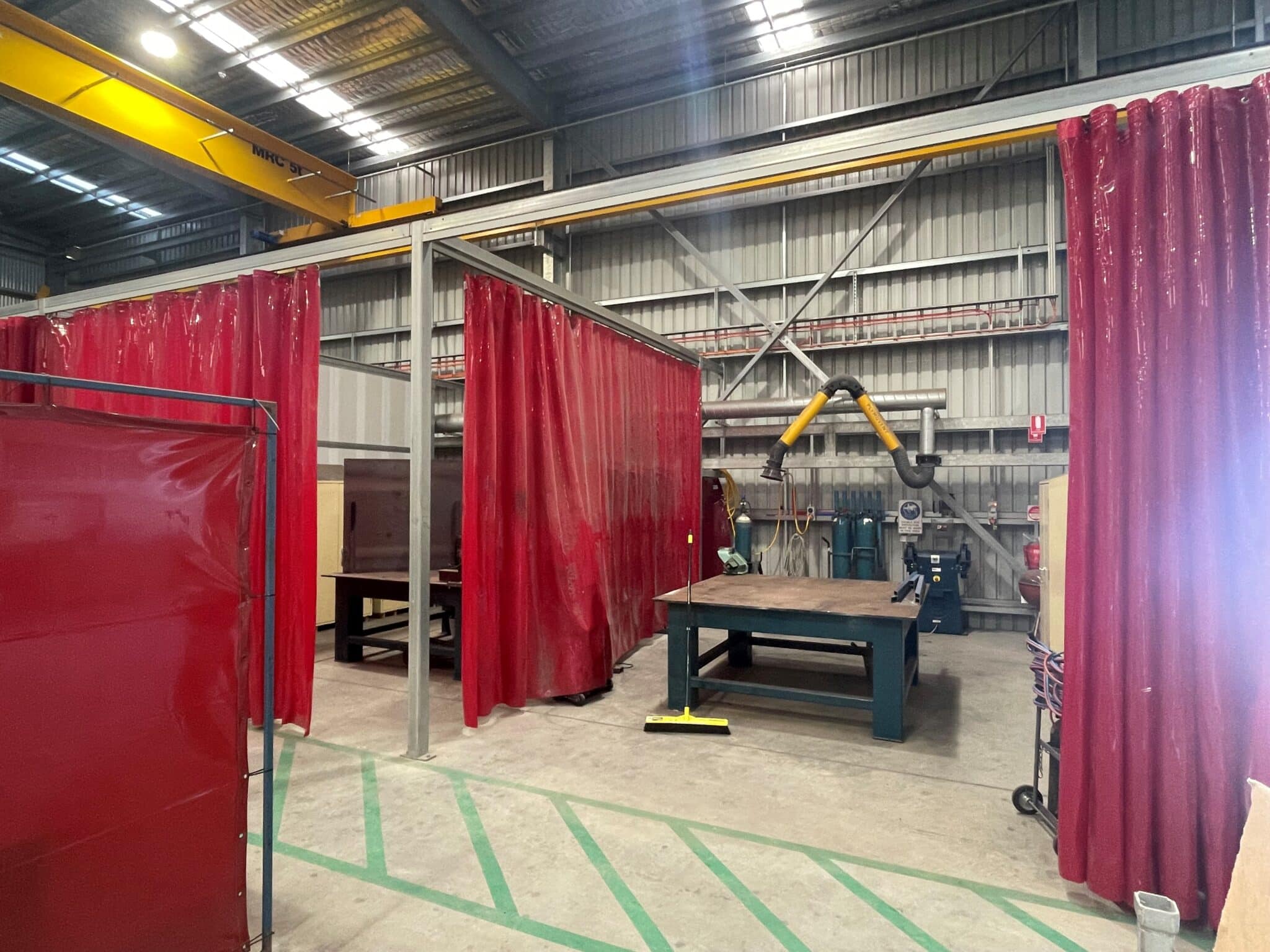
Project: Sonic Acoustic Welding Bay
Industry: Rail infrastructure and rollingstock maintenance
Location: Portsmith Depot, Cairns QLD
Client: Queensland Rail
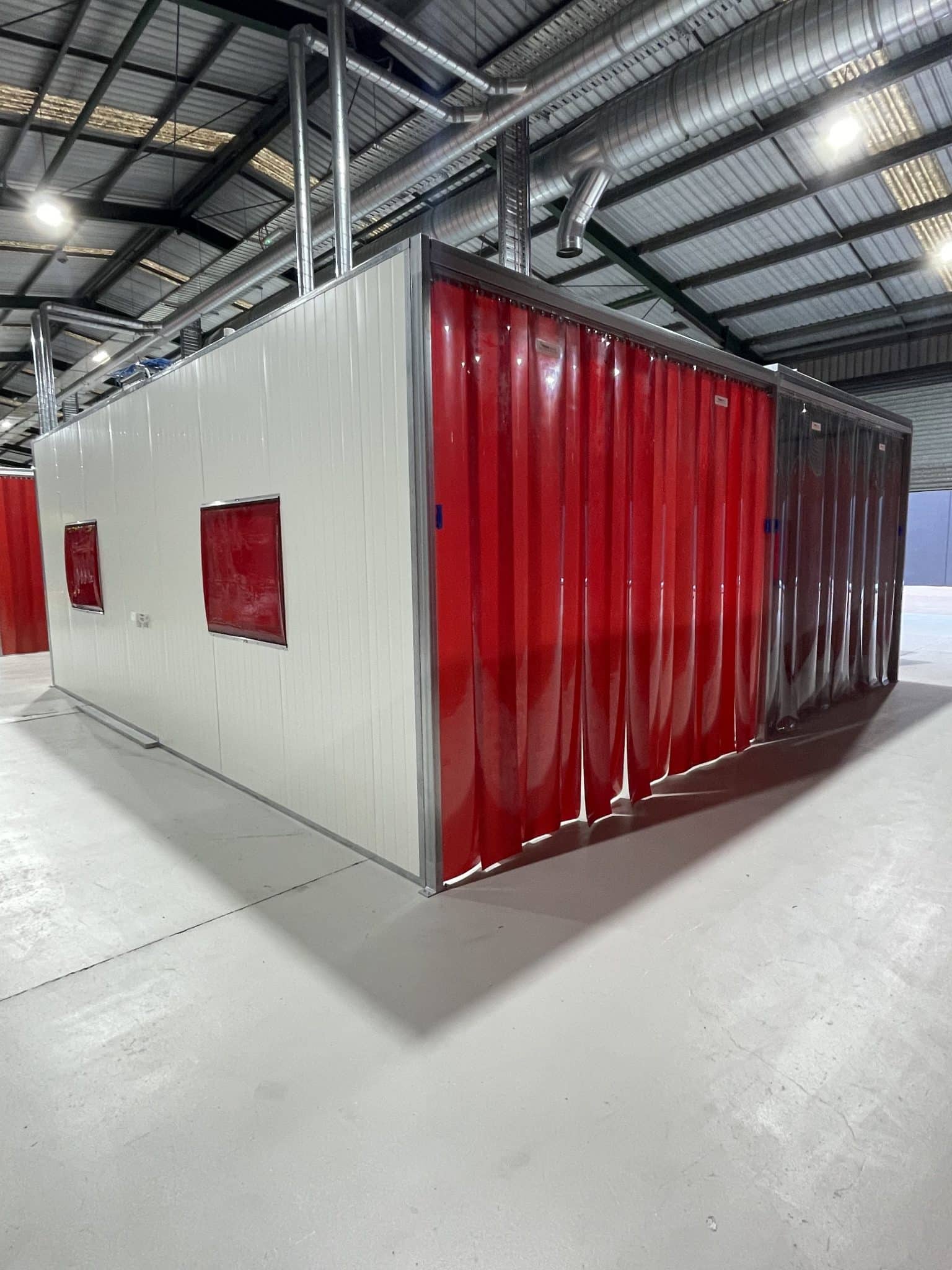
Project: Acoustic welding protection
Industry: Resources
Location: Wellesley, Western Australia
Client: Albemarle Lithium Pty Ltd
Project: Unique Welding & Grinding Bay
Industry: Manufacturing
Location: Gold Coast - QLD
Client: Outdoor equipment manufacturer
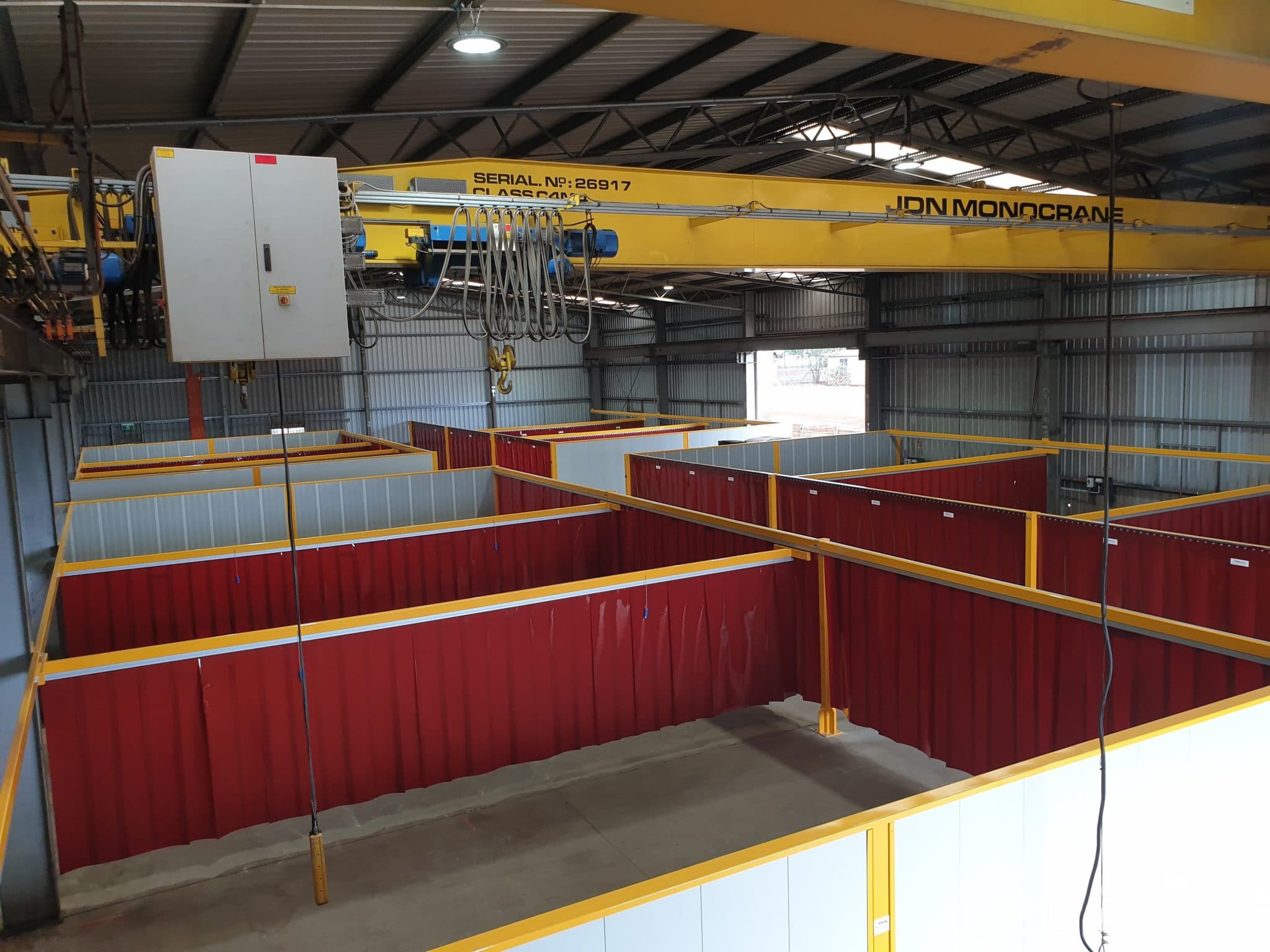
Project: Welding Bays
Industry: Manufacturing
Location: Toowoomba, QLD
Client: JRS Manufacturing
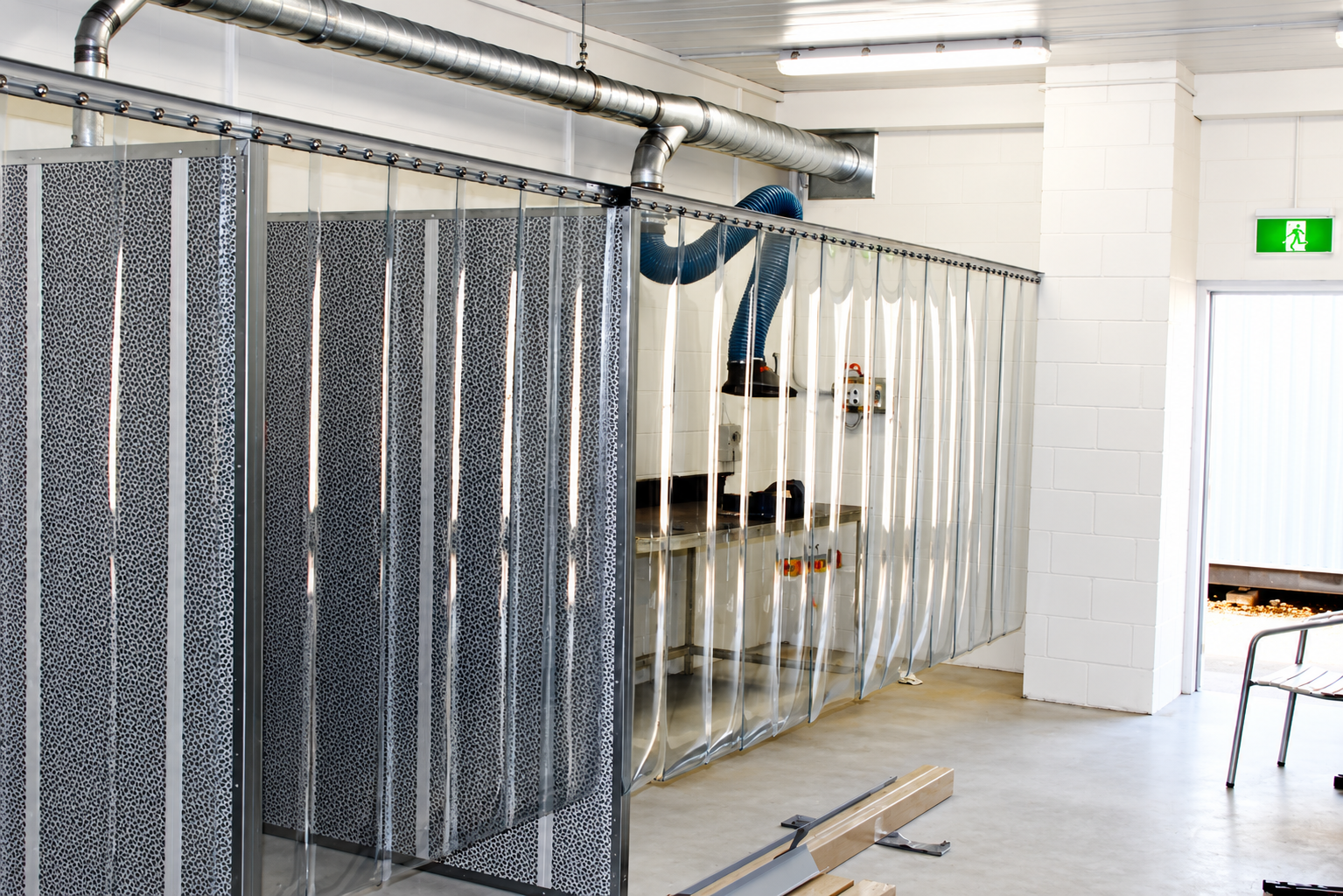
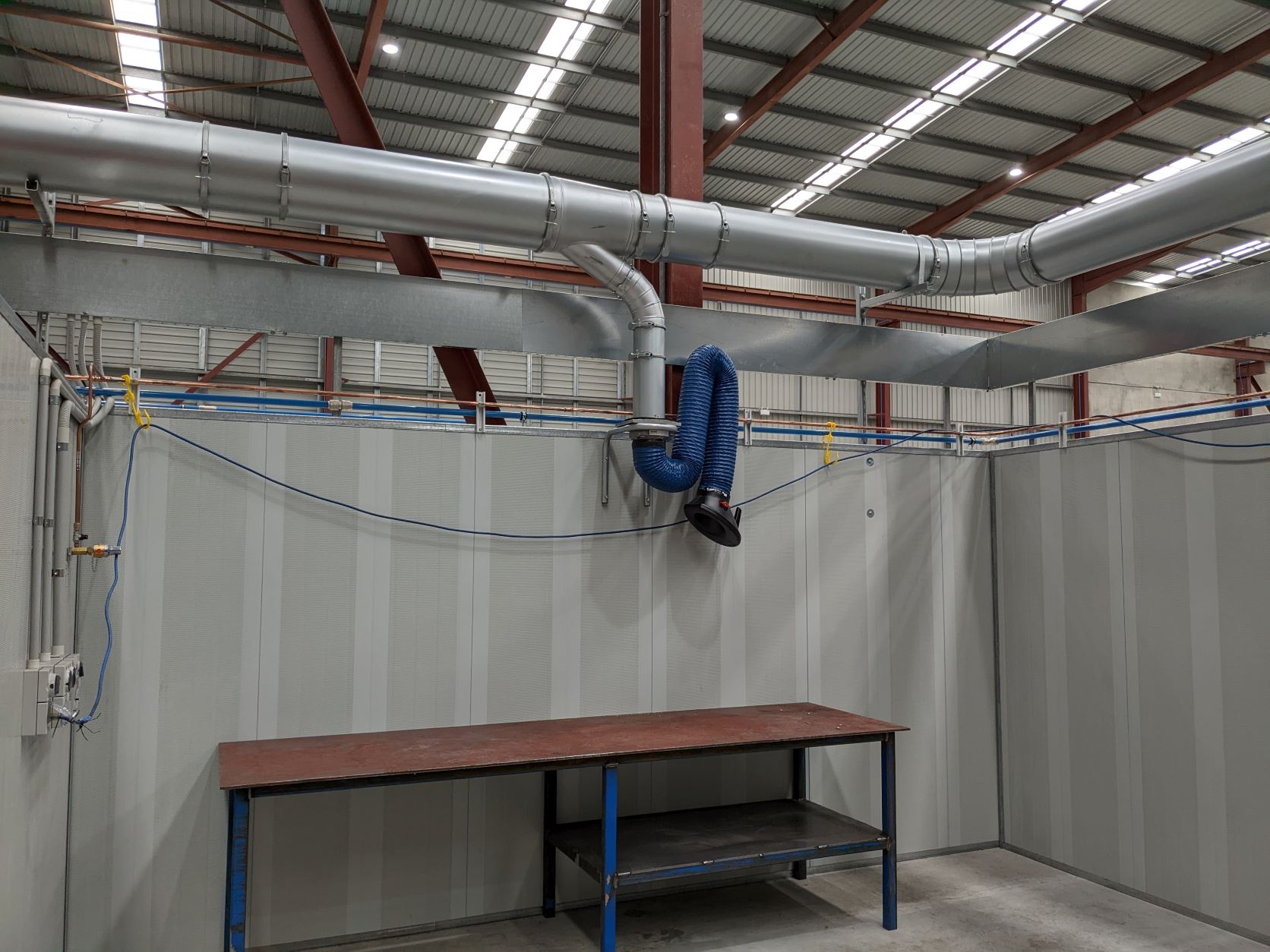
Welding can generate hazardous airborne contaminants. Source-capture extraction is used to collect fume close to where it is produced as part of the workplace controls used to manage worker exposure.
In October 2026, the workplace exposure standard for total welding fumes not otherwise classified is 1mg/m³ as an eight-hour time-weighted average where implemented in the relevant jurisdiction. Australia moves to the workplace exposure limit framework from 1 December 2026. Other individual components of welding fume can also have their own limits.
Not necessarily. Extraction should form part of the workplace risk assessment and hierarchy of controls. The welding process, material, contaminants, ventilation, work practices and any required respiratory protection all need to be considered.
Source capture relies on the extraction point being positioned close enough to collect fume before it disperses into the surrounding work area. The correct position depends on the welding process, airflow and workpiece without obstructing the operator.
Yes, depending on the selected equipment and design. Multiple extraction points can be considered, but airflow, simultaneous use, ducting and filtration need to be assessed for the actual workshop.
Yes. Fixed and mobile configurations can be considered based on workstation layout, welding frequency, movement of workpieces and the reach required.
Where there is uncertainty about airborne contaminant exposure, workplace air monitoring may be required. Commissioning checks, equipment maintenance and suitable professional advice can also help verify that the selected controls are operating as intended.
Provide the welding processes, materials and consumables, number of stations, work area dimensions, operating pattern, required reach, available services, proposed duct routes and any project-specific exposure or commissioning requirements.
"(Required)" indicates required fields
Download will be available on the next screen
Note: Flexshield provides industrial acoustic solutions.
For commercial click here. For small or domestic enquiries click here.