
Call 1300 799 969 | Contact Us
Home » PVC strip curtains vs solid screens in manufacturing facilities
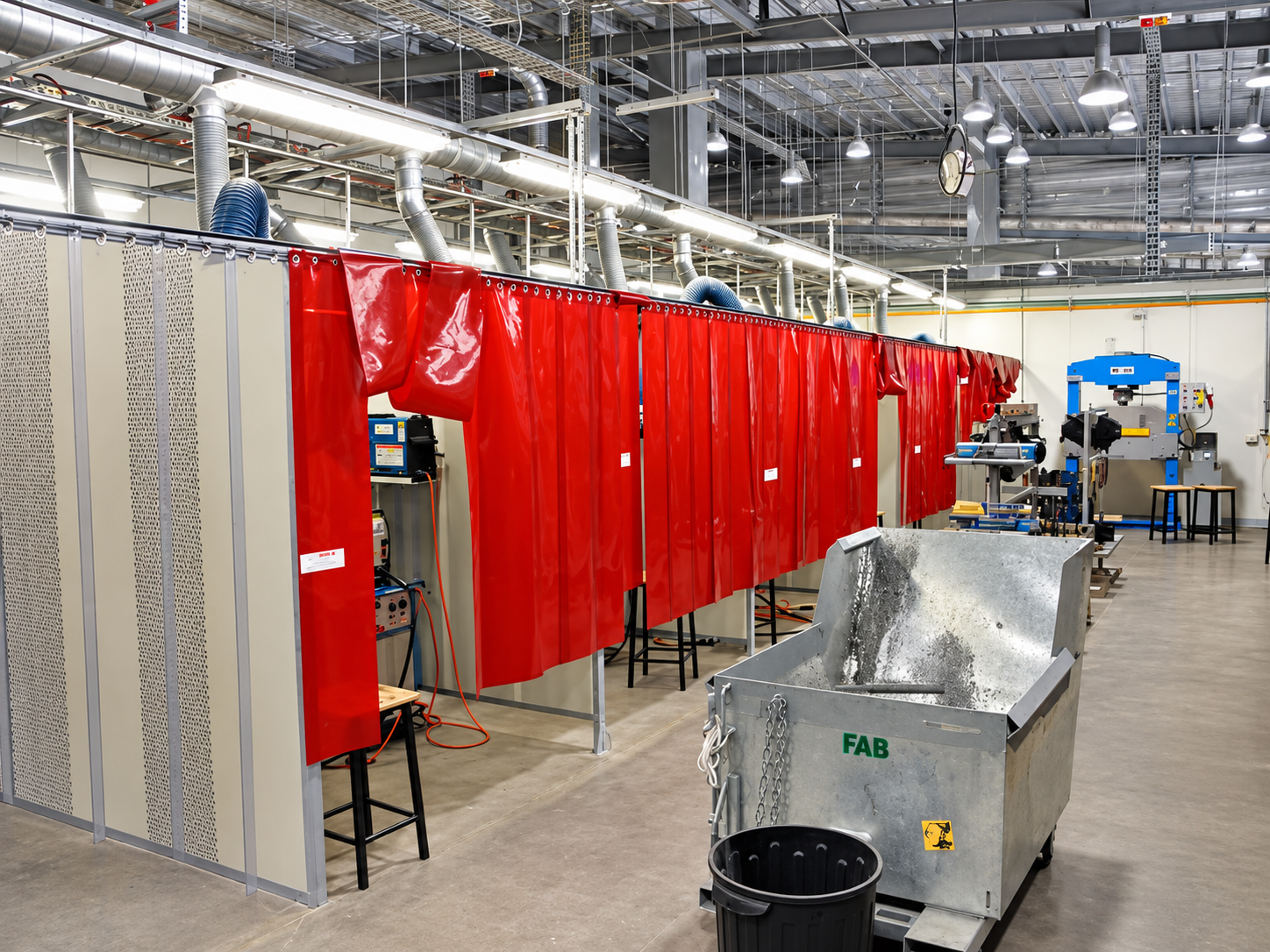
In manufacturing facilities, installing a barrier can fix one problem and create another. A fabrication area needs to be separated from the rest of the factory floor. Forklifts cross the boundary all day, supervisors need a clear view into the work zone, and dust needs to stay close to the process.
A solid screen can create strong separation, but every doorway or opening becomes another access decision. A PVC strip curtain takes a different approach: it creates a physical barrier while allowing people and vehicles to pass through.
That difference is why the choice should start with the way the area operates, not with a preference for one material. PVC strip curtains are particularly useful where frequent access, visibility and flexible separation matter. Solid screens are generally the stronger choice where the boundary must remain rigid, impact resistance is a priority, or open access through the barrier would undermine the purpose of the separation.
For manufacturing teams comparing the two, the most useful question is not which barrier is better overall. It’s which barrier creates the right level of separation without making normal work harder.
Doorways between production zones often need to do two jobs at once. They need to maintain separation, yet they also need to stay usable for workers, trolleys and forklifts. A hinged or sliding solid barrier can work, but it relies on an opening and closing action every time traffic passes.
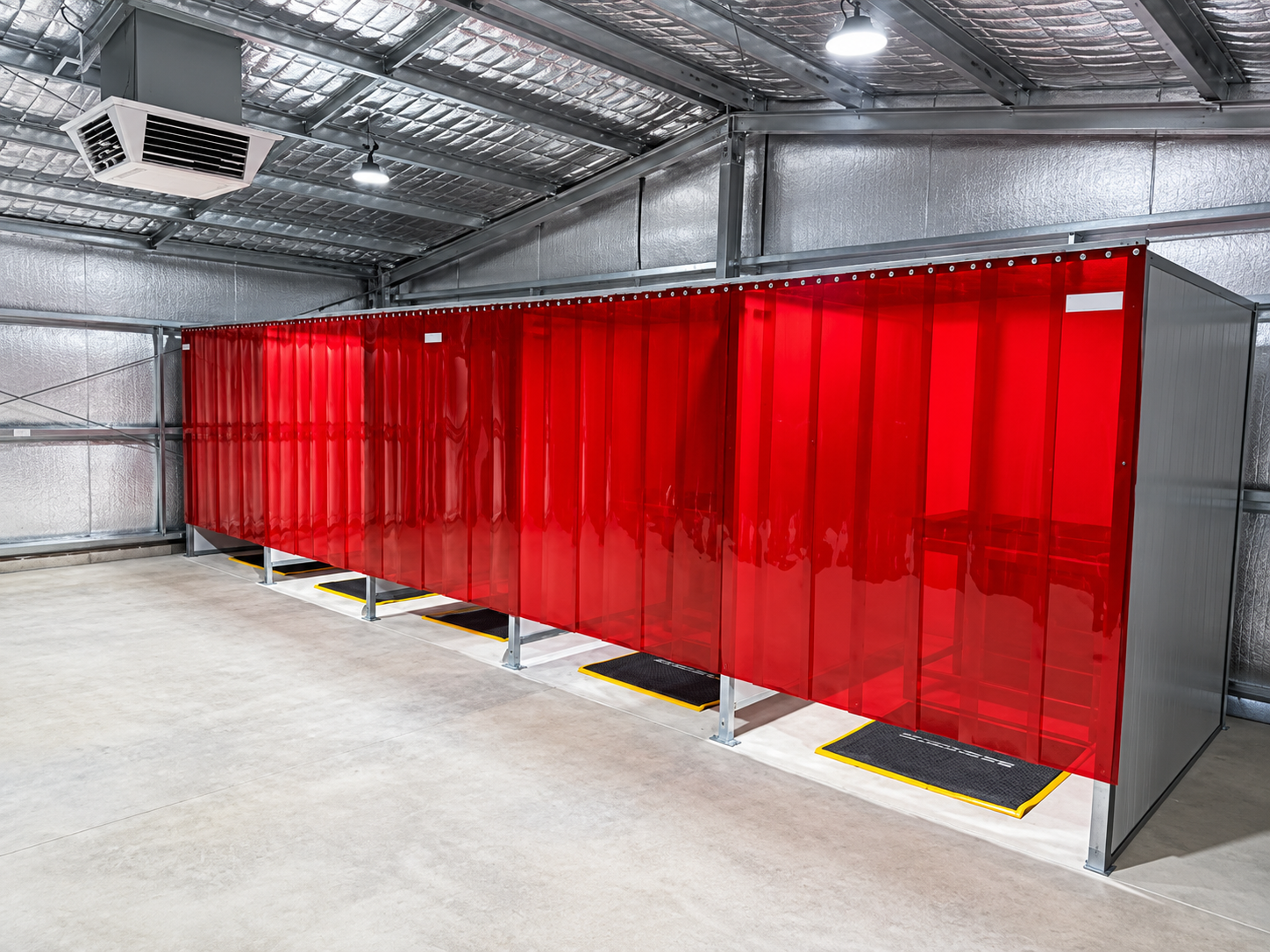
Flexible PVC Strip Curtains are designed for repeated movement through an opening. The strips part as a person or vehicle passes and then fall back into position. On a busy factory floor, that can reduce the temptation to leave a door or panel open simply because access is frequent.
Flexshield’s Flexible PVC Strip Curtains are custom-made and available in 2 mm, 4 mm and 6 mm thickness options. The live product information also lists UV-resistant materials, clear visibility and mounting options suited to industrial use. Thickness, overlap, mounting method and the type of traffic passing through the opening should all be considered before specifying the curtain.
In manufacturing, visibility can be a practical safety and supervision requirement. A clear barrier lets a forklift operator see movement on the other side, allows supervisors to observe a process, and helps natural light move between zones.
This is one of the strongest reasons to choose clear PVC strips instead of an opaque solid partition. The boundary remains obvious without completely closing off the visual connection between work areas.
Flexshield’s work at the Draffin Manufacturing project in Bayswater, Victoria shows the point well. The manufacturer needed to replace an existing red curtain with clear material while retaining its existing mounting hardware. Flexshield supplied purpose-matched SonicClear PVC strips with the required hole pattern and overlap. The project was driven by a straightforward operational need for durability and unrestricted line-of-sight.
A flexible barrier can also be useful when the goal is to reduce the movement of airborne material or environmental conditions between adjoining zones. In manufacturing facilities, strip curtains are commonly considered for dust, fumes, weather exposure, temperature separation and general process zoning.
The amount of containment depends on the curtain configuration. Strip width, material thickness, overlap, opening size, air movement and traffic frequency all influence how the barrier behaves. A curtain crossed by forklifts every few minutes will not perform like an undisturbed fixed partition.
That distinction matters when setting expectations. PVC strips can provide useful separation while preserving access, but they should not be treated as an airtight wall. Where the process requires a tightly sealed clean area, pressure control, or a fully enclosed hazardous zone, the broader enclosure design needs to be assessed rather than relying on strips alone.
There are plenty of manufacturing applications where flexibility is not the priority. A rigid screen or fixed partition can be more appropriate around machinery, impact-prone areas or locations where people should not pass through the boundary at all.
Solid construction can also make it easier to integrate controlled doors, interlocks, structural guarding or other access measures. If the separation is intended to prevent entry rather than simply divide two working zones, a walk-through strip curtain may send the wrong message and provide the wrong level of control.
The same applies when the required performance depends on a continuous sealed construction. The barrier should be selected around the hazard, traffic pattern and performance target, not around convenience alone.
The choice of barrier for manufacturing is not always limited to strips or a solid wall. SonicClear PVC Screens and Barriers use clear PVC sheeting in fixed or retractable configurations. They can create a more continuous flexible division while retaining visibility and allowing the layout to be opened when required.
This can suit wash areas, contamination control, machinery separation, and larger factory zones where a full sheet is preferable to individual strips. Access can be designed through a retractable section, a dedicated entry or an integrated strip-curtain opening.
For facilities that need a flexible layout but want broader coverage than a strip doorway, sheet screening is worth comparing before committing to a permanent solid partition.
PVC can reduce noise transfer in the right configuration, but access and gaps still matter. Flexshield’s Flexible PVC Strip Curtains have acoustic performance tested to AS 1191-2002, with ratings referenced to AS/NZS ISO 717.1-2004. Flexshield also uses NATA-accredited testing for relevant product performance.
That does not mean every strip-curtain installation will deliver the same result. An opening that is frequently crossed, or a curtain with insufficient overlap or gaps around the perimeter can change installed performance. If noise reduction is the main project driver, start with the required reduction and the noise source, then select the barrier and configuration to suit.
Where a higher level of isolation is required, a purpose-designed enclosure or rigid construction may be more appropriate than PVC screening. This is an area where measured site conditions and verified product data matter more than assumptions based on material alone.
A simple comparison can narrow the choice before detailed specification begins.
| Site requirement | PVC strip curtains | Solid screens |
| Frequent pedestrian or forklift access | Strong fit | Requires a door, gate or opening |
| Clear line-of-sight | Strong fit with clear PVC | Depends on glazing or open sections |
| Dust or draught separation with regular access | Often a practical fit | Strong separation, but access needs planning |
| Preventing people from crossing the boundary | Usually not the first choice | Often the stronger fit |
| Rigid impact protection | Not intended as rigid guarding | Can be designed for the required duty |
| Layout likely to change | Easy to adapt in many applications | Usually involves more alteration |
| High acoustic isolation target | Depends heavily on configuration and access | Purpose-designed rigid construction may be better |
These questions usually reveal whether the project needs a walk-through curtain, a sheet divider, a rigid screen or a combination of barrier types.
Flexshield has supplied SonicClear strip curtains for Australian manufacturers where access and separation had to coexist. In one reported Digga Australia application, UV-stable yellow PVC strip curtain kits were used to help contain dust, define work zones and allow forklifts and personnel to keep moving through the area.
That is the type of application where strip curtains can outperform a solid screen in day-to-day usability. The barrier is present when the opening is not being crossed, but normal traffic does not need to stop and operate a door every time it moves between zones.
The best barrier is the one that matches the way your manufacturing site actually works. PVC strip curtains are a strong choice for high-traffic openings, visible zoning and flexible separation. Solid screens remain the better choice when the boundary must be rigid, controlled or physically restrictive. Clear sheet curtains can fill the space between these two approaches.
Flexshield Group manufactures industrial PVC screening in Australia and can configure material thickness, overlap, mounting and access around the application. Where verified acoustic performance is relevant, product data can be supported by NATA-accredited testing rather than relying on broad claims.
When you’re deciding between PVC strip curtains, sheet screening and a solid partition, start with the process, traffic and level of separation required. Flexshield Group can review the opening, operating conditions and access needs, then recommend an Australian-manufactured barrier built around the site rather than a one-size-fits-all product.
We’ll make sure it’s built right from the start. Contact Flexshield on 1300 799 969 or get in touch online.
Proudly built by Flexshield Group
Designed to perform. Built to last.