Tips for managing acoustic output from essential plant
Backup power systems are a fundamental part of critical infrastructure. Hospitals, data centres, water treatment facilities, telecommunications infrastructure, and government buildings all rely on diesel generators and associated mechanical plant to maintain their operations when primary power is interrupted.
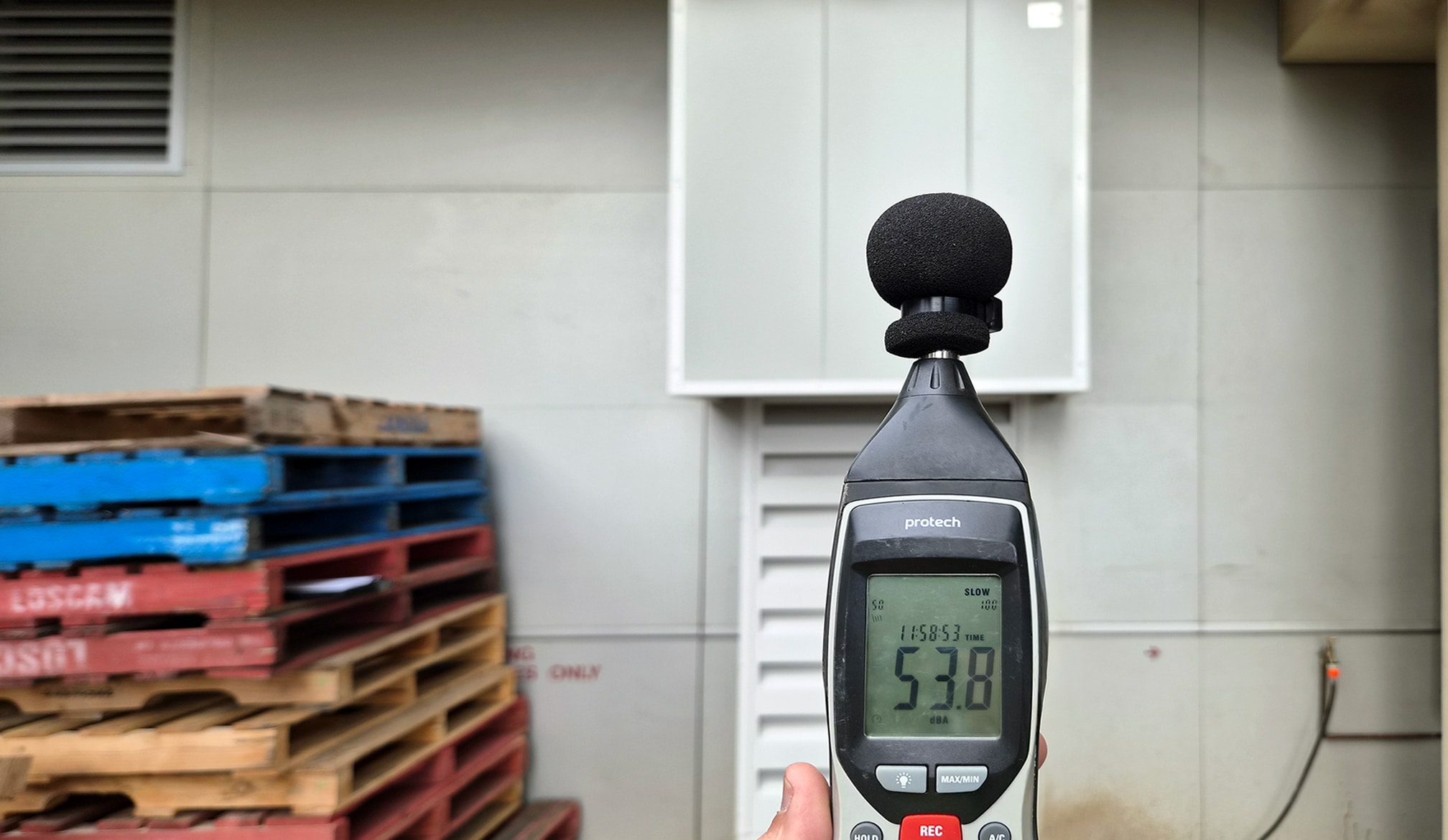
These systems are often located within or adjacent to facilities that often sit in mixed-use or urban locations. This makes managing acoustic output a significant consideration, both for regulatory compliance and ensuring positive ongoing community relations.
Why backup power noise control presents a distinct challenge
Backup generators differ from permanent operational plant in important ways:
- They are typically tested on a regular schedule, creating predictable noise events that nearby residents and businesses notice. In some facilities, testing occurs during business hours, early morning periods, or weekends, when ambient noise is low and mechanical sound carries further.
- In urban and mixed-use locations, generator compounds near site boundaries can produce noise that affects residential properties, adjoining commercial tenants, or public areas. Development conditions for many facilities specify noise limits that require acoustic management to meet.
- For data centres and telecommunications facilities, the challenge is further complicated by the continuous operation of cooling infrastructure that runs alongside generator systems. The combined acoustic output of generators, cooling towers, and mechanical plant can exceed site-specific noise limits, particularly at night when background noise levels drop.
Acoustic barriers for generator compounds
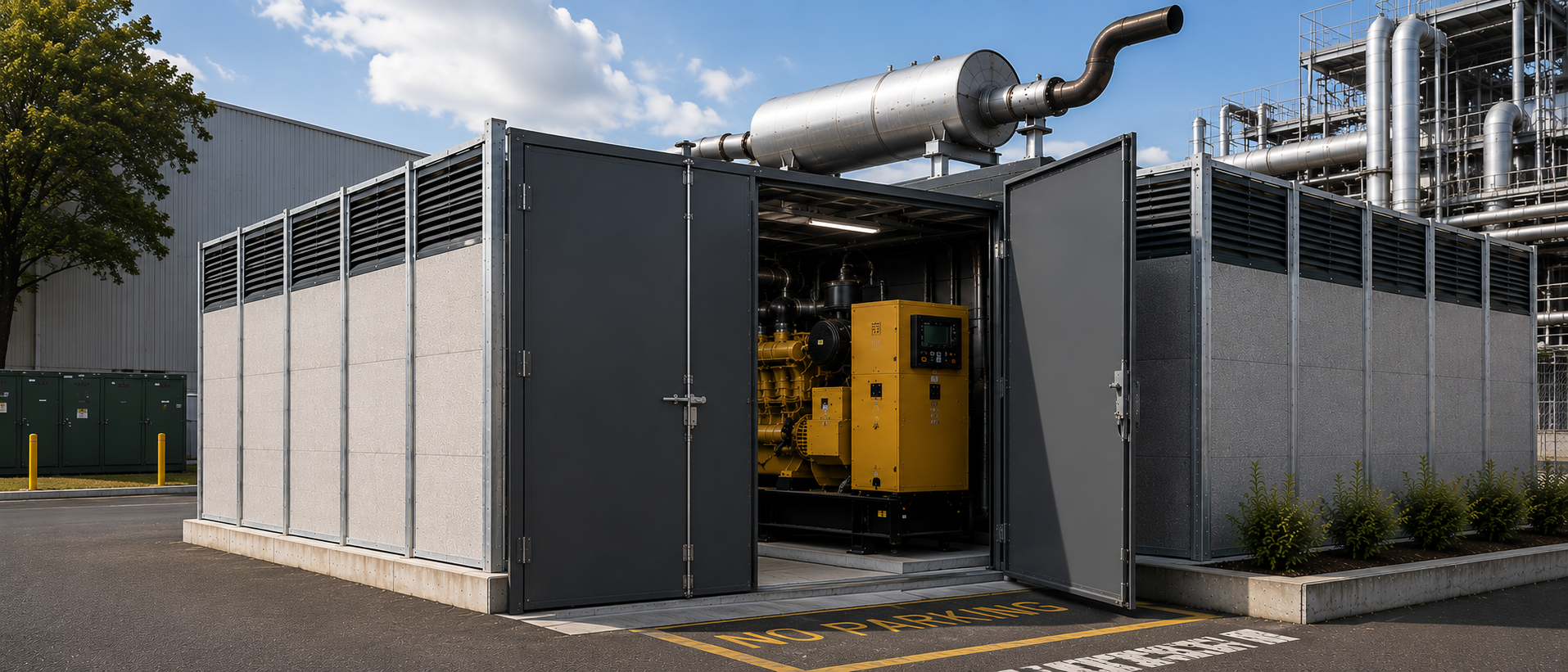
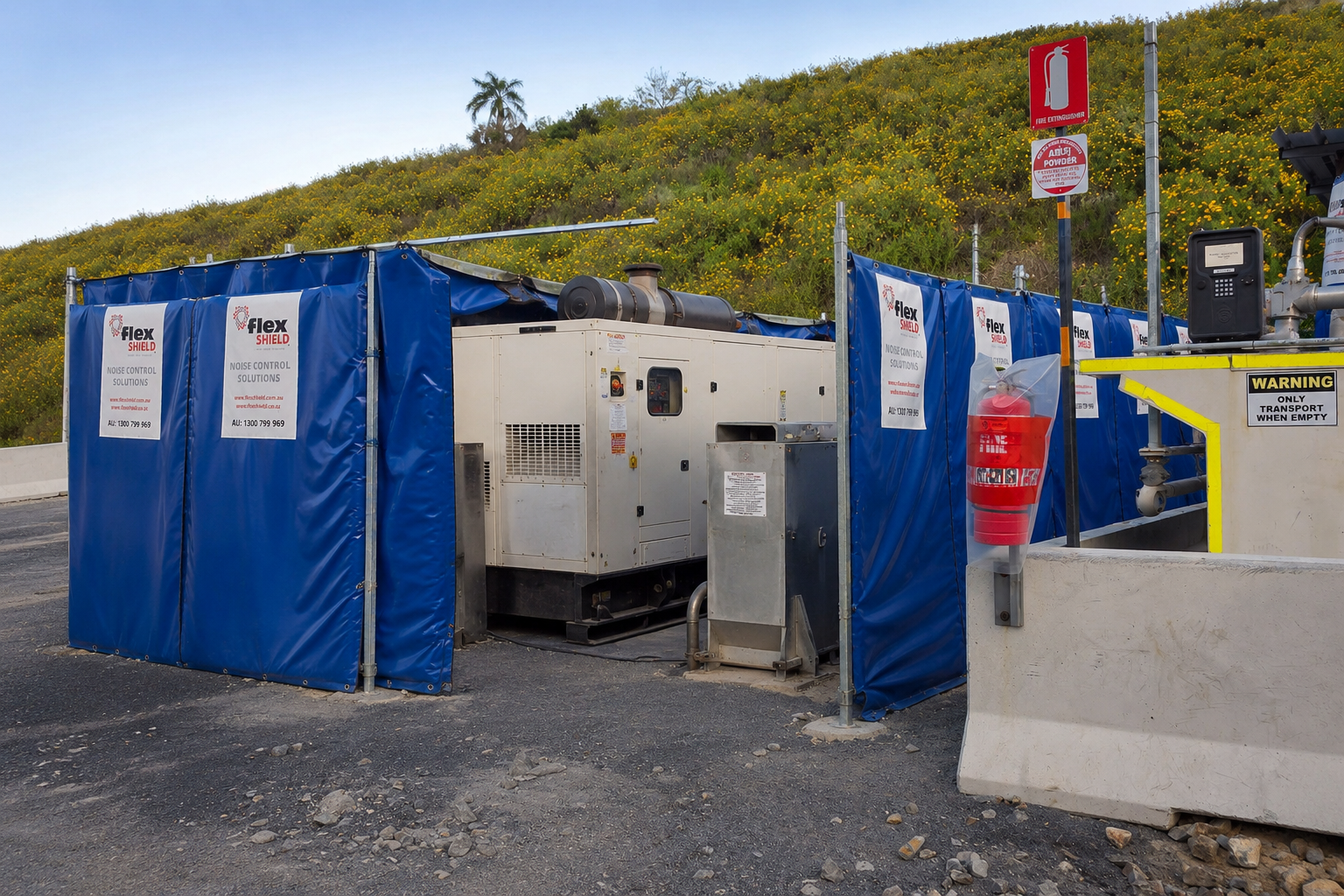
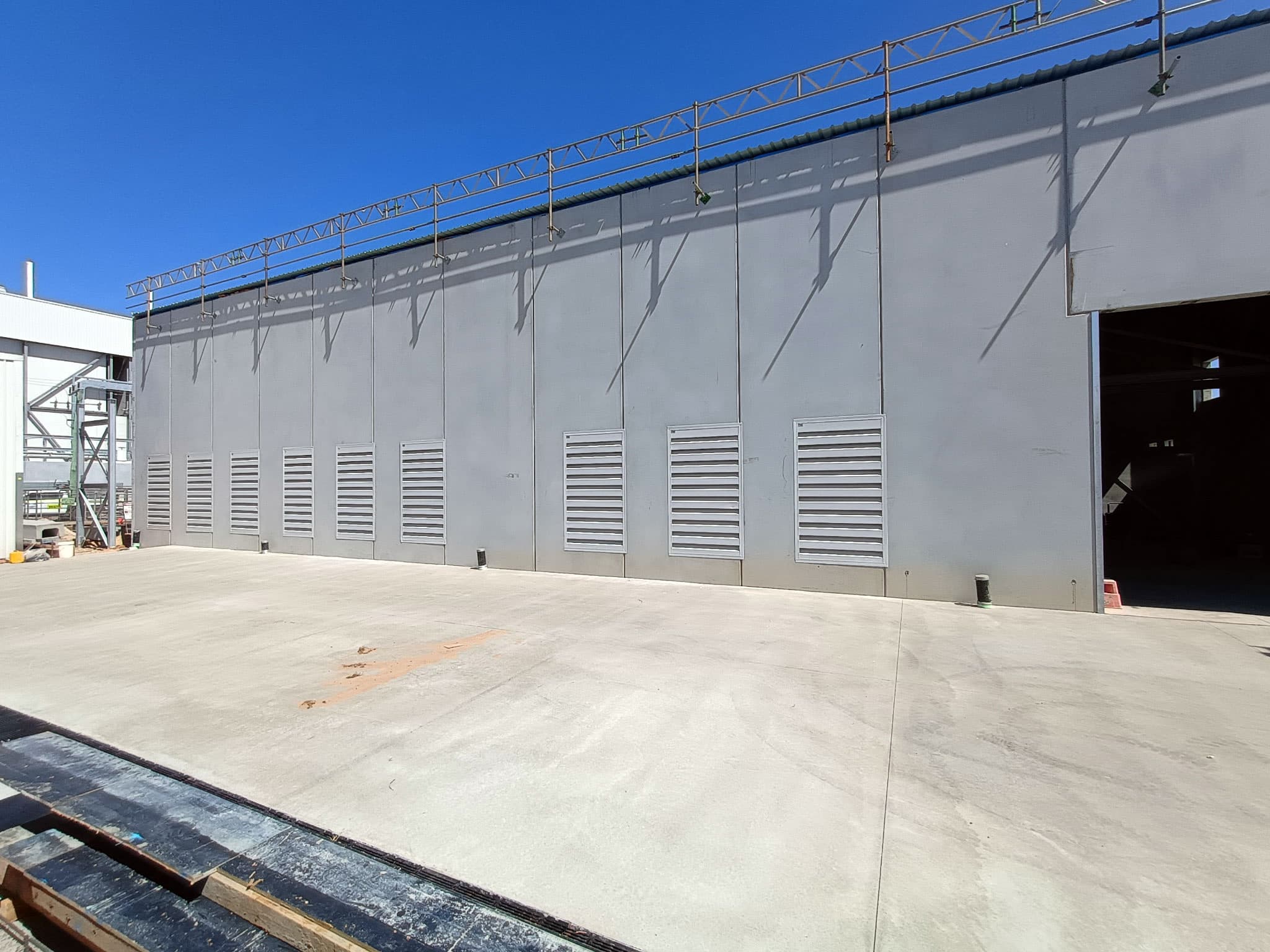
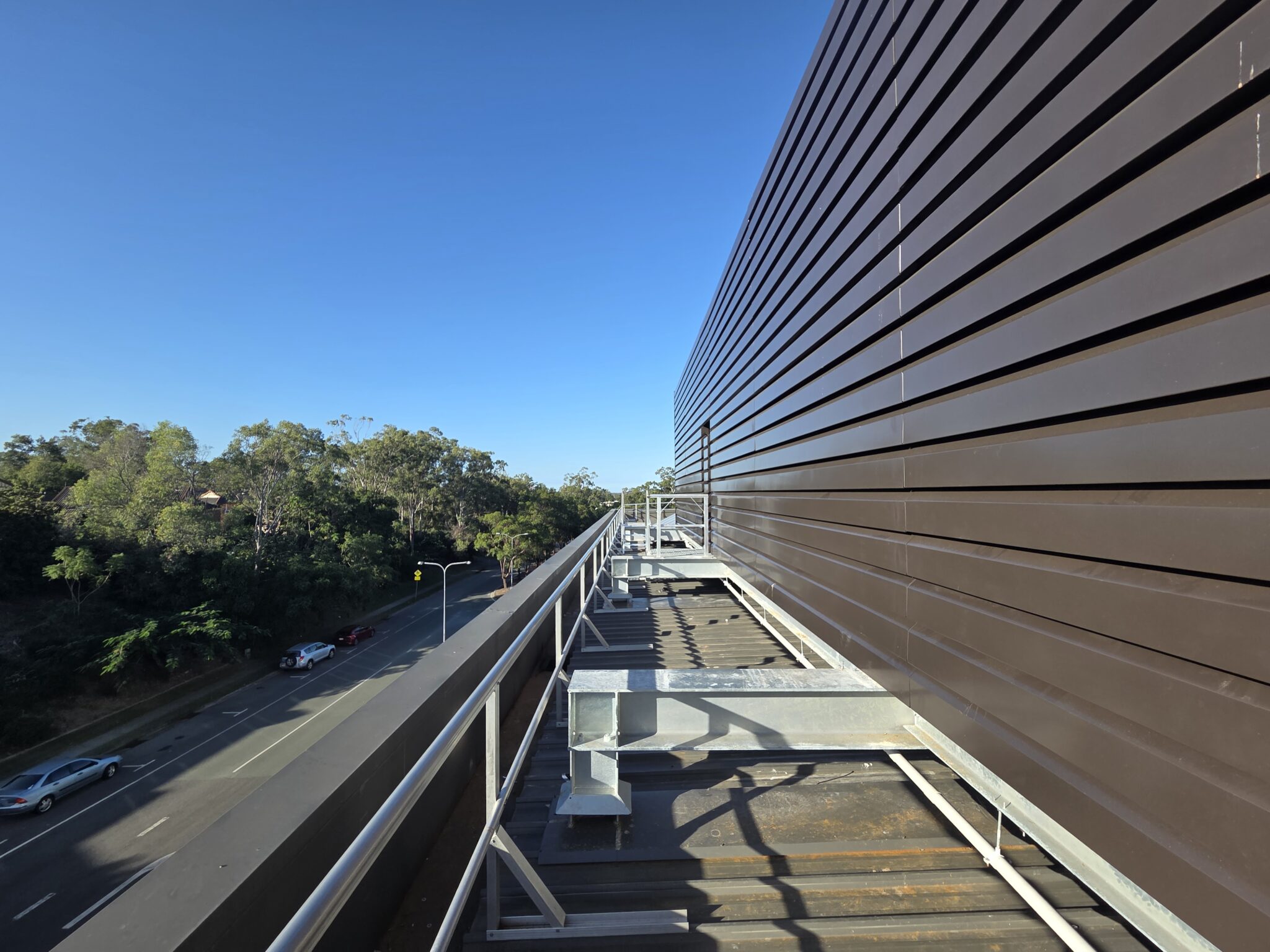
One of the most practical approaches to managing backup power noise is to install acoustic barriers around generator compounds. Barriers between the generator and the site boundary help to reduce noise transfer without restricting access for fuel delivery, servicing, and maintenance.
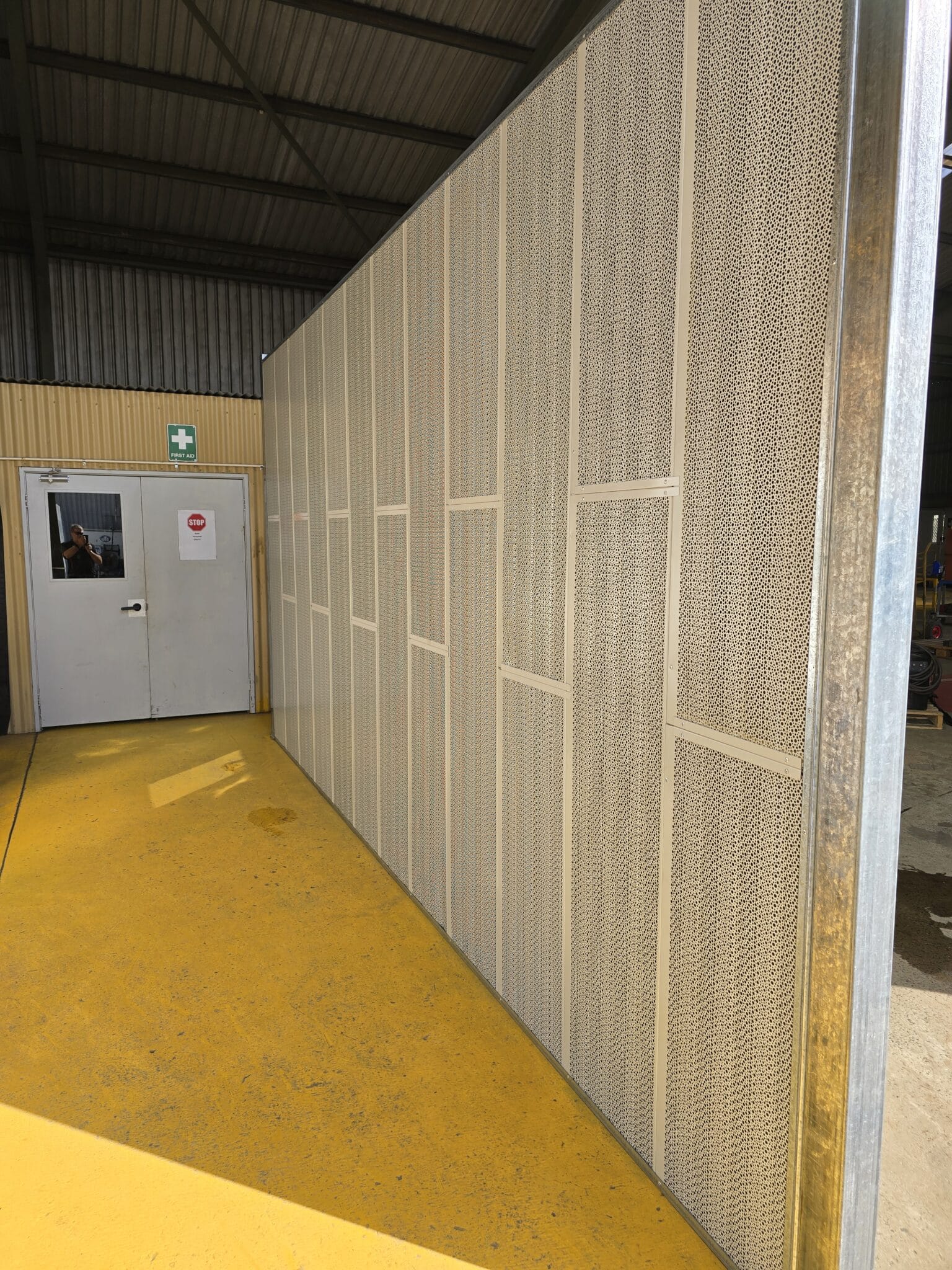
Flexshield’s Sonic System acoustic modular panels can be configured around generator compounds and plant areas. The V100 panel achieves Rw 37dB from NATA-accredited laboratory testing, with a fire rating of FRL -/120/-. The V100SP panel achieves Rw 45dB with the same fire rating. For backup power applications where fuel systems and fire safety are relevant, the fire-rated panel construction provides important additional benefit alongside acoustic performance.
Importantly, modular acoustic panels can be installed without major civil works and reconfigured if site layouts change over time. This makes them suitable for planned upgrades as well as existing facilities where acoustic management has been identified as a requirement after commissioning.
Maintaining ventilation through acoustic treatment
Backup generators require adequate ventilation for combustion air and heat dissipation. Acoustic barriers that restrict airflow can compromise generator performance or create reliability risks. That’s why ventilation requirements must be accounted for at the acoustic design stage.
Sonic Series acoustic louvres are designed to reduce airborne noise while maintaining airflow through ventilated openings in barriers and enclosure walls. The SL4-30C achieves Rw 31dB with 35% free area, while the SL4-20C achieves Rw 29dB with 29% free area.
These configurations allow acoustic treatment to be integrated into compound walls and plant room openings without blocking the ventilation that backup power systems depend on. Acoustic louvre selection depends on the balance between acoustic performance required and the free area needed for the specific equipment.
Noise control solutions for exhaust and low-frequency noise
Generator exhaust is a significant contributor to low-frequency noise output. While the generator body can be enclosed or screened, the exhaust system requires separate management to reduce tonal low-frequency output that travels across open areas and penetrates buildings.
Sonic acoustic attenuators for exhaust systems are available as part of Flexshield’s product range. Attenuator selection depends on the specific generator exhaust configuration and the acoustic targets for the site.
The importance of planning acoustic treatment into your design
If you’re planning new backup power infrastructure, it is more straightforward to address acoustic requirements during the design stage rather than retrofitting treatment after commissioning. Acoustic barriers, ventilation louvres, and exhaust attenuation can all be integrated into compound layouts and equipment specifications from the outset.
When noise issues have been identified at an existing facility, the approach will depend on the current configuration, site constraints, and the specific applicable noise limits. In most cases, a combination of perimeter noise barriers and acoustic louvres will address the primary noise transfer paths without requiring major structural changes.
Speak to the experts in backup power noise control
By manufacturing right here in Australia, Flexshield can respond quickly to your specific project requirements. We can manufacture and deliver acoustic panels and louvres without the lead times associated with imported products, which matters when you need backup power noise control ahead of a specific regulatory deadline or generator installation date.
We’ll make sure it’s built right from the start. Contact Flexshield on 1300 799 969 or get in touch online.
Proudly built by Flexshield Group
Designed to perform. Built to last.