
Call 1300 799 969 | Contact Us

Home » Temporary generator noise control for construction projects
Generators are a feature of most major Australian construction sites. They power temporary facilities, support remote work areas, provide backup capacity, and keep operations running where grid connection is not available or not yet commissioned.
They’re also one of the most common sources of construction site noise complaints. A diesel generator running continuously produces significant mechanical and exhaust noise. Without controls in place, that noise can travel well beyond the site boundary and create problems with neighbours, regulators, and ultimately project timelines.
Managing generator noise early – and managing it practically – avoids these problems. Let’s look at the main sources of generator noise, the control measures that are available for temporary applications, and how to choose between them for your site.
A diesel generator produces noise from several sources simultaneously. The engine block generates broadband mechanical noise, while the exhaust system produces a strong low-frequency component. Cooling fans contribute airborne noise across a wide frequency range. And structural vibration can transmit through ground and support structures, creating additional noise paths that are harder to address.
The combined effect is a noise source that is difficult to ignore, particularly during early morning or evening hours when background noise levels are lower and site noise conditions are typically more restricted.
Most Australian states apply time-based noise restrictions to construction sites, with tighter limits in the early morning, evening, and weekend periods. Without noise controls, a generator providing backup or continuous power during those periods can easily breach those limits.
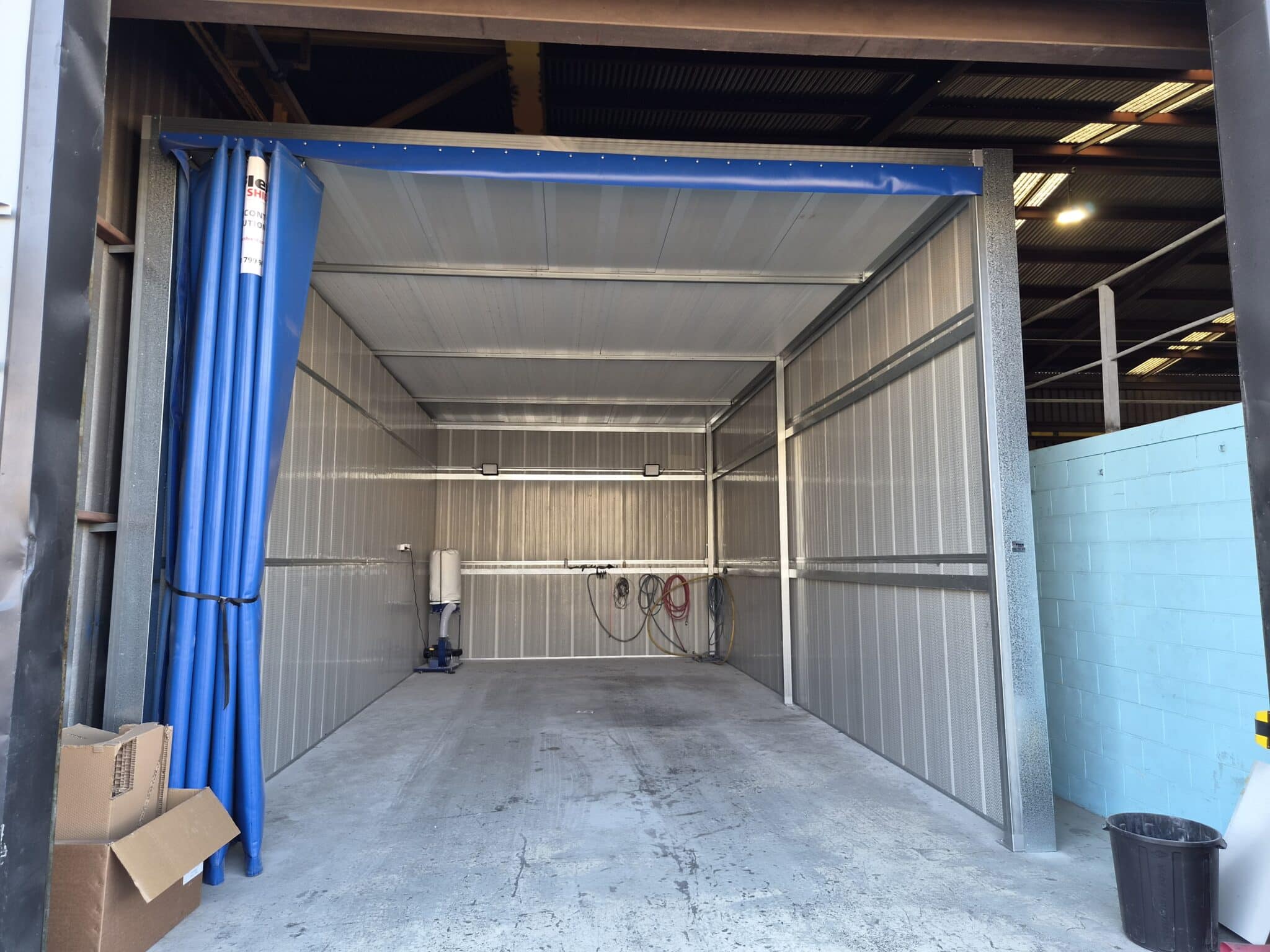
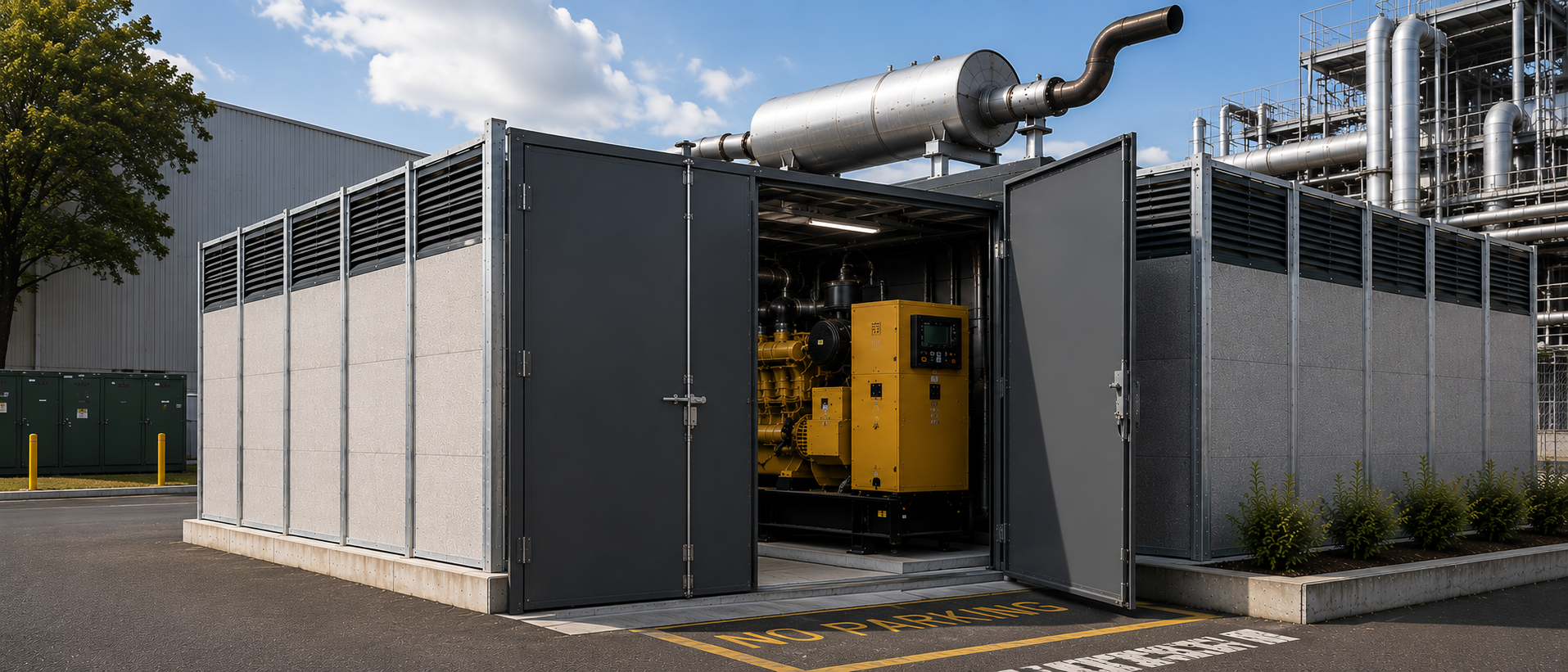
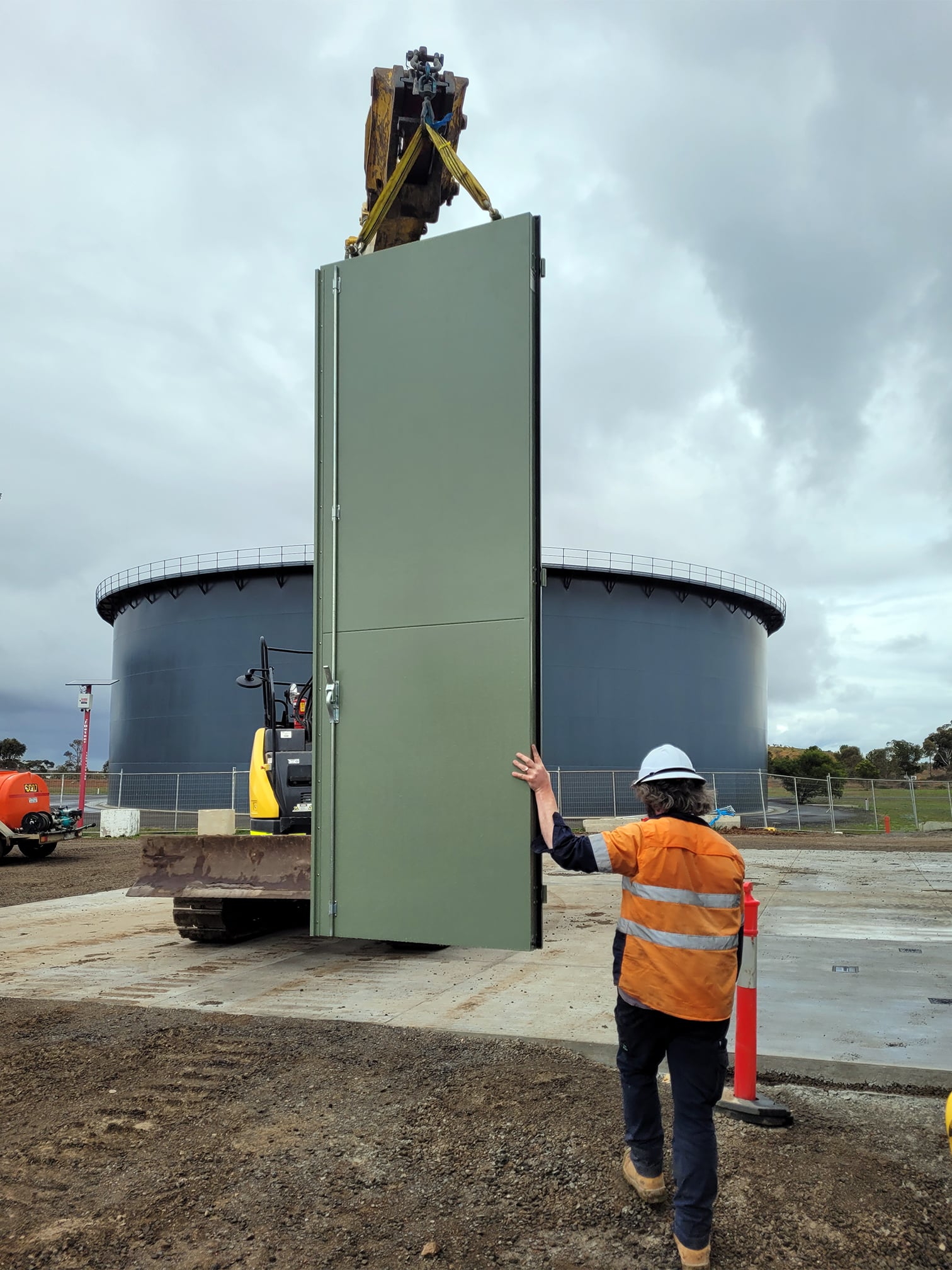
An acoustic enclosure is a purpose-built structure that wraps around the site generator to reduce noise from all sides. For a temporary construction application, that means a structure that can be installed without a crane, reconfigured as the site changes, and removed at the end of the project.
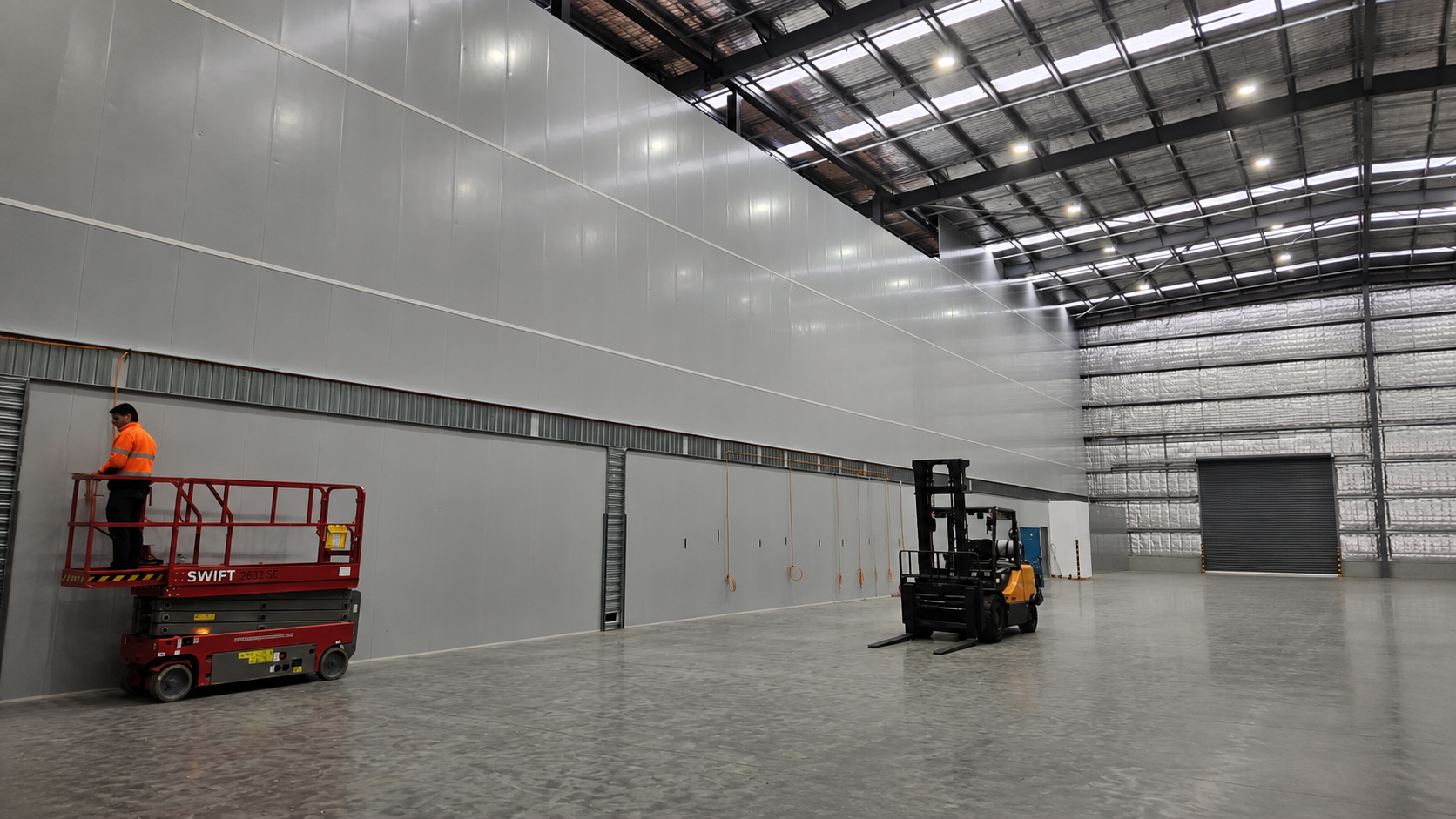
Sonic System acoustic modular panels from Flexshield are designed for exactly this type of application. The panels connect without mechanical fasteners, which means enclosures can be assembled by site crew without specialised labour. The system can be configured to suit generators of different sizes and orientations.
Different panels can be selected depending on the noise reduction required:
All offer a fire rating of -/120/-, and each panel type also carries NRC ratings suited to internal acoustic treatment where reverberation buildup inside the enclosure needs to be managed.
Since diesel engines require airflow for combustion and cooling, ventilation is a critical design consideration for any generator enclosure. Insufficient ventilation causes overheating and equipment failure. Acoustic louvres in an enclosure provide a path for airflow while maintaining noise attenuation at the opening.
Sonic Series acoustic louvres are independently tested and available in configurations from Rw 18dB to Rw 33dB depending on the model selected. Louvre sizing and placement needs to match the ventilation requirements of the specific generator – this is worth confirming with the generator supplier or an acoustic consultant before the enclosure is finalised.
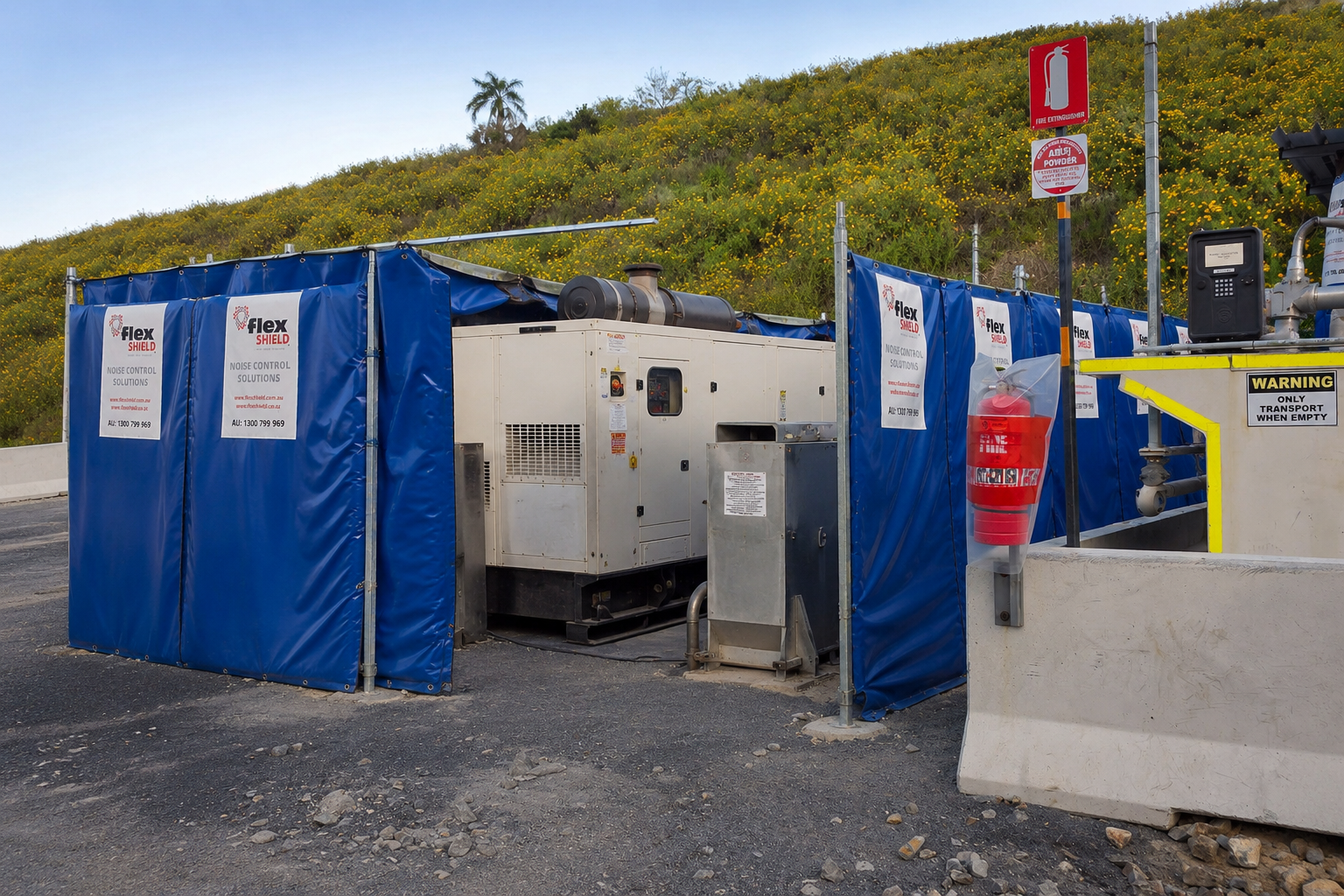
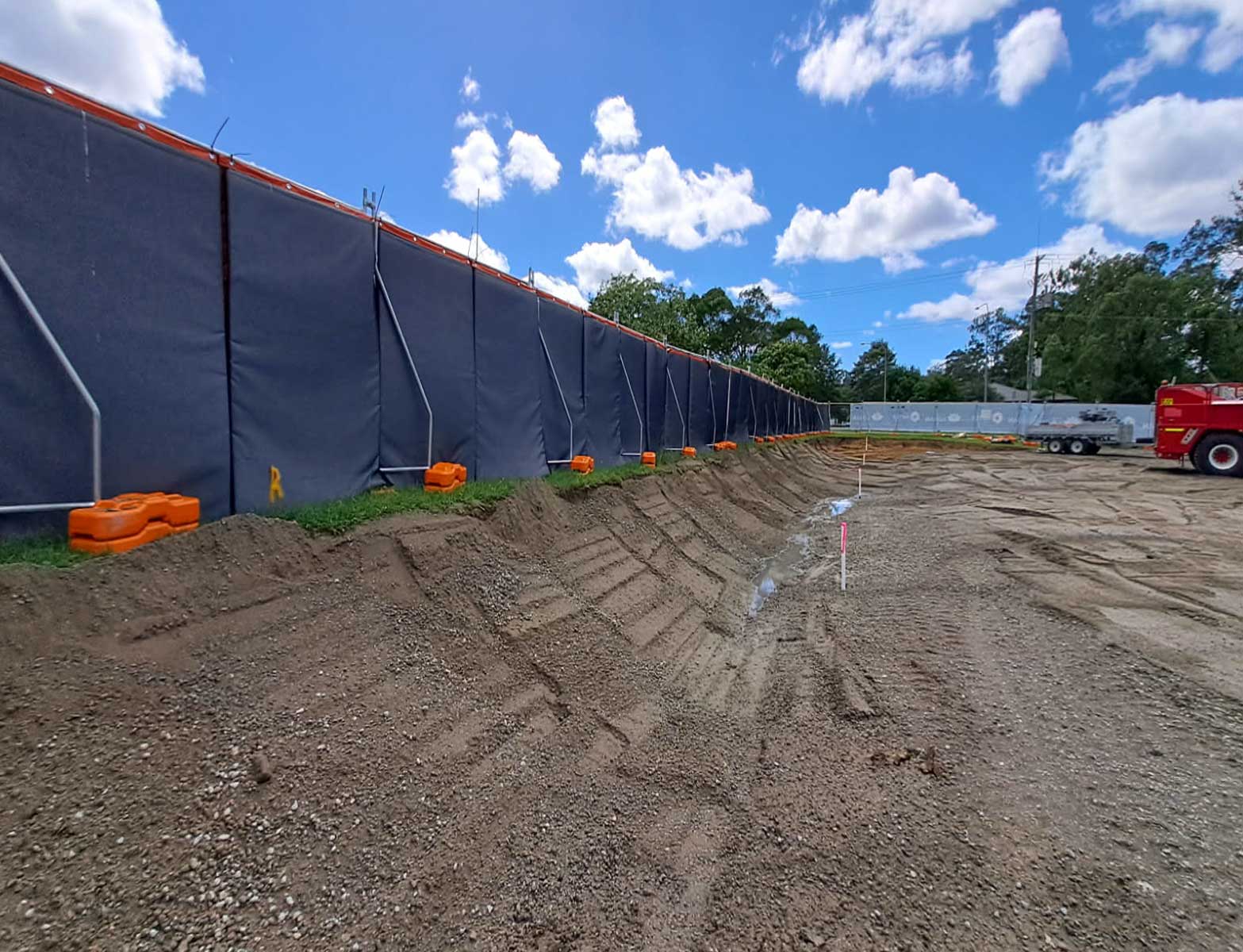
Where a full enclosure is not practical, an acoustic barrier can provide directional noise reduction. The barrier can be placed between the generator and the nearest sensitive receiver, whether it’s a neighbouring property, a residential building, or another part of the site where noise levels need to be lower.
Barriers work by blocking the direct line of sight between the source and the receiver and introducing diffraction loss over the top of the barrier. The attenuation provided will depend on the barrier height, the geometry of the source and receiver positions, and the acoustic properties of the barrier material.
For temporary construction applications, modular panel barriers offer the same assembly and reconfiguration benefits as enclosures. Panels can be erected without ground penetration using base plate systems, allowing placement on hardstand areas without permanent fixings.
Barriers are generally less effective than full enclosures because they address only part of the noise path. They can be a useful complement to an enclosure, used to address residual noise in specific directions, or as an interim measure while a more complete solution is put in place.
Generator exhaust noise is a particular challenge because of the strong low-frequency component. Standard acoustic panels perform well at mid and high frequencies, but provide less attenuation at the low frequencies (typically 63Hz to 250Hz) where generator exhaust energy is concentrated.
Sonic Curtain products provide some low-frequency performance. RMIT University Applied Acoustics Laboratory testing of the 6kg Sonic Curtain shows indicative attenuation of 9.0dB at 50Hz, 14.5dB at 63Hz, and 17.0dB at 80Hz under laboratory conditions. These are not guaranteed site performance figures, but they indicate meaningful attenuation in the lower frequency range compared to lighter acoustic curtain products.
For exhaust systems specifically, attenuator silencers fitted directly to the exhaust outlet are often the most direct approach to reducing exhaust noise at source. This is worth discussing with the generator supplier as part of the project specification.
Only addressing construction site generator noise after complaints have already started is a common mistake. Once a complaint has been lodged with a local authority, the project team is responding under pressure rather than managing proactively.
The better approach is to include noise control in the generator setup from the start. Before the generator arrives on site, identify the nearest sensitive receivers, check the site noise conditions in the construction management plan or development consent, and decide what level of noise control is required.
If the project has a Construction Noise and Vibration Management Plan, the generator placement and control requirements will typically be specified there. Use that document as the baseline.
Flexshield supplies acoustic enclosures, panels, and louvres for construction site generators across Australia. Products are Australian manufactured, which means shorter lead times and the ability to adjust specifications mid-project if site conditions change.
When specifying noise control for a site generator, ensure your requirements include:
If you’re working from a Construction Noise and Vibration Management Plan that specifies a noise limit at a receiver location, a Flexshield acoustic consultant can advise on the enclosure performance required to meet that limit from the generator’s position on site.
We’ll make sure it’s built right from the start. Contact Flexshield on 1300 799 969 or get in touch online.
Proudly built by Flexshield Group
Designed to perform. Built to last.