
Call 1300 799 969 | Contact Us
Home » Generator noise control for temporary applications
Diesel generators are the backbone of temporary power on construction and infrastructure sites across Australia, running lighting towers, site sheds, pumps and small plant well before permanent power is connected.
They are also one of the most common sources of noise complaints on a working site. A single generator running continuously near a site boundary can push a project into breach of its development consent conditions, trigger council or EPA intervention, and put site management in a difficult position with neighbouring residents and businesses.
Generator noise control is not a minor detail on the project plan. It is a compliance requirement that needs to be designed into the site setup from day one, not fixed after the first complaint arrives.
This guide sets out the rules that apply to generator noise in Australia, what the data says about typical generator noise levels, and the practical steps site managers, engineers and procurement teams can take to keep a temporary generator install within limits.
Generators are usually installed early, often before hoarding, screening or other site infrastructure is in place. They frequently run outside standard daytime hours to support night works, early starts, or continuous pumping. Unlike the intermittent noise of plant and equipment, a generator produces a constant, low-frequency drone that carries well beyond the site boundary and is difficult for occupants nearby to ignore, particularly overnight.
Local councils and state environmental regulators receive a steady stream of complaints about generator noise on residential-adjacent sites. Repeated complaints can lead to noise abatement notices, restrictions on working hours, and in some cases a requirement to shut equipment down until noise mitigation is demonstrated.
Temporary noise barriers do not generally require a separate approval of their own, but they may be required under a development consent, construction noise management plan or principal contractor requirement. Confirming those requirements before the generator arrives helps avoid costly changes once the site is operating.
EPA and council limits
Construction noise in Australia is regulated at state and local government level, which means there is no single national generator noise limit.
In New South Wales, the Interim Construction Noise Guideline sets standard construction hours of 7am to 6pm on weekdays and 8am to 1pm on Saturdays, with no work on Sundays or public holidays without a specific approval.
A common threshold applied across guidelines is that construction noise, including generator noise, should not exceed background noise by more than 5 decibels when measured over a 15-minute period at the nearest sensitive receiver, with stricter conditions often applying outside standard hours.
Other states apply their own EPA publications and planning conditions, so site teams working across multiple jurisdictions need to check the consent conditions and local noise guideline for each project.
AS 2436 and typical generator noise levels
Australian Standard AS 2436 addresses noise and vibration control on construction, demolition and maintenance sites. It includes reference noise data for common site equipment, including generators, and is widely used during planning to estimate expected noise levels.
Diesel generators are listed with a noise output range of roughly 84 to 113 decibels, with a midpoint around 99 decibels at 10 metres, depending on generator size and load. That midpoint figure sits well above most residential background noise levels and above typical EPA compliance thresholds at anything less than a substantial distance, which is why enclosures, screening and siting decisions matter so much for generator noise control on a live site.
Noise from a running generator reaches neighbouring properties through three main paths:
Managing generator noise properly means addressing all three, rather than relying on a single measure. The standard approach used across the industry, and the one Flexshield recommends to project teams, is to work through the noise path in order: treat the noise at the source first, screen the path between the generator and the nearest sensitive receiver second, and use distance and scheduling as a final layer of protection.
1) Treating noise at the source
The most reliable improvement comes from containing noise as close to the generator as possible. A well-specified acoustic enclosure with proper sealing, absorptive lining, silenced exhaust and ventilation, and resilient anti-vibration mounts can significantly reduce the noise leaving the unit, although the exact reduction depends on the enclosure design and the generator’s baseline noise level.
Manufacturer insertion loss data should therefore be checked against the site’s compliance target. Many modern generator sets are supplied with an enclosure as standard, but older or hired units are often not adequately treated, and this is worth checking before the unit arrives on site.
2) Screening the noise path
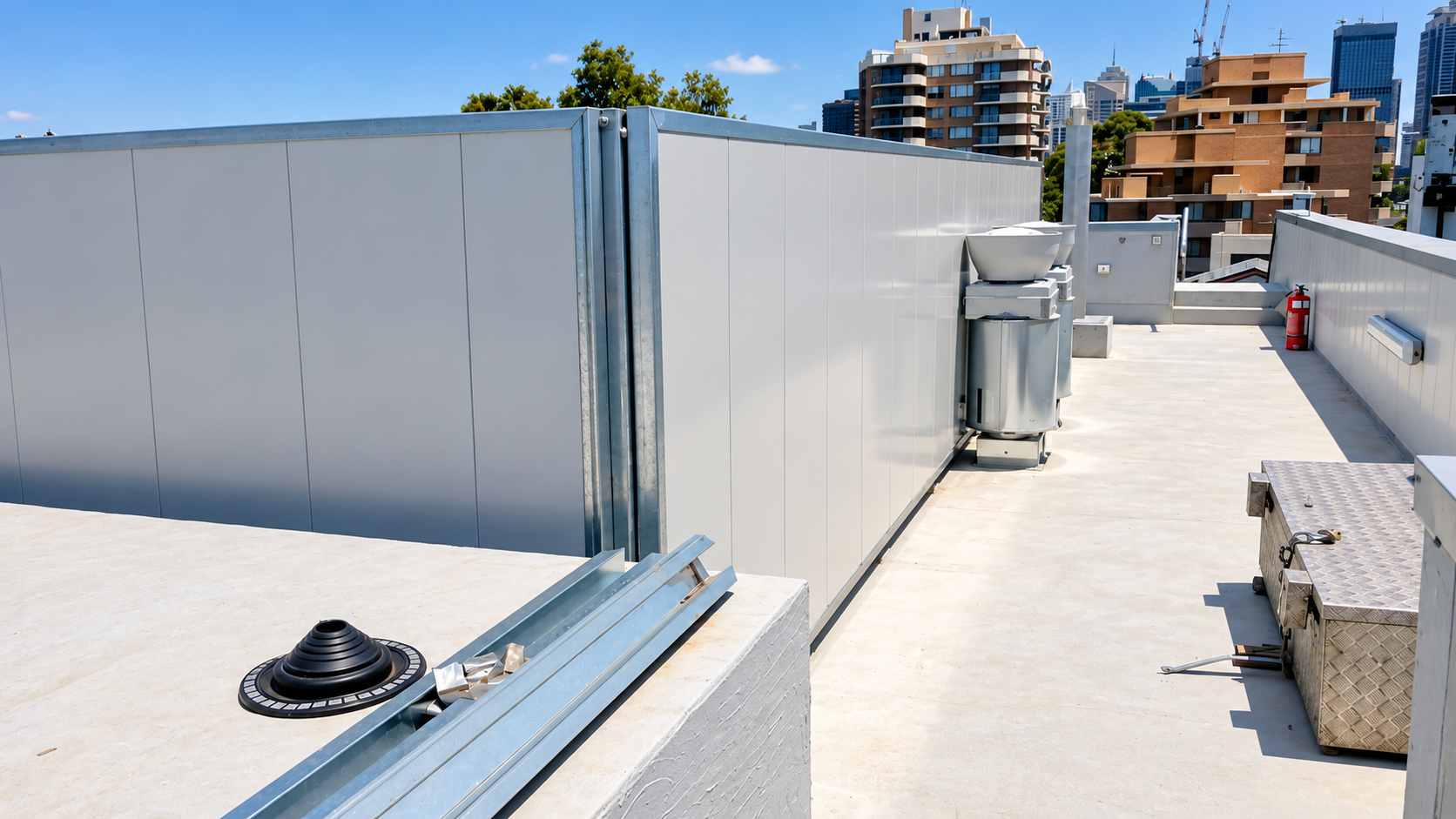
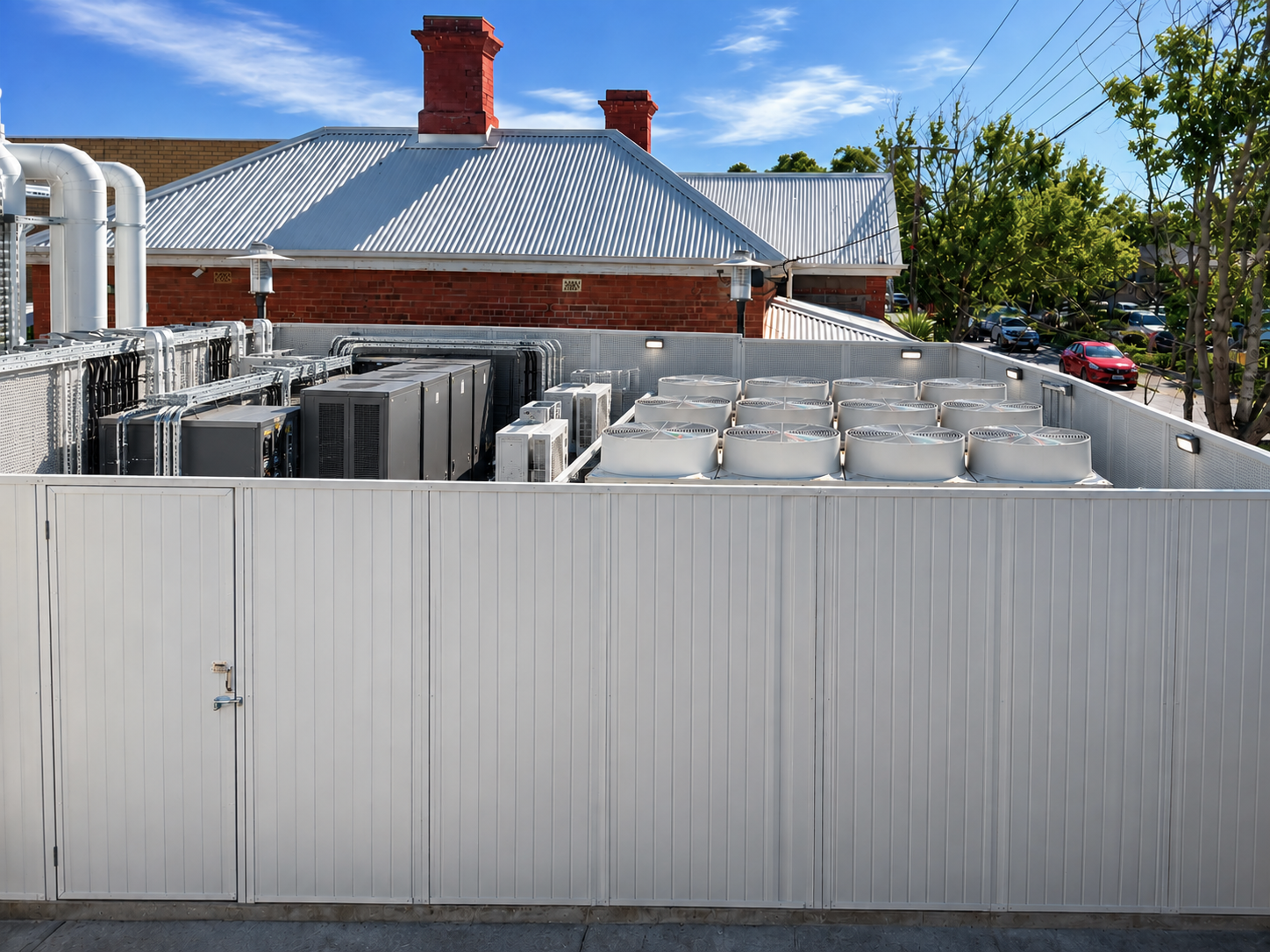
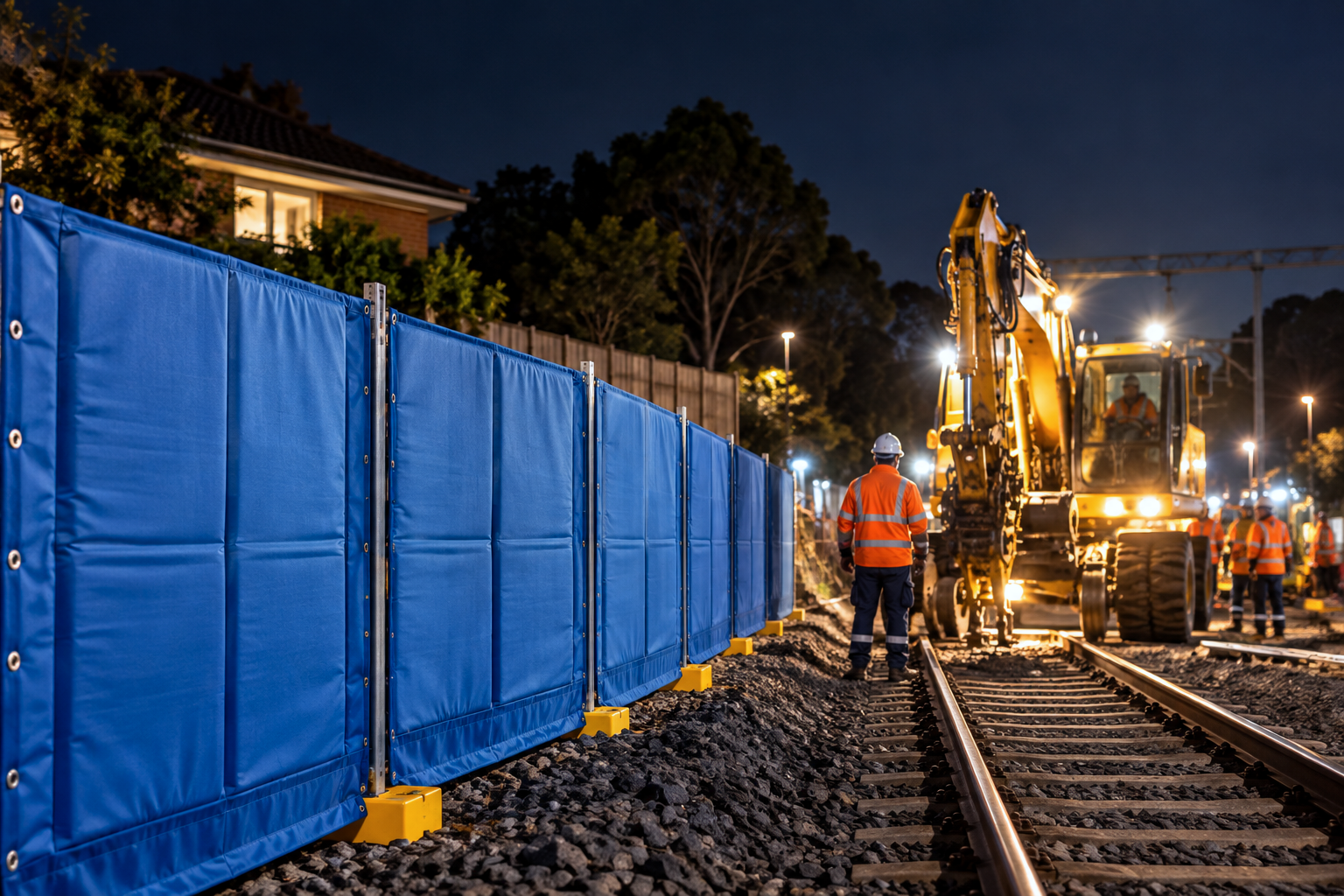
Where an enclosure alone is not enough, or the generator sits close to a boundary, a barrier positioned between the unit and the nearest sensitive receiver adds a second layer of protection.
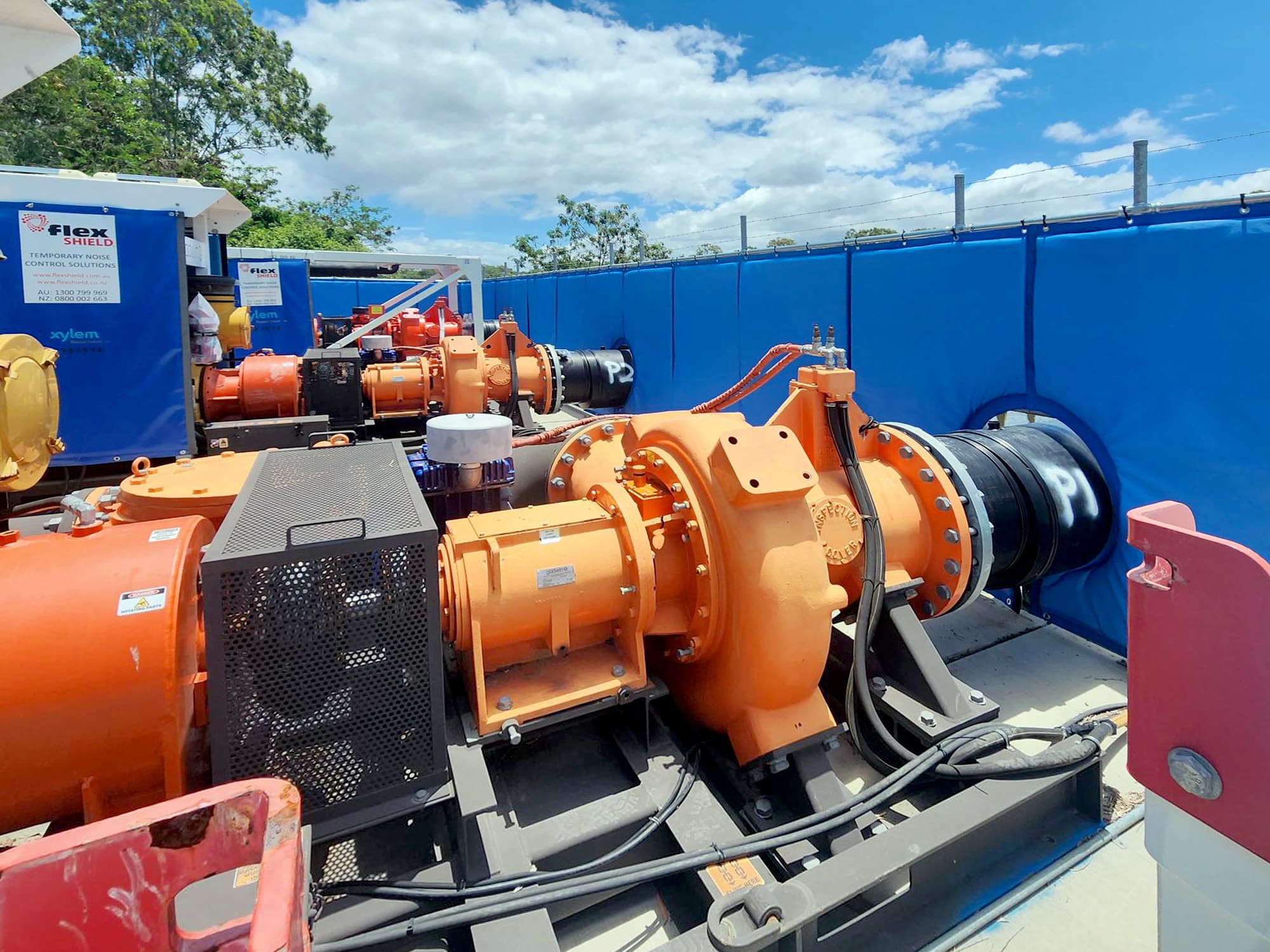
Flexshield manufactures Australian-made barrier and screening products designed for exactly this application: heavy-duty, weather-resistant panels that can be positioned quickly around a generator or along a site boundary without needing permanent groundworks. Because the panels are engineered for repeated site use, the same barrier set can move with the generator as the site progresses through different work fronts.
3) Distance, siting and scheduling
Noise level falls off with distance, so positioning the generator as far as reasonably practicable from the nearest sensitive receiver, and away from hard surfaces that reflect noise back towards a boundary, makes a measurable difference before any barrier is even installed.
Where night or early-start works are unavoidable, scheduling generator-heavy activities within standard construction hours wherever the programme allows, and notifying nearby residents in advance of any planned exceptions, reduces both the noise impact and the likelihood of a complaint being lodged.
Material and insertion loss performance
The choice of barrier material matters. Dense, mass-loaded PVC or composite panels provide meaningfully better insertion loss than lightweight fencing fabric or shade cloth, which offer very little genuine noise reduction despite sometimes being marketed for the purpose. When specifying a barrier for generator noise control, ask for insertion loss data rather than relying on material thickness alone.
Weather resistance and site durability
A temporary site barrier needs to perform through Australian conditions, including UV exposure, wind loading and rain, without degrading over the life of the project. Flexshield panels are manufactured to withstand outdoor site conditions across a full project programme, which matters on longer infrastructure and construction contracts where the same barrier set may be in use for many months.
Ease of relocation between work fronts
Generators are rarely fixed in one place for the life of a project. As work fronts shift, the barrier and enclosure setup needs to move with them. Barrier panels designed with simple fixings and manageable panel sizes let site crews relocate screening quickly, without specialist plant or lengthy downtime. Durable panels can also be reused across multiple projects, making them a practical addition to a contractor’s site equipment rather than a single-use item.
A practical checklist for generator noise compliance
Plan generator noise control before the site goes live
Temporary power is often needed before the rest of the site is fully established, which makes generator placement, enclosure performance and barrier screening important decisions early in the programme.
Flexshield Group manufactures Australian-made barrier and screening products for construction, infrastructure and industrial sites. By reviewing the generator, site layout, nearest sensitive receivers and likely work hours before installation, project teams can plan a noise control approach that suits the operating conditions and can move as the site changes.
We’ll make sure it’s built right from the start. Contact Flexshield on 1300 799 969 or get in touch online.
Proudly built by Flexshield Group
Designed to perform. Built to last.